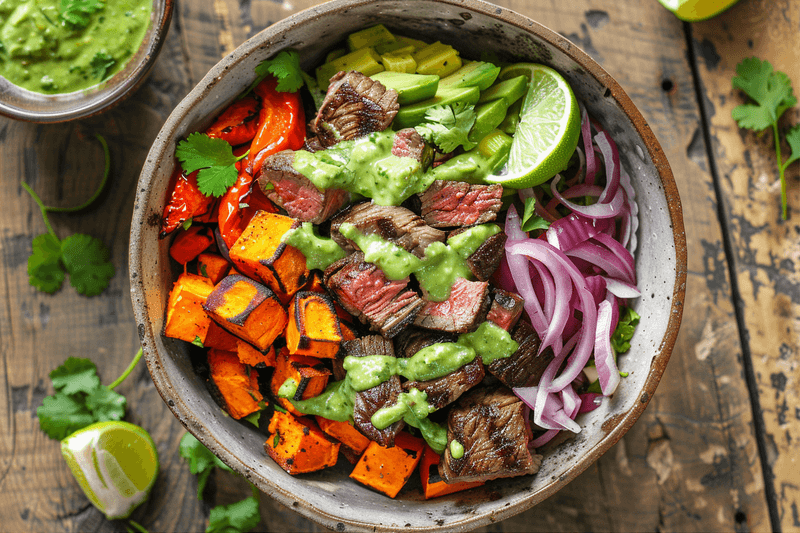
Steak and Sweet Potato Bowls with Avocado-Cilantro Drizzle
One-pan steak and sweet potato bowls with a creamy avocado-cilantro drizzle. Minimal cleanup, maximum flavor. Perfect for easy weeknight dinners.
cookwithlucia.com/recipes/steak-and-sweet-potato-bowls-with-avocado-cilantro-drizzle
Introduction
Let me tell you the universal truth that unites every home cook on this planet: nobody actually enjoys doing dishes. We love cooking, we love eating, but that sink full of pots and pans after dinner? That's where the joy ends and the negotiation begins. That's exactly why these steak and sweet potato bowls with avocado-cilantro drizzle have become one of my absolute go-to meals when I want something impressive without the kitchen chaos.
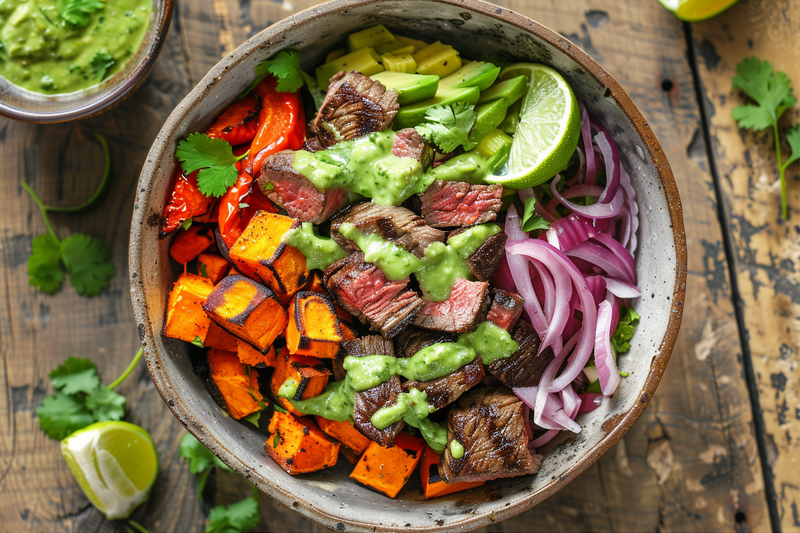
Picture this: tender, perfectly seasoned steak bites sharing space with caramelized sweet potato cubes, both getting beautifully browned in the same pan. While they cook, you're whisking together the silkiest, most vibrant avocado-cilantro drizzle that ties everything together with its creamy, herby brightness. The sweet potatoes develop these crispy golden edges while staying soft inside, the steak gets a gorgeous sear, and when you pile everything into bowls and drizzle that green sauce over top, it looks like something you'd order at a trendy grain bowl restaurant.
The best part? One pan does all the heavy lifting. The steak juices mingle with the sweet potato caramelization, creating layers of flavor that you simply can't achieve when cooking components separately. And when dinner is done, you're left with exactly one pan to clean, one cutting board, and maybe a bowl or two. That's the kind of cooking that makes weeknight dinners feel manageable, even on those evenings when your energy is running on fumes but your family still needs to eat well.
The One-Pan Philosophy
There's actual culinary science behind why cooking multiple components in the same pan creates something greater than the sum of its parts. When steak releases its savory juices and sweet potatoes caramelize their natural sugars, those flavors don't just stay put—they create a shared flavor base that coats everything in the pan. It's the same principle that makes a good pan sauce so magical, except here, the vegetables are absorbing all that goodness directly.
The art of one-pan cooking really comes down to understanding timing and temperature. You can't just throw everything in at once and hope for the best. Some ingredients need a head start, others benefit from being added later, and knowing when to give things space versus when to let them crowd together is what separates a mediocre one-pan meal from a truly spectacular one.
Honestly, this method is both the laziest and the smartest way to cook, and I mean that as the highest compliment. It's lazy because you're minimizing effort and cleanup, but it's smart because you're maximizing flavor development and efficiency. When I make steak and sweet potato bowls with avocado-cilantro drizzle, I'm not cutting corners on quality—I'm just being strategic about how I apply heat and build flavor. That's the kind of cooking wisdom that makes regular home cooking sustainable over the long haul.
What Goes In
The foundation of these steak and sweet potato bowls starts with choosing the right cut of steak. I typically reach for sirloin or flat iron steak because they're flavorful, relatively tender, and they cut into beautiful cubes that sear quickly without overcooking. You want a cut with enough marbling to stay juicy but not so much that it renders out excessive fat in the pan. The key is cutting against the grain into bite-sized pieces that will cook in about the same time as your sweet potatoes finish roasting.
Sweet potatoes are the perfect companion here because they're sturdy enough to handle high heat without turning to mush. I cut them into three-quarter-inch cubes, which gives them enough surface area to caramelize beautifully while ensuring they cook through in a reasonable timeframe. Their natural sweetness provides the perfect counterbalance to the savory, umami-rich steak, creating that sweet-savory harmony that makes every bite interesting.
For the avocado-cilantro drizzle, you need ripe avocados that blend smoothly, fresh cilantro with those bright, citrusy notes, lime juice for acidity, and a touch of garlic for depth. Some people add jalapeño for heat, but I keep it optional since not everyone wants that kick. A splash of water or olive oil helps thin it to drizzle consistency, and salt brings all those flavors into focus.
The supporting cast includes red onion for a sharp bite that mellows as it cooks, bell peppers for sweetness and color, and garlic that gets all toasty and fragrant. I always keep cumin and smoked paprika on hand for these bowls—they add warmth and depth without overwhelming the natural flavors of the steak and sweet potatoes. If you're missing any vegetables, don't stress it. Zucchini works beautifully, as do mushrooms or cherry tomatoes. The beauty of steak and sweet potato bowls with avocado-cilantro drizzle is their flexibility.
Assembly and Cooking
Start by preheating your oven to 425°F and getting your largest sheet pan ready. The sweet potatoes need a head start because they take longer to cook through than the steak, so they go in first. Toss them with olive oil, salt, cumin, and smoked paprika, then spread them in a single layer across half of your sheet pan. Give them about 15 minutes in the oven to get a good start on roasting before you add anything else.
While those sweet potatoes are getting their initial roast, prep your steak by patting it completely dry with paper towels. This step is crucial for getting a good sear—any surface moisture will steam rather than brown. Cut your steak into bite-sized cubes, season generously with salt and pepper, and toss with a light coating of oil. When those 15 minutes are up, pull the pan out and add your steak cubes to the empty half of the pan, spreading them out so they have room to breathe.
This is also when I add sliced onions and bell peppers, tucking them around the steak and sweet potatoes. They'll soften and caramelize in the time it takes the steak to cook and the sweet potatoes to finish. Return the pan to the oven for another 10 to 12 minutes for medium-rare to medium steak, or longer if you prefer your meat more well-done.
The pan choice genuinely matters here. A heavy-duty rimmed sheet pan is ideal because it can handle high heat, has enough surface area to prevent crowding, and the rim keeps any juices contained. Cast iron works beautifully too if you're cooking for fewer people. The goal is a pan that conducts heat evenly and gives you enough real estate that the steak can sear rather than steam. If everything is piled on top of each other, you'll end up with gray, boiled meat instead of those gorgeous caramelized edges we're after.
While everything finishes cooking, whip up your avocado-cilantro drizzle by blending avocado, cilantro, lime juice, garlic, and enough water to reach a pourable consistency. Season it well with salt—underseasoned avocado is a sad thing. The drizzle should taste bright, creamy, and assertive enough to stand up to the rich steak and sweet potatoes.
Secrets for One-Pan Success
The single biggest mistake people make with one-pan meals is overcrowding. When ingredients are packed too tightly, they trap steam and end up steaming instead of roasting or searing. Leave space between your steak cubes and sweet potato pieces. If you're doubling the recipe, use two pans rather than cramming everything onto one. That breathing room is what allows moisture to evaporate and surfaces to caramelize.
Building layers of flavor starts before anything even hits the pan. Season your components separately before combining them—the sweet potatoes get their own spice blend, the steak gets its seasoning, and everything benefits from being well-salted at each stage. This creates depth that you simply can't achieve by sprinkling salt over everything at the end.
Know when to stir and when to leave things alone. With steak and sweet potato bowls with avocado-cilantro drizzle, I give the sweet potatoes one good toss about halfway through their initial roasting time to ensure even browning. But once the steak goes in, I resist the urge to fuss with it. Let those meat cubes sit undisturbed so they develop a proper crust on at least one side. Constant stirring is the enemy of caramelization.
For the crispiest sweet potatoes and the best sear on your steak, make sure your pan is fully preheated before adding ingredients. A cold pan means food sits in its own moisture longer, leading to soggy results. That initial blast of heat when food hits the pan is what jump-starts the browning process.
Pat your proteins dry, always. I mentioned this earlier but it bears repeating because it's that important. Moisture is the enemy of browning. Even if your steak looks dry, give it another pat with paper towels right before it goes in the pan. The same goes for any vegetables that tend to hold water—dry them thoroughly first.
Finally, don't skip the resting period. When you pull that pan from the oven, let everything sit for three to five minutes before assembling your bowls. The steak will finish cooking with residual heat and its juices will redistribute, ensuring every bite is tender and flavorful rather than dry.
Rounding Out the Meal
While your steak and sweet potato bowls come together in the oven, you have plenty of time to prep simple sides that make this feel like a complete, balanced meal. A quick cabbage slaw with lime juice and a pinch of salt adds crunch and freshness that contrasts beautifully with the rich, warm components. Just shred some cabbage, toss it with lime juice, and let it sit while everything cooks—the acid will soften it slightly and mellow its raw bite.
Fresh herbs are your best friend here. Cilantro is already featured in the drizzle, but don't stop there. Chopped green onions add a mild onion flavor and beautiful color. Fresh mint might sound unconventional, but a few torn leaves scattered over the top add a cooling element that plays wonderfully against the cumin and paprika.
For extra heartiness, serve these bowls over a base of fluffy rice, quinoa, or even cauliflower rice if you're keeping things lighter. The grains soak up that glorious avocado-cilantro drizzle and any pan juices, making sure not a drop of flavor goes to waste. I often cook rice in my rice cooker at the start and just keep it warm—it's ready exactly when I need it.
A squeeze of fresh lime over the finished bowl is non-negotiable in my kitchen. That bright citrus note cuts through the richness and makes all the flavors pop. Set out lime wedges so everyone can add as much as they like. The acidity is what transforms this from a good bowl to a great one.
Leftovers and Next-Day Ideas
One of the unexpected joys of steak and sweet potato bowls with avocado-cilantro drizzle is how well the components hold up as leftovers. Store the steak and vegetables in an airtight container in the fridge for up to three days. Keep the avocado-cilantro drizzle separate, pressing plastic wrap directly onto its surface to prevent browning. The drizzle will stay vibrant and green for about two days.
Reheating requires a light touch to avoid turning the steak tough and rubbery. I spread the leftovers on a sheet pan and warm them in a 350°F oven for just eight to ten minutes, until heated through but not cooking further. Alternatively, a quick reheat in a skillet over medium heat works beautifully, giving you a chance to crisp up the sweet potatoes even more.
The transformation potential of these leftovers is where things get really exciting. Chop everything up and pile it into warm tortillas for quick tacos or wraps. The steak and sweet potatoes make an incredible filling for quesadillas—just add some cheese and crisp them up in a pan. I've also tossed cold leftovers with fresh greens and extra avocado-cilantro drizzle for a hearty grain bowl salad that's perfect for packed lunches.
If you're feeling creative, dice the steak and sweet potatoes finely and use them as a filling for stuffed peppers or as a topping for baked sweet potatoes. The flavors are bold enough to stand up to being repurposed, and the meal prep possibilities are nearly endless once you have these components cooked and ready.
Answers to Your Questions
What's the best pan to use for this recipe?
A large rimmed sheet pan is my top choice for steak and sweet potato bowls because it provides maximum surface area and can easily fit all the components without overcrowding. Heavy-gauge aluminum sheet pans conduct heat evenly and develop excellent caramelization. If you're cooking for two, a large cast iron skillet works wonderfully and can go straight from stovetop to oven if you want to start the sweet potatoes on the stove first.
Can I swap vegetables based on what's in season?
Absolutely, and I encourage it! In summer, try zucchini, cherry tomatoes, or corn kernels added in the last few minutes of cooking. Fall and winter call for butternut squash instead of sweet potatoes, or add Brussels sprouts alongside them. Asparagus and snap peas are perfect spring additions that need only the final 5 minutes of cooking time. Just match the size of your cuts to the cooking time required for each vegetable.
How do I ensure everything comes out crispy, not soggy?
The key is managing moisture and avoiding overcrowding. Pat all ingredients dry before seasoning, use enough oil to coat everything lightly but not drench it, and make sure there's space between pieces on your pan. High oven temperature helps too—don't go below 425°F. If your pan looks crowded, split the recipe between two pans or cook in batches. That extra pan is worth washing for the superior texture you'll achieve.
Can I double this recipe and still use one pan?
I wouldn't recommend it because doubling the ingredients on a single pan, even a large one, will lead to overcrowding and steaming rather than roasting. You'll end up with soft, gray steak and pale sweet potatoes instead of the caramelized, flavorful results you're after. Use two sheet pans on different oven racks instead, rotating them halfway through cooking for even results. The extra pan is a small price to pay for maintaining quality.
Should I line my pan with foil for easier cleanup?
While foil makes cleanup easier, it can sometimes prevent proper browning because it reflects heat differently than the bare pan surface. If you do use foil, use heavy-duty foil and make sure it's pressed smoothly against the pan without wrinkles that could create steam pockets. Parchment paper is another option that promotes better browning than foil. Honestly though, a well-seasoned sheet pan with a light oil coating cleans up easily enough that I usually skip the liner altogether.
How do I prevent the avocado drizzle from turning brown?
The lime juice in the drizzle helps slow oxidation, but you can take extra steps to keep it vibrant green. Press plastic wrap directly onto the surface of the drizzle, eliminating any air exposure. Store it in the smallest container possible to minimize air space. Making the drizzle just before serving is ideal, but if you need to prep ahead, these storage tricks will keep it looking fresh for a day or two. A quick stir before serving will help revive its color.
Final Thoughts on These Flavor-Packed Bowls
What makes steak and sweet potato bowls with avocado-cilantro drizzle so special isn't just the minimal cleanup or the quick cooking time, though those are certainly appreciated on busy weeknights. It's the way each component enhances the others—how the sweet potato's caramelized edges complement the savory steak, how the creamy avocado drizzle brings everything together with its bright, herby notes, and how the whole dish feels nourishing and satisfying without being heavy.
This is the kind of meal that works equally well for a quiet dinner at home as it does for a casual gathering with friends. You can prep the components ahead, keep the drizzle chilled, and just roast everything when you're ready to eat. The presentation is naturally beautiful—those jewel-toned sweet potatoes, the rich brown steak, the vibrant green drizzle—so you don't need to fuss with plating to make it look appealing.
I love how adaptable these bowls are to different dietary needs and preferences too. Keep the base the same but adjust the toppings based on who's eating. Some people pile on extra cilantro, others prefer a handful of toasted pepitas for crunch, and there's always someone who wants extra drizzle on the side. Everyone gets to customize their bowl while you only had to cook once.
The technique you learn making this dish translates to countless other one-pan meals too. Once you understand the principle of staggered timing and proper spacing, you can apply it to chicken and vegetables, fish and potatoes, or any protein-and-vegetable combination you can imagine. Master this recipe and you've essentially mastered a whole category of efficient, flavorful home cooking.
Making It Your Own
Once you've made steak and sweet potato bowls with avocado-cilantro drizzle a few times following the basic template, don't be afraid to put your own spin on things. Swap the cumin and paprika for curry powder and turmeric for a completely different flavor profile. Try a tahini-herb drizzle instead of avocado-cilantro for a nuttier, Middle Eastern-inspired version. Add chickpeas or black beans along with the vegetables for extra protein and fiber.
The spice level is entirely up to you. Keep it mild for families with young children, or heat things up with fresh jalapeños in the drizzle and a sprinkle of red pepper flakes on the steak. I've made versions with everything from mild and family-friendly to seriously spicy, and they're all delicious in their own way.
Texture additions can elevate these bowls from everyday dinner to something special. Toasted pepitas, crushed tortilla chips, or crispy chickpeas on top add crunch that contrasts beautifully with the tender steak and soft sweet potatoes. A handful of crumbled cheese—try cotija or feta—adds salty, tangy notes that complement the sweet and savory elements.
Seasonal variations keep these bowls interesting year-round. In autumn, add roasted apple slices or dried cranberries for a touch of sweetness. Summer versions might include fresh corn, tomatoes, and avocado chunks instead of drizzle. Winter calls for heartier additions like roasted Brussels sprouts or butternut squash. The core technique stays the same while the ingredients shift with the seasons.
Why This Recipe Works for Real Life
I keep coming back to steak and sweet potato bowls with avocado-cilantro drizzle because they solve so many of the challenges that make weeknight cooking stressful. The ingredient list is straightforward with no obscure items that require a special trip to specialty stores. Everything you need is available at any regular market, and most of it keeps well, so you can stock up when things go on sale.
The timing is forgiving too. If your sweet potatoes take an extra five minutes or you prefer your steak more well-done, it's easy to adjust without throwing off the entire meal. Unlike delicate recipes where a minute too long ruins everything, these bowls are resilient and adaptable to your schedule and preferences.
From a nutritional standpoint, you're getting quality protein from the steak, complex carbohydrates and fiber from the sweet potatoes, healthy fats from the avocado, and plenty of vegetables. It's a balanced meal that leaves you satisfied without feeling overstuffed. The portion sizes are generous enough for hungry appetites but not so excessive that you're uncomfortably full.
The cost per serving is reasonable too, especially if you watch for sales on steak and buy sweet potatoes when they're in season. This is the kind of recipe that looks and tastes like something you'd pay good money for at a restaurant, but it costs a fraction of that to make at home. That value proposition matters when you're cooking regularly for a family.
But beyond all the practical benefits, these bowls just taste really, really good. That's what keeps them in regular rotation. The flavors are bright and satisfying, the textures are varied and interesting, and every bite delivers that perfect balance of sweet, savory, rich, and fresh. This is feel-good food that happens to be good for you—the best kind of recipe in my book.
Steak and Sweet Potato Bowls with Avocado-Cilantro Drizzle
Tender steak cubes and caramelized sweet potatoes roasted together on one pan, then topped with a creamy avocado-cilantro drizzle. A complete meal with minimal cleanup.
Prep Time
15 min
Cook Time
30 min
Total Time
45 min
Servings
4 servings
Ingredients
For 4 servings
- 1.5 pounds sirloin or flat iron steak, cut into 3/4-inch cubes
- 2 large sweet potatoes, peeled and cut into 3/4-inch cubes
- 1 red bell pepper, cut into 1-inch pieces
- 1 medium red onion, sliced into wedges
- 3 tablespoons olive oil, divided
- 1.5 teaspoons ground cumin
- 1 teaspoon smoked paprika
- Salt and black pepper to taste
- 2 ripe avocados
- 1 cup fresh cilantro leaves and tender stems
- 2 cloves garlic, minced
- 3 tablespoons fresh lime juice
- 3-4 tablespoons water
- Optional: cooked rice or quinoa for serving
- Optional: lime wedges and extra cilantro for garnish
Instructions
- 1
Preheat and prepare pan
Preheat your oven to 425°F. Line a large rimmed sheet pan with parchment paper or lightly grease it with oil. Make sure your pan is large enough to hold all ingredients in a single layer without overcrowding.
- 2
Season sweet potatoes
In a large bowl, toss the sweet potato cubes with 1.5 tablespoons olive oil, cumin, smoked paprika, 1 teaspoon salt, and 1/2 teaspoon black pepper. Make sure each piece is well coated with the oil and spices for maximum flavor.
- 3
Start roasting sweet potatoes
Spread the seasoned sweet potatoes in a single layer on half of your prepared sheet pan, leaving the other half empty for the steak. Roast for 15 minutes to give them a head start, as they take longer to cook through than the steak.
- 4
Prepare the steak
While sweet potatoes roast, pat the steak cubes completely dry with paper towels. Toss them in a bowl with the remaining 1.5 tablespoons olive oil, 1 teaspoon salt, and 1/2 teaspoon black pepper. The dry surface is crucial for achieving a good sear.
- 5
Add steak and vegetables
After the initial 15 minutes, remove the pan from the oven. Add the seasoned steak cubes to the empty half of the pan, spreading them out so they have space to brown. Scatter the bell pepper pieces and onion wedges around both the steak and sweet potatoes.
- 6
Finish roasting everything
Return the pan to the oven and roast for 10-12 minutes for medium-rare to medium steak, or 14-15 minutes for more well-done meat. The sweet potatoes should be tender with crispy, caramelized edges, and the vegetables should be softened and slightly charred.
- 7
Make avocado-cilantro drizzle
While everything finishes cooking, add avocados, cilantro, garlic, lime juice, 3 tablespoons water, 1/2 teaspoon salt, and a pinch of black pepper to a blender or food processor. Blend until completely smooth and creamy, adding more water one tablespoon at a time if needed to reach a pourable consistency.
- 8
Rest and assemble
Remove the pan from the oven and let everything rest for 3-5 minutes. This allows the steak juices to redistribute and ensures tender, juicy meat. Taste and adjust seasoning if needed.
- 9
Serve the bowls
Divide the steak, sweet potatoes, and roasted vegetables among four bowls. If using rice or quinoa, place it at the bottom first, then top with the roasted components. Drizzle generously with the avocado-cilantro sauce.
- 10
Garnish and enjoy
Garnish each bowl with extra cilantro if desired and serve with lime wedges on the side. Encourage everyone to squeeze fresh lime juice over their bowl just before eating for the brightest, most vibrant flavor. Store any leftover drizzle separately in the refrigerator for up to two days.
Nutrition Facts
Per serving (estimated)
485 calories
Calories
38g
Carbs
38g
Protein
22g
Fat
8g
Fiber
680mg
Sodium
9g
Sugar