Crockpot Garlic Butter Chicken – Easy Family Dinner
Tender, flavorful crockpot garlic butter chicken that cooks while you work. Simple ingredients, incredible taste, perfect for busy weeknights.
cookwithlucia.com/recipes/crockpot-garlic-butter-chicken-easy-crockpot-dinner-for-busy-families
There's something absolutely magical about walking through your front door after a long day to the aroma of garlic and butter swirling through your home. That's exactly what happens when you master crockpot garlic butter chicken, a technique that transforms simple pantry ingredients into restaurant-quality comfort food while you go about your busy day. The beauty of this method lies in its gentle, prolonged cooking that allows chicken to become impossibly tender while absorbing every bit of that rich, savory sauce.
What makes crockpot garlic butter chicken so special is the way slow, moist heat breaks down the chicken fibers without drying them out, creating meat that practically falls apart at the touch of a fork. The garlic mellows and sweetens during those hours of cooking, losing any harsh bite and instead becoming nutty and almost caramelized. The butter emulsifies with the chicken's natural juices, creating a sauce that's simultaneously rich and light, coating every bite with luxurious flavor.
I know many home cooks feel intimidated by the idea of leaving food cooking unattended for hours, worried about dry chicken or bland results. But here's the truth: the crockpot is actually more forgiving than stovetop cooking. Once you understand why this method works so beautifully, you'll reach for your slow cooker several times a week. The key is understanding how gentle heat and time work together to create something truly special.
The Science Behind the Method
When you cook crockpot garlic butter chicken, you're harnessing the power of low-temperature braising, a technique professional chefs use to transform tough cuts into tender masterpieces. Inside your slow cooker, temperatures hover between 180-210°F, which is the perfect range for collagen breakdown. Even though chicken breast doesn't have as much collagen as tougher meats, this gentle environment prevents the proteins from seizing up and squeezing out moisture, which is what happens when you cook chicken too hot and too fast.
The garlic undergoes a fascinating transformation during those slow cooking hours. Raw garlic contains sharp sulfur compounds that can be overwhelming, but prolonged gentle heat converts these into sweet, complex flavors through a process similar to caramelization. The allicin that gives raw garlic its bite breaks down into dozens of milder compounds that taste nutty, slightly sweet, and deeply savory. This is why your crockpot garlic butter chicken doesn't taste harsh or overwhelming despite using multiple cloves of garlic.
The butter plays a crucial scientific role beyond just adding richness. As it melts and mingles with the chicken's natural juices and any added liquid, fat molecules surround and capture flavor compounds, making them more available to your taste buds. This is why food cooked with fat tastes more intensely flavorful. The fat also helps conduct heat evenly throughout the pot, ensuring every piece of chicken cooks at the same gentle rate. Understanding this science helps you see why rushing this dish would ruin it, and why patience creates perfection.
Tools and Ingredients You'll Need
The centerpiece of making crockpot garlic butter chicken is, of course, your slow cooker itself. A 6-quart model is ideal for feeding four to six people, but a 4-quart works perfectly fine if you're cooking for fewer. I prefer oval-shaped crockpots because they accommodate chicken breasts laid flat better than round models, but honestly, either shape works. If you don't own a slow cooker yet, look for one with at least low and high settings. Programmable models with timers are wonderful but absolutely not necessary for success.
For ingredients, start with boneless, skinless chicken breasts or thighs, about two pounds total. Thighs are naturally more forgiving due to their higher fat content, but breasts work beautifully when cooked this way. You'll need real butter, not margarine, as the milk solids in butter contribute essential flavor during the long cooking process. Fresh garlic is non-negotiable here since it's a star ingredient. Plan on six to eight cloves for proper impact. You'll also want chicken broth or stock, fresh herbs like parsley or thyme, and basic seasonings.
Quality indicators matter even in simple dishes. Choose chicken that looks pink and fresh, never gray or with an off smell. Your butter should be unsalted so you control the sodium level. Garlic cloves should be firm and tightly wrapped in their papery skins, not soft or sprouting green shoots. For broth, look for versions with minimal ingredients, or make your own if you have time. The beauty of crockpot garlic butter chicken is that it elevates simple ingredients, so starting with good quality makes a noticeable difference.
If you don't have fresh herbs, dried ones work in a pinch, just use about one-third the amount since dried herbs are more concentrated. A good knife for mincing garlic is helpful, though a garlic press speeds things up. A wooden spoon for stirring and tongs for removing the finished chicken are the only other tools you'll need. This really is accessible cooking at its finest.
The Method, Step by Step
Begin by preparing your ingredients, which takes maybe ten minutes of active work. Pat your chicken pieces completely dry with paper towels because excess moisture will dilute your sauce and prevent proper browning of flavors. Season both sides of each piece generously with salt and black pepper. Mince your garlic cloves finely or press them through a garlic press. The smaller you mince them, the more their flavor will permeate the dish. Measure out your butter and have your broth ready. This preparation stage sets you up for success.
Now coat the inside of your crockpot insert with a thin layer of cooking spray or a bit of butter. This isn't strictly necessary, but it makes cleanup easier later. Place your seasoned chicken pieces in a single layer on the bottom of the insert. If they overlap slightly, that's fine, but try to keep them mostly flat so they cook evenly. Scatter the minced garlic over and around the chicken pieces. Don't worry if some lands on top of the chicken; it will all redistribute during cooking. Cut your butter into tablespoon-sized pieces and dot them across the chicken and garlic. This ensures even distribution as everything melts.
Pour your chicken broth around, not directly over, the chicken. You want about half a cup to three-quarters of a cup, just enough to create steam and prevent sticking, but not so much that you're boiling the chicken. The goal of crockpot garlic butter chicken is to braise gently, not to poach. If you're adding fresh herbs, tuck the sprigs into the liquid or lay them over the chicken now. At this point, you can also add extras like sliced mushrooms, baby potatoes, or baby carrots if you want a complete meal.
Place the lid firmly on your crockpot and set it to low. For chicken breasts, you'll need about four to five hours on low or two and a half to three hours on high. For chicken thighs, add an extra hour on low or thirty minutes on high since they benefit from longer cooking. Resist the urge to lift the lid and check on things. Every time you remove the lid, you release heat and add about fifteen minutes to your cooking time. Trust the process and let the slow cooker work its magic.
After the cooking time, check for doneness by inserting an instant-read thermometer into the thickest part of a chicken piece. You're looking for 165°F. The chicken should be tender enough that it shreds easily with a fork. At this point, remove the chicken pieces to a serving platter and tent them loosely with foil. Look at the liquid remaining in your crockpot. It's probably thin and buttery. To transform it into a proper sauce, you have options. You can whisk in a slurry of cornstarch and cold water, then let it cook on high for fifteen minutes. Or you can pour it into a small saucepan and reduce it on the stovetop for a more concentrated flavor.
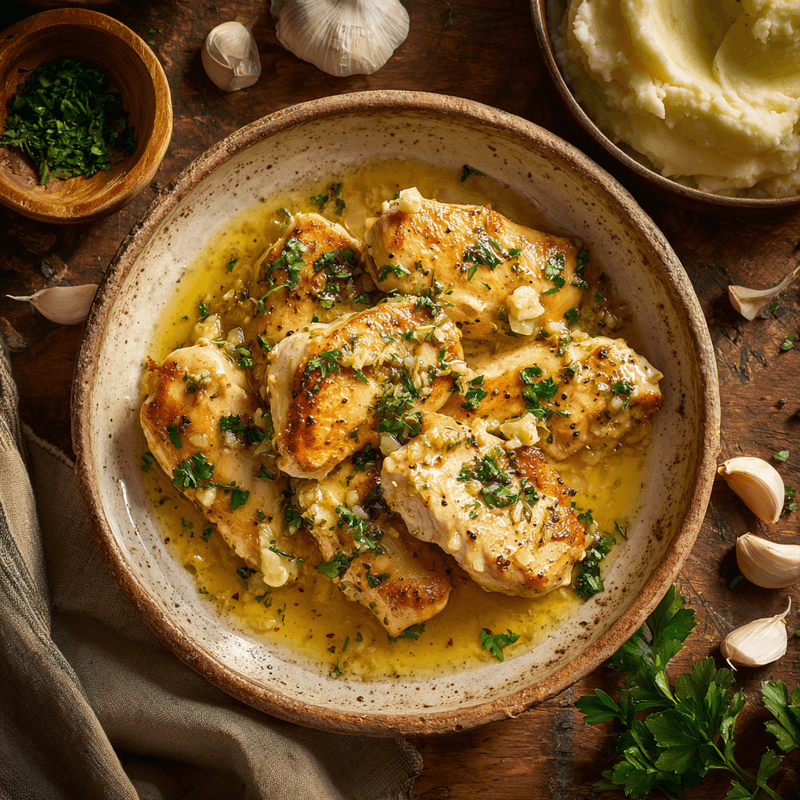
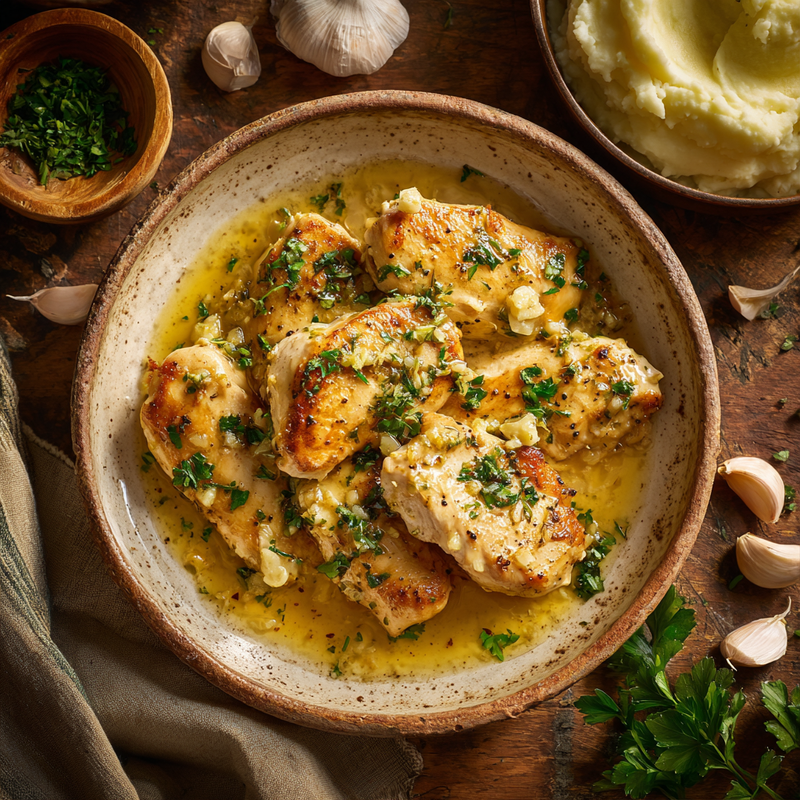
Once your sauce reaches the consistency you like, taste it and adjust the seasonings. It might need more salt, a squeeze of lemon juice for brightness, or a pinch of red pepper flakes for heat. Pour this glossy, fragrant sauce over your chicken. Garnish with fresh chopped parsley and serve your crockpot garlic butter chicken immediately. The entire active cooking time you invested was probably fifteen minutes, yet what you've created tastes like you spent hours in the kitchen.
Troubleshooting Guide
If your chicken turns out dry and stringy, you likely cooked it too long or on too high a temperature. Chicken breast is particularly susceptible to overcooking. Next time, check the temperature at the earliest recommended time and remove it as soon as it hits 165°F. Remember that carryover cooking will bring the temperature up a few more degrees even after you turn off the heat. Consider switching to chicken thighs, which contain more fat and connective tissue, making them nearly impossible to overcook in a crockpot. They'll stay moist and tender even if you leave them an extra hour.
When the garlic tastes too sharp or harsh, it probably didn't cook long enough, or you used too high a temperature that prevented proper mellowing. Garlic needs time at low temperatures to transform its sulfur compounds into sweet, mellow flavors. Make sure you're cooking on low rather than high, and ensure your crockpot is functioning properly. Some older models run hotter than they should. You can test yours by filling it with water and checking the temperature after a few hours. If your garlic still tastes harsh, try roasting the cloves in the oven for fifteen minutes before adding them to your crockpot garlic butter chicken.
If your sauce is too thin and watery, you may have added too much liquid initially or your chicken released more moisture than expected. Don't worry, this is easily fixed. Remove the chicken and switch your crockpot to high with the lid off, letting the liquid reduce for twenty to thirty minutes. Alternatively, transfer the liquid to a saucepan and simmer it on the stove until it thickens. You can also whisk together one tablespoon of cornstarch with two tablespoons of cold water, stir it into the liquid, and cook for another ten minutes. The sauce should coat the back of a spoon nicely.
When the dish lacks flavor overall, you probably under-seasoned at the beginning or used low-quality broth. Salt is crucial for bringing out flavors, so don't be timid with it when seasoning the raw chicken. Always taste your sauce at the end and adjust. A squeeze of fresh lemon juice can brighten everything remarkably. If your butter flavor isn't coming through, it might have been too little butter for the amount of liquid, causing it to get diluted. Next time, increase the butter slightly or reduce the broth.
If the butter separates and looks greasy rather than emulsified into a cohesive sauce, the cooking temperature was too high or there wasn't enough water-based liquid to form an emulsion. An emulsion needs both fat and water molecules along with gentle agitation. When you remove the chicken, whisk the sauce vigorously or use an immersion blender for a few seconds. Adding a tablespoon of cold butter at the end and whisking it in can also help re-emulsify a broken sauce. These fixes are simple once you understand what went wrong.
Taking It to the Next Level
Once you've mastered basic crockpot garlic butter chicken, elevate it by incorporating fresh lemon zest and juice in the final minutes. The bright citrus cuts through the rich butter and makes the garlic flavors pop even more. Add the zest of one lemon to the sauce after cooking, along with two tablespoons of fresh lemon juice, and stir well. This restaurant trick transforms good into extraordinary. You can also experiment with different herb combinations. Fresh rosemary and thyme together create an earthy, aromatic version, while tarragon adds a sophisticated, slightly anise-like note that pairs beautifully with butter.
For deeper complexity, brown your chicken pieces in a hot skillet with a bit of oil before transferring them to the crockpot. This extra step adds about five minutes of work but creates fond, those flavorful browned bits, and gives the chicken an appealing color. The Maillard reaction from browning develops hundreds of new flavor compounds that slow cooking alone can't achieve. Professional chefs almost always sear before braising for exactly this reason. Your crockpot garlic butter chicken will have a richer, more developed taste.
Consider adding umami-rich ingredients like a tablespoon of white miso paste, a few anchovy fillets that dissolve into the sauce, or a splash of soy sauce. These ingredients don't make the dish taste fishy or Asian; instead, they add savory depth that makes people wonder what your secret is. Sun-dried tomatoes, artichoke hearts, or roasted red peppers introduced in the last hour of cooking add color and complexity. A handful of baby spinach stirred in at the end wilts perfectly and adds nutrition. The beauty of this technique is its versatility.
Storing Your Results
Crockpot garlic butter chicken stores beautifully, making it perfect for meal prep. Once cooled to room temperature, transfer the chicken and sauce to an airtight container and refrigerate for up to four days. The flavors actually deepen and meld overnight, so leftovers often taste even better than the original meal. Make sure to store the chicken pieces submerged in the sauce as much as possible, which keeps them from drying out. Glass containers with tight-fitting lids work best as they don't absorb odors or stain like some plastics.
For longer storage, this dish freezes exceptionally well for up to three months. Let everything cool completely, then portion it into freezer-safe containers or heavy-duty freezer bags. If using bags, lay them flat in the freezer until solid, then stack them to save space. Write the date on each container so you can keep track. The butter in the sauce protects the chicken from freezer burn better than water-based liquids would. When you're ready to use it, thaw overnight in the refrigerator rather than at room temperature for food safety.
Reheating requires a gentle touch to maintain the tender texture you worked to achieve. The microwave works for single portions, but use fifty percent power and heat in short intervals, stirring between each, to prevent the chicken from becoming rubbery. For larger portions, reheat gently in a covered saucepan on the stovetop over low heat, stirring occasionally. You can also reheat individual portions in a covered dish in a 300°F oven for about twenty minutes. Add a splash of broth or water if the sauce seems too thick after storage. The key is low and slow, just like the original cooking method.
Common Questions
Can I make crockpot garlic butter chicken without a slow cooker?
Absolutely! You can adapt this recipe for your oven or even a Dutch oven on the stovetop. For the oven method, place everything in a covered baking dish and cook at 275°F for about two and a half to three hours. The key is maintaining that low, steady temperature. On the stovetop, use your lowest heat setting and a heavy pot with a tight-fitting lid, checking occasionally to ensure it's barely simmering, not boiling. An Instant Pot works too, using the slow cook function or pressure cooking for just eight minutes with natural release.
Why is my chicken tough even after cooking for hours?
This seems counterintuitive, but chicken can actually become tough from overcooking even in a moist environment. When proteins cook beyond 165°F, they squeeze out all their moisture and become dry and chewy. If you're cooking on high instead of low, the temperature might be too aggressive. Also, if your crockpot is older, it might run hotter than intended. Invest in an inexpensive oven thermometer that you can place inside the crockpot to check the actual cooking temperature. Switch to chicken thighs, which are much more forgiving, or reduce your cooking time significantly.
Can I double the recipe for a crowd?
You can definitely scale up crockpot garlic butter chicken, but make sure your slow cooker is large enough. It should be between half and three-quarters full for optimal heat circulation. If you're doubling everything, you might need a second slow cooker rather than cramming it all into one. The cooking time remains roughly the same since it's determined by the thickness of individual chicken pieces, not the total volume. Just make sure the pieces are in a relatively even layer, and everything will cook properly. You might need to increase the sauce ingredients slightly more than double to ensure enough liquid.
What should I serve alongside this dish?
The rich, buttery sauce over crockpot garlic butter chicken begs for something to soak it up. Fluffy white rice, creamy mashed potatoes, or buttered egg noodles are classic choices. Crusty bread for dipping is always welcome at the table. For vegetables, keep them simple so they don't compete with the starring flavors. Steamed green beans, roasted broccoli, or a crisp green salad with a light vinaigrette provide nice contrast. If you added vegetables directly to the slow cooker, you already have a complete meal that just needs a starch.
How can I make this dish healthier without sacrificing flavor?
Start by using chicken breasts instead of thighs to reduce fat content, though thighs do stay more moist. You can cut the butter in half and still achieve great flavor, especially if you compensate with more garlic and herbs. Use low-sodium chicken broth to control salt intake. Adding vegetables like mushrooms, zucchini, or bell peppers directly to the crockpot increases nutrition and fiber while diluting the calorie density. At serving time, be mindful of portion sizes and pair your crockpot garlic butter chicken with plenty of vegetables and a reasonable portion of starch rather than loading up only on the rich main dish.
Can I prep this the night before?
Meal prep is where crockpot garlic butter chicken really shines. The night before, season your chicken and place it in the crockpot insert along with all the other ingredients except the butter, which you should add in the morning since it might separate if it sits too long. Cover the insert with plastic wrap or its lid and refrigerate overnight. In the morning, add the butter, place the insert in the base, and turn it on. Just remember to add about thirty minutes to your cooking time since everything is starting cold from the refrigerator. This morning routine takes literally two minutes, and you'll come home to a ready dinner.
Crockpot Garlic Butter Chicken
Tender, juicy chicken breasts slow-cooked in a rich garlic butter sauce. This easy crockpot recipe delivers restaurant-quality flavor with minimal effort, perfect for busy weeknight dinners.
Prep Time
15 min
Cook Time
5h
Total Time
5h 15m
Servings
6 servings
Ingredients
For 6 servings
- 2 pounds boneless, skinless chicken breasts
- 6-8 cloves garlic, minced
- 6 tablespoons unsalted butter
- 3/4 cup low-sodium chicken broth
- 1 teaspoon salt
- 1/2 teaspoon black pepper
- 1 teaspoon dried Italian seasoning
- 1/4 teaspoon red pepper flakes (optional)
- 2 tablespoons fresh parsley, chopped
- 1 tablespoon fresh lemon juice
- 1 tablespoon cornstarch (optional, for thickening)
- 2 tablespoons cold water (optional, for slurry)
Instructions
- 1
Prepare the chicken
Pat the chicken breasts completely dry using paper towels to remove excess moisture. Season both sides generously with salt, black pepper, and Italian seasoning. This dry surface and proper seasoning are essential for developing flavor during the slow cooking process.
- 2
Prepare the crockpot
Lightly coat the inside of your slow cooker insert with cooking spray or a small amount of butter. This prevents sticking and makes cleanup easier. Arrange the seasoned chicken breasts in a single layer on the bottom of the insert, overlapping slightly if necessary.
- 3
Add garlic and butter
Scatter the minced garlic evenly over and around the chicken pieces. Cut the butter into tablespoon-sized pieces and distribute them across the chicken and garlic. This ensures the butter melts evenly and coats all the chicken as it cooks.
- 4
Add liquid and seasonings
Pour the chicken broth around the edges of the chicken, not directly over it, to preserve the seasoning on top. Add red pepper flakes if using. The liquid should come about one-third up the sides of the chicken, creating steam without drowning the meat.
- 5
Cook on low
Cover the crockpot with its lid and set to low heat. Cook for 4 to 5 hours without lifting the lid. The chicken is done when an instant-read thermometer inserted into the thickest part registers 165°F and the meat is tender enough to shred easily with a fork.
- 6
Rest the chicken
Carefully remove the cooked chicken pieces to a serving platter using tongs. Tent loosely with aluminum foil to keep warm while you prepare the sauce. This resting period allows the juices to redistribute throughout the meat.
- 7
Thicken the sauce
If you prefer a thicker sauce, whisk together cornstarch and cold water to create a slurry. Stir this into the liquid remaining in the crockpot, cover, and cook on high for 10-15 minutes until thickened. Alternatively, reduce the liquid in a saucepan on the stovetop over medium heat.
- 8
Finish and serve
Stir the fresh lemon juice into the sauce and taste for seasoning, adjusting salt and pepper as needed. Pour the garlic butter sauce generously over the chicken. Garnish with freshly chopped parsley and serve immediately with your choice of rice, pasta, or crusty bread.
Nutrition Facts
Per serving (estimated)
285 calories
Calories
3g
Carbs
32g
Protein
15g
Fat
0g
Fiber
520mg
Sodium
0g
Sugar