Summer Peach Blueberry Kale Salad Recipe
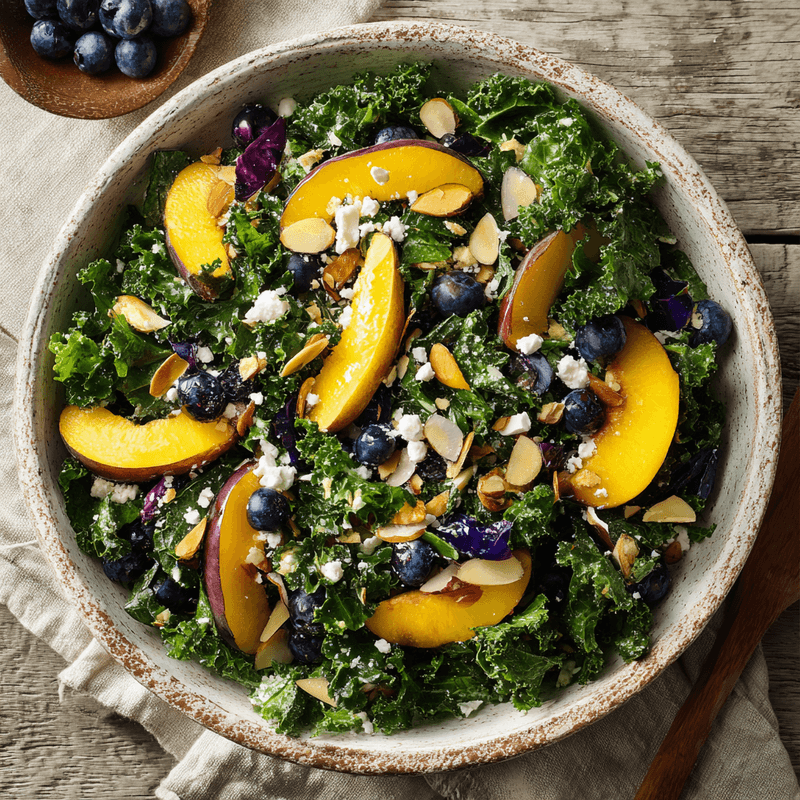
Fresh summer peach blueberry kale salad with honey vinaigrette. Learn to massage kale, balance fruit sweetness, and create perfect texture contrasts.
cookwithlucia.com/recipes/summer-peach-blueberry-kale-salad
There's something magical about building a salad that celebrates the peak of summer produce while mastering the technique of transforming raw kale from tough and bitter to silky and tender. A summer peach blueberry kale salad isn't just about tossing ingredients together—it's about understanding how to coax sweetness from stone fruits, how salt and acid work together to break down fibrous greens, and how to layer textures so every bite offers something different. When you get it right, you'll have leaves that glisten with dressing, fruit that bursts with juice, and a balance of flavors that makes you reach for another forkful before you've finished chewing.
I know raw kale can feel intimidating if you've only encountered it as a tough, chewy green that seems more decorative than delicious. But here's the truth: once you understand the simple technique of massaging kale, you'll transform it into one of the most versatile salad bases in your repertoire. The method works because you're physically breaking down the cell walls, releasing moisture, and creating a tender texture that absorbs dressing beautifully. Combine that with the natural sweetness of ripe summer peaches, the tart pop of fresh blueberries, and a honey vinaigrette that ties everything together, and you've got a dish that works equally well for weekend dinners and family gatherings.
The beauty of this summer peach blueberry kale salad is that once you master the core technique, you can adapt it endlessly. Swap stone fruits with the seasons, change up your nuts or seeds, adjust the acid in your dressing, and you'll never eat the same salad twice. Let me walk you through exactly how to build this dish with confidence, understanding not just what to do, but why each step matters.
The Science Behind the Method
Kale leaves are protected by thick cell walls made of cellulose and contain compounds called glucosinolates that contribute to their characteristic bitter, peppery flavor. When you massage kale with salt and acid, you're doing several things simultaneously: the salt draws out moisture through osmosis, softening the leaves, while also beginning to denature proteins in the cell structure. The mechanical action of your hands physically ruptures those tough cell walls, making the leaves more tender and easier to digest. This process also helps mellow some of those sharper flavor compounds, creating a milder, more palatable green that still retains its earthy character.
The interaction between fruit acids and the kale is equally important in a summer peach blueberry kale salad. Peach juice contains malic and citric acids, while the lemon juice in your dressing adds even more acidity. These acids continue the tenderizing work, breaking down fibrous structures over time. Meanwhile, the natural sugars in the fruit create flavor balance, offsetting any remaining bitterness. The fat in your dressing—whether from olive oil or another source—acts as a carrier for fat-soluble nutrients and flavor compounds, coating your palate and creating that satisfying, rich mouthfeel.
Understanding this science transforms you from someone following a recipe into a cook who can adjust on the fly. If your kale feels especially tough, you know to massage longer or add a bit more salt. If your peaches aren't perfectly ripe, you understand why a touch more honey in the dressing will help balance the flavors. This knowledge is transferable to dozens of other preparations, making you more confident in the kitchen overall.
Tools and Ingredients You'll Need
The beautiful simplicity of a summer peach blueberry kale salad means you won't need specialized equipment. A large mixing bowl is your most important tool—choose one that's bigger than you think you need, as kale is voluminous before it's massaged and you'll want room to work your hands through it without spilling. Glass or stainless steel bowls work best because they won't absorb odors or stains. If you don't have a large bowl, you can work in batches, though this makes the massaging process a bit more tedious.
For the dressing, a small jar with a tight-fitting lid makes emulsification effortless—just shake vigorously and you're done. Alternatively, a small bowl and whisk work perfectly well, though you'll need to whisk more energetically to fully combine the oil and acid. A sharp knife is essential for cutting peaches cleanly without crushing their delicate flesh. A serrated knife can work if your chef's knife isn't razor-sharp, as the sawing motion gets through the skin without requiring as much downward pressure.
For ingredients, seek out lacinato kale (also called dinosaur or Tuscan kale) if possible—its flatter leaves and slightly more tender texture make it ideal for raw preparations, though curly kale works beautifully too with a bit more massaging. Your peaches should yield slightly to gentle pressure and smell fragrant at the stem end. Blueberries should be plump, dry, and uniform in color. For the dressing, extra virgin olive oil provides the best flavor, though a neutral oil works if you prefer a milder taste. Raw honey adds complexity that granulated sugar can't match, and fresh lemon juice is significantly brighter than bottled.
If you're on a budget, don't stress about finding the most expensive olive oil—a mid-range option works fine when it's balanced with other strong flavors. The same goes for nuts or seeds—sliced almonds are economical and delicious, while more expensive options like pecans or candied walnuts add luxury if you want to elevate the dish.
The Method, Step by Step
Begin by preparing your kale, which is the most important step in creating a successful summer peach blueberry kale salad. Strip the leaves from their tough center ribs by holding the stem end in one hand and running your other hand down the rib, pulling the leafy portions away. The ribs are too fibrous to eat raw, so discard them or save for vegetable stock. Tear or chop the leaves into bite-sized pieces—I prefer pieces about two inches across, large enough to feel substantial but small enough to eat comfortably. Wash the kale thoroughly in cold water, then dry it completely using a salad spinner or clean kitchen towels. Any residual water will dilute your dressing and prevent proper massaging.
Place the dry kale in your large bowl and sprinkle it with about half a teaspoon of fine sea salt and a tablespoon of lemon juice. Now comes the transformative part: using your hands, begin squeezing and scrunching the kale as if you're kneading bread dough. Work systematically, grabbing handfuls and really working the leaves between your fingers and palms. You'll feel the leaves beginning to soften and reduce in volume after about two minutes. Continue massaging for three to five minutes total—you'll know you're done when the kale has darkened slightly in color, reduced by about half its original volume, and feels silky rather than waxy. The leaves should glisten and feel tender when you bite into a piece.
While the massaged kale rests, prepare your peaches by cutting them in half along their natural seam, twisting to separate the halves, and removing the pit. Slice each half into thin wedges—about eight slices per peach half creates the ideal balance of visual appeal and eating experience. The thinner your slices, the more peach flavor distributes throughout the summer peach blueberry kale salad, but too thin and they'll break apart. If your peaches are extremely ripe and juicy, you can cut slightly thicker slices for structural integrity.
Create your dressing by combining three tablespoons of olive oil, one and a half tablespoons of fresh lemon juice, one tablespoon of honey, a quarter teaspoon of fine sea salt, and freshly ground black pepper in your jar or bowl. If using a jar, seal it tightly and shake vigorously for thirty seconds until the mixture is fully emulsified and slightly thickened. If whisking, pour the oil in a slow, steady stream while whisking constantly to create a stable emulsion. Taste and adjust—the dressing should taste slightly too acidic and salty on its own, because the kale and sweet fruit will balance it out.
Add the dressing to your massaged kale and toss thoroughly, using your hands or tongs to ensure every leaf is coated. Let this sit for five to ten minutes if you have time—the dressed kale continues to tenderize and the flavors meld beautifully. Just before serving, add your peach slices and fresh blueberries, tossing gently to distribute the fruit without crushing the berries. The goal is to have fruit throughout the salad rather than all settled on top or bottom.
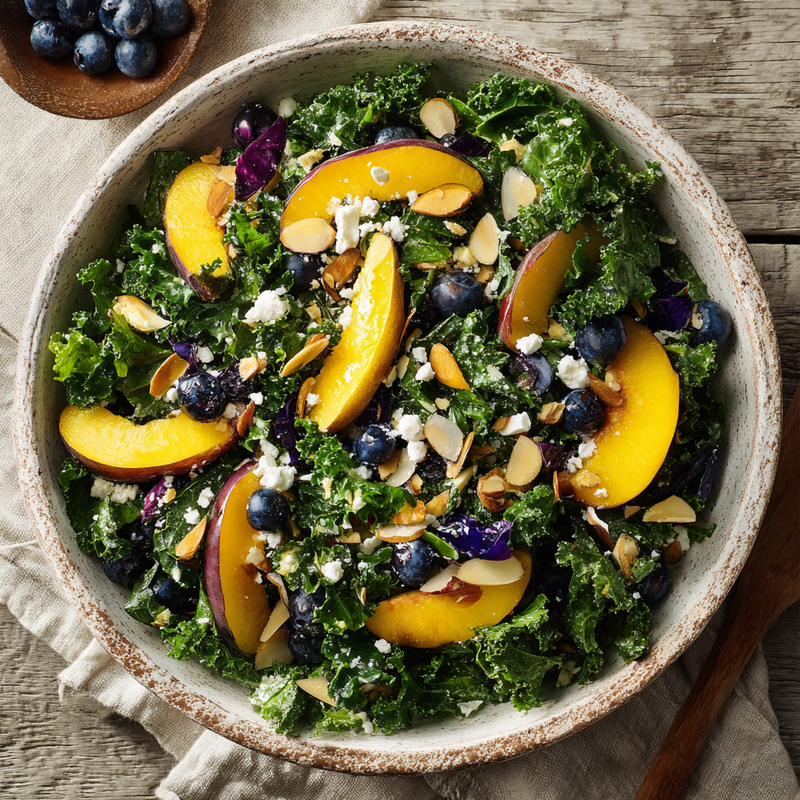
Finish your summer peach blueberry kale salad with textural elements that provide contrast to the tender greens and soft fruit. Toasted nuts or seeds add essential crunch—try sliced almonds toasted until golden, pepitas for a different flavor profile, or sunflower seeds for a nut-free option. A sprinkle of crumbled feta or goat cheese adds tangy creaminess, though the salad is equally delicious without cheese if you prefer a lighter dish. Some thinly sliced red onion or shallot adds sharp bite, while fresh herbs like mint or basil introduce aromatic complexity.
Troubleshooting Guide
If your kale still feels tough and chewy after assembling the salad, you didn't massage it long enough or thoroughly enough. The fix: remove the fruit temporarily, add another small pinch of salt and squeeze of lemon, and massage for another two to three minutes. You can't really over-massage kale for a raw salad, so err on the side of working it more rather than less. In the future, make sure you're really applying pressure and working every leaf, not just lightly tossing it.
When your summer peach blueberry kale salad tastes flat or boring despite following the recipe, the likely culprit is under-seasoning or lack of acid balance. Kale needs more salt than you might expect because of its robust flavor and the dilution effect of its high water content. Add salt in small increments, tossing and tasting after each addition. If it's still flat, add more lemon juice or a splash of apple cider vinegar to brighten everything up. Sometimes a grind of black pepper or pinch of red pepper flakes is the missing element that makes flavors pop.
If your peaches turn brown quickly after cutting, they're oxidizing on contact with air. While this doesn't affect flavor, it's not visually appealing. Toss the cut peaches with a small amount of lemon juice immediately after slicing to slow oxidation. For the best presentation at family gatherings, cut the peaches no more than thirty minutes before serving. You can prepare everything else in advance and add the peaches at the last moment.
When your dressing breaks or separates, it means the emulsion failed—the oil and acid aren't staying combined. This happens when ingredients are at very different temperatures or when you add oil too quickly. To fix a broken dressing, start with a teaspoon of mustard or a tiny splash of water in a clean bowl, then slowly whisk in the broken dressing—the mustard acts as an emulsifier that helps everything come together. For future success, let your oil and lemon juice come to room temperature before combining, and add the oil gradually while whisking constantly.
If the entire salad becomes soggy or wilted, you've dressed it too far in advance. While massaged kale is more resilient than lettuce, it still can't sit in dressing for hours without becoming limp. The solution is to prepare components separately: massage the kale and store it undressed in the refrigerator, keep the dressing in a separate container, and only combine them within an hour of serving. The fruit should be added at the very last moment to prevent it from releasing too much juice and diluting the dressing.
Taking It to the Next Level
For a more complex flavor profile, toast your nuts in a dry skillet with a tablespoon of honey and a pinch of flaky sea salt, creating candied nuts that add sweet-salty crunch. Watch them carefully as they can burn quickly—remove from heat when they're golden and fragrant, then spread on parchment to cool completely. The caramelized coating on these nuts provides textural contrast and an additional layer of sweetness that plays beautifully against the tangy dressing.
Consider adding grilled elements to your summer peach blueberry kale salad for smoky depth. Grilled peach halves develop concentrated sweetness and char marks that add visual drama. Brush the cut sides lightly with oil, place them cut-side down on a hot grill for two to three minutes until marked, then cool and slice. You can also grill halloumi cheese until golden, then cube it for a warm, squeaky element that contrasts with the cool greens.
Experiment with your acid source to create different flavor profiles. White balsamic vinegar adds subtle sweetness and keeps the salad visually bright, while apple cider vinegar contributes fruity notes that complement stone fruits. A small spoonful of Dijon mustard whisked into the dressing adds complexity and helps with emulsification. Fresh ginger grated into the dressing creates an Asian-inspired variation that works wonderfully with the fruit.
For textural variety, add crispy elements like toasted quinoa, roasted chickpeas, or crushed seed crackers. These provide crunch in a different way than nuts, and some add protein to make the salad more substantial. Thinly shaved fennel adds anise notes and crisp texture, while sliced cucumber contributes cooling freshness. Each addition should be intentional—think about what flavor or texture element you want to enhance rather than adding ingredients just for the sake of complexity.
Storing Your Results
The beauty of a summer peach blueberry kale salad is that its components store remarkably well when kept separate. Massaged, undressed kale actually improves over a day in the refrigerator—it continues to tenderize and develops a slightly sweeter flavor as some of the glucosinolates break down. Store it in an airtight container lined with paper towels to absorb any excess moisture. It will keep beautifully for up to three days, making it perfect for meal preparation.
Your dressing stays fresh for up to a week when stored in a sealed jar in the refrigerator. The oil will solidify when cold, so remove it from the refrigerator about thirty minutes before using and shake vigorously to re-emulsify. If you've added fresh herbs or garlic to the dressing, use it within three to four days for the best flavor, as these fresh elements deteriorate more quickly than the base ingredients.
Fruit is the most perishable component, so add it only to the portion you're planning to serve immediately. Whole, unwashed blueberries keep for up to ten days in the refrigerator, while whole peaches should be stored at room temperature until perfectly ripe, then refrigerated and used within two to three days. Cut peaches oxidize and release juice, so they should be sliced fresh for each serving of the salad.
If you must store fully assembled salad, know that it's best consumed within two to three hours. The acid in the dressing will continue to break down the kale, which isn't necessarily bad, but the fruit will release juice that dilutes the dressing and creates a watery pool at the bottom of the bowl. For family gatherings, you can present the massaged, dressed kale in a serving bowl and offer the fruit, nuts, and cheese as toppings that guests can add themselves—this keeps everything at peak freshness and allows for customization.
Common Questions
Can I make this summer peach blueberry kale salad without a salad spinner?
Absolutely—a salad spinner is convenient but not essential. After washing your kale, lay the leaves in a single layer on clean kitchen towels, roll the towel up loosely, and press gently to absorb water. You can also pat each leaf dry individually, though this takes more time. The key is ensuring the kale is completely dry before massaging, as water prevents the salt and acid from working effectively and dilutes your dressing.
How do I adjust this recipe for a larger gathering?
The summer peach blueberry kale salad scales beautifully—simply multiply all ingredients by the number of servings you need. For very large batches, massage the kale in multiple smaller batches rather than one enormous bowl, as you need room to work your hands through the leaves effectively. Increase your dressing by the same proportion, but taste as you go since larger volumes sometimes need slightly less salt per serving. Prepare components the morning of your event and assemble just before serving for the freshest result.
What can I substitute if peaches aren't in season?
The technique works with virtually any stone fruit or firm fruit that provides sweetness and acid balance. Nectarines are the most obvious substitute, requiring no peeling and offering similar flavor. Ripe pears add subtle sweetness with a different texture, while fresh strawberries or raspberries echo the berry element and add tartness. In winter, try roasted butternut squash cubes or dried fruit like apricots or cranberries, though you'll want to adjust the dressing's sweetness level since dried fruit is more concentrated.
Why does my kale taste bitter even after massaging?
Some kale varieties are naturally more bitter, and kale becomes increasingly bitter as it ages or is exposed to heat stress during growing. If you're dealing with particularly bitter leaves, try blanching them for thirty seconds in boiling water, then shocking in ice water and drying thoroughly before massaging—this removes some bitter compounds. Adding more sweet elements to your summer peach blueberry kale salad, like extra honey in the dressing or additional fruit, can balance residual bitterness. Finally, make sure you've removed all the tough center ribs, as these are the most bitter part.
Can I prepare this salad the night before?
For the best texture and flavor, I recommend preparing components separately the night before and assembling two to three hours before serving at most. Massage your kale and store it undressed in the refrigerator. Make your dressing and refrigerate it separately. Wash and dry your blueberries, toast your nuts, and prep any cheese or other toppings. The morning of serving, slice your peaches, dress your kale, and let it sit at room temperature for about thirty minutes. Add the peaches, blueberries, and toppings right before guests arrive for a summer peach blueberry kale salad that tastes freshly made.
How can I make this salad more filling for a main course?
Transforming this side salad into a satisfying main course is simple—add protein and increase the substantial elements. Grilled chicken breast sliced over the top is classic and delicious, while chickpeas or white beans add plant-based protein and creamy texture. Quinoa tossed with the massaged kale adds nutty flavor and makes the salad more substantial without overwhelming the fresh fruit flavors. Increase the nuts or seeds to a half cup for added richness and staying power, and consider adding avocado slices for healthy fats that make the meal more satiating.
Summer Peach Blueberry Kale Salad
A vibrant summer salad featuring massaged kale, fresh peaches, blueberries, and a honey lemon vinaigrette. The perfect balance of sweet fruit, tender greens, and crunchy toppings.
Prep Time
20 min
Cook Time
5 min
Total Time
25 min
Servings
4 servings
Ingredients
For 4 servings
- 1 large bunch lacinato kale (about 8 cups torn leaves)
- 3/4 teaspoon fine sea salt, divided
- 3 tablespoons fresh lemon juice, divided
- 3 tablespoons extra virgin olive oil
- 1 tablespoon raw honey
- 1/4 teaspoon freshly ground black pepper
- 2 large ripe peaches, sliced into thin wedges
- 1 cup fresh blueberries
- 1/3 cup sliced almonds, toasted
- 1/4 cup crumbled feta cheese (optional)
- 2 tablespoons thinly sliced red onion (optional)
Instructions
- 1
Prepare the kale
Strip kale leaves from their tough center ribs by running your hand down each stem. Tear or chop the leaves into bite-sized pieces about two inches across. Wash thoroughly in cold water and dry completely using a salad spinner or clean kitchen towels.
- 2
Massage the kale
Place the dry kale in a large mixing bowl. Sprinkle with 1/2 teaspoon of fine sea salt and 1 tablespoon of lemon juice. Using your hands, squeeze and scrunch the kale as if kneading dough for 3 to 5 minutes. The kale should darken in color, reduce by half in volume, and feel silky and tender.
- 3
Toast the almonds
While the kale rests, heat a dry skillet over medium heat. Add sliced almonds and toast for 3 to 4 minutes, stirring frequently, until golden brown and fragrant. Remove from heat immediately and transfer to a plate to cool.
- 4
Prepare the peaches
Cut peaches in half along their natural seam, twist to separate the halves, and remove the pit. Slice each peach half into thin wedges, about 8 slices per half. If peaches are very ripe, you can cut slightly thicker slices for better structure.
- 5
Make the dressing
In a jar with a tight-fitting lid or a small bowl, combine 3 tablespoons olive oil, remaining 2 tablespoons lemon juice, honey, remaining 1/4 teaspoon salt, and black pepper. Shake vigorously for 30 seconds or whisk constantly until fully emulsified and slightly thickened.
- 6
Dress the kale
Pour the dressing over the massaged kale and toss thoroughly using your hands or tongs to ensure every leaf is coated. Let the dressed kale sit for 5 to 10 minutes to allow flavors to meld and the kale to continue tenderizing.
- 7
Add fruit and toppings
Just before serving, add the peach slices and fresh blueberries to the dressed kale, tossing gently to distribute the fruit without crushing the berries. The fruit should be evenly distributed throughout the salad.
- 8
Finish and serve
Transfer the salad to a serving bowl or individual plates. Top with toasted almonds, crumbled feta cheese if using, and thinly sliced red onion if desired. Serve immediately for the best texture and flavor, or within 2 to 3 hours of assembly.
Nutrition Facts
Per serving (estimated)
245 calories
Calories
28g
Carbs
7g
Protein
14g
Fat
5g
Fiber
420mg
Sodium
16g
Sugar