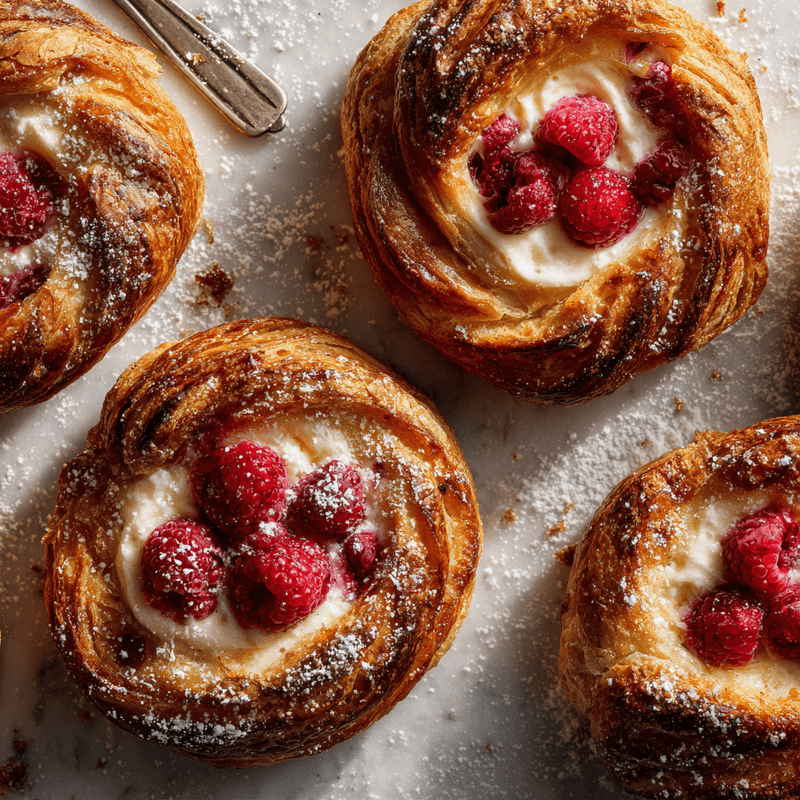
Sourdough Discard Raspberry Cream Cheese Danishes Recipe
Master buttery sourdough discard raspberry cream cheese danishes with this detailed guide. Learn lamination techniques, filling tips, and troubleshooting.
cookwithlucia.com/recipes/sourdough-discard-raspberry-cream-cheese-danishes
There's something profoundly satisfying about transforming humble sourdough discard into pastries worthy of a professional bakery window. Sourdough discard raspberry cream cheese danishes represent the pinnacle of home baking—a marriage of tangy fermented dough, lush cream cheese filling, and jewel-bright raspberries that captures both tradition and innovation. The first time I encountered a truly exceptional danish, the layers shattered audibly at the first bite, revealing a tender, slightly chewy interior perfumed with that distinctive sourdough tang. The cream cheese filling was neither too sweet nor too savory, and the raspberries added bursts of tart brightness that cut through the richness perfectly.
I won't mislead you: these sourdough discard raspberry cream cheese danishes require dedication. You'll need to plan ahead, work butter into dough, chill at intervals, and exercise patience. But every moment invested pays dividends in flaky, golden pastries that fill your kitchen with an aroma so intoxicating your neighbors might knock on your door. This isn't a quick weekday breakfast project—it's a weekend endeavor that rewards you with bakery-quality results and the deep satisfaction of mastering a genuinely challenging technique.
This guide will walk you through every stage, from understanding why your butter must be the exact right temperature to recognizing the visual cues that tell you your lamination is perfect. Whether you're an experienced baker looking to elevate your sourdough discard game or someone ready to tackle laminated dough for the first time, you'll find the detailed explanations and troubleshooting advice you need to succeed. Let's create something extraordinary together.
The Origins and History
The danish pastry, despite its name, traces its origins to Austria in the early 19th century. When Viennese bakers traveled to Denmark during a bakery workers' strike, they brought their laminated dough techniques with them. Danish bakers embraced and refined these methods, eventually creating what we now recognize as the danish pastry—lighter and more delicate than its Austrian ancestor, with a higher ratio of butter to flour that produces those impossibly tender layers.
As danish pastries spread across Europe and eventually to North America, regional variations flourished. Scandinavian versions often feature cardamom in the dough and almond paste fillings, while American interpretations embraced cream cheese and fruit combinations. The raspberry and cream cheese pairing became particularly beloved in the United States during the mid-20th century, when cream cheese's popularity soared and home bakers sought fruit fillings that wouldn't make pastries soggy.
The sourdough discard variation is a thoroughly modern innovation, born from the recent sourdough revival and the desire to minimize waste. Incorporating sourdough starter discard into danish dough adds complexity—a subtle tang that balances the sweetness and a depth of flavor that makes these pastries more interesting than their conventional counterparts. The wild yeasts and bacteria in the discard contribute character without making the dough excessively sour, since the discard is typically unfed and less active.
Today's home bakers have elevated sourdough discard raspberry cream cheese danishes into an art form, sharing techniques online and pushing the boundaries of what home ovens can achieve. What was once the exclusive domain of professional bakeries now graces kitchen tables at family gatherings and weekend brunches, proof that dedication and good instruction can yield restaurant-quality results.
Understanding the Flavor Profile
Sourdough discard raspberry cream cheese danishes present a sophisticated balance of contrasting flavors that work in remarkable harmony. The base dough carries a gentle tang from the sourdough discard—not aggressively sour, but present enough to add dimension and cut through the richness of the butter. This subtle acidity makes the pastry more complex and less cloying than sweet danishes made with standard yeast dough.
The cream cheese filling contributes both richness and a delicate savory note that grounds the pastry. When properly sweetened, it tastes luxurious without being candy-sweet, with a slight tang that echoes the sourdough and creates a cohesive flavor thread throughout the danish. The raspberries introduce bright, tart fruitiness that provides crucial contrast—each berry bursts with acidity and natural sweetness that refreshes your palate between bites of buttery pastry.
The texture journey is equally important to the experience. Your teeth should meet initial resistance from the crisp, golden exterior before breaking through layers that alternately shatter and yield. The interior should be tender with a slight chew, never doughy or dense. The cream cheese filling should be smooth and spreadable, neither runny nor stiff, while the raspberries maintain some structural integrity rather than dissolving completely into jam. When these elements come together perfectly, each bite delivers crunch, tenderness, creaminess, and fruit in a sequence that keeps you reaching for another piece.
Essential Ingredients Explained
The sourdough discard serves as both flavoring agent and dough conditioner in these pastries. Use unfed discard that's been refrigerated for one to seven days—the timing isn't critical, but older discard contributes more tang. The acids in the discard help tenderize the gluten network, making the final pastry more delicate. Don't worry if your discard has a layer of liquid on top; just stir it back in before measuring. If you maintain a whole wheat or rye starter, the discard will work perfectly, though it may add a subtle nutty flavor.
Butter quality directly determines your success with sourdough discard raspberry cream cheese danishes. European-style butter with 82-84% butterfat creates superior layers because it contains less water than standard American butter. The lower moisture content means less steam during baking, which allows the layers to stay distinct rather than melding together. Use unsalted butter so you can control the salt level precisely. The butter must be cold but pliable—firm enough to hold its shape during lamination but soft enough to roll without shattering into chunks.
All-purpose flour with 10-12% protein content provides the ideal balance for laminated dough. Bread flour contains too much protein and will make your danishes tough and chewy rather than tender and flaky. Cake flour lacks sufficient structure to support the layers. Look for unbleached all-purpose flour from reputable brands, as bleaching can affect how the flour absorbs moisture and develops gluten.
Full-fat cream cheese creates the lush, stable filling these pastries deserve. Low-fat versions contain more water and stabilizers that can make the filling weep or separate during baking. Bring the cream cheese to room temperature before mixing—cold cream cheese won't incorporate smoothly and will form lumps. Some bakers add a small amount of cornstarch to the filling to prevent it from becoming too liquid during baking, which is especially helpful in warmer climates.
Fresh raspberries provide the best flavor and texture, but frozen raspberries work beautifully if used straight from the freezer without thawing. Thawed raspberries release too much liquid and can make your pastries soggy. If using frozen berries, place them on the pastries while still frozen and expect slightly longer baking times. Some bakers toss the raspberries with a tiny amount of cornstarch to absorb excess juice.
Whole milk in the dough adds fat and protein that contribute to browning and flavor. The milk proteins caramelize during baking, creating that beautiful golden color and rich taste. You can substitute with plant-based milk if needed, though the flavor will be slightly different. Eggs serve multiple functions: the yolks add richness and color to both the dough and the cream cheese filling, while the egg wash on top creates that glossy, professional bakery finish.
Granulated sugar sweetens both the dough and filling without adding moisture or interfering with structure. Fine sea salt or kosher salt enhances all the other flavors—even the sweetness tastes sweeter when properly salted. Vanilla extract in both the dough and the cream cheese filling adds warmth and depth, making the overall flavor profile more complex and interesting.
Mastering the Technique
Creating sourdough discard raspberry cream cheese danishes begins with mixing a enriched dough that's soft and pliable but not sticky. Combine your sourdough discard with milk, eggs, sugar, and flour until the mixture forms a shaggy mass, then knead until smooth and elastic. This dough requires less kneading than bread dough because you're not aiming for maximum gluten development—over-kneading will make your finished pastries tough. The dough should feel soft, slightly tacky, and spring back gently when poked.
The first chill is crucial for lamination success. Roll your dough into a rectangle, wrap it tightly, and refrigerate for at least two hours or overnight. This rest period allows the gluten to relax completely and the dough to firm up, making it easier to roll evenly. Meanwhile, prepare your butter block by pounding cold butter between parchment paper until it forms a flat rectangle about half the size of your dough. The butter should be cold but pliable—bendable without cracking. If it's too hard, it will shatter through the dough layers; too soft, and it will squeeze out the sides.
Lamination—the process of folding butter into dough—creates the signature flaky layers. Roll your chilled dough into a large rectangle, place the butter block on one half, and fold the other half over like closing a book. Seal the edges, then roll the package into a long rectangle and perform your first fold. The traditional method uses a letter fold (like folding a business letter into thirds) or a book fold. Each fold multiplies the layers exponentially: three folds create 27 layers, four folds create 81 layers. Between each fold, refrigerate the dough for 30-45 minutes to keep the butter from melting.
Shaping requires a delicate touch and sharp tools. Roll your laminated dough into a large rectangle about a quarter-inch thick, then cut it into squares. The sharper your knife or pastry cutter, the cleaner the cuts and the better your layers will separate during baking. Dull blades compress the layers together, preventing them from puffing properly. Make diagonal cuts from each corner toward the center, leaving the middle intact, then fold alternating points to the center to create the classic danish windmill shape.
The final proof happens at cool room temperature, not in a warm proving environment. Because the dough contains so much butter, excessive warmth will melt the butter layers and ruin your lamination. Let the shaped danishes rest for 45-60 minutes until slightly puffy but not doubled. They should look relaxed and show a slight increase in size. Just before baking, pipe or spoon your cream cheese filling into the center, add raspberries, and brush the exposed dough with egg wash. Bake at a high temperature initially to create steam that puffs the layers, then reduce the heat to finish cooking the interior without burning the exterior.
Common Pitfalls and How to Fix Them
The most frequent disaster with sourdough discard raspberry cream cheese danishes is butter leakage during baking. If you see puddles of melted butter in your oven, your butter was either too soft during lamination or your dough became too warm. The butter should remain distinct from the dough in firm layers until it hits the oven heat. To prevent this, work quickly during lamination, chill thoroughly between folds, and don't skip refrigeration steps even if you're short on time. If your kitchen is very warm, work on a chilled marble slab and refrigerate your rolling pin between sessions.
Dense, doughy pastries instead of flaky ones usually result from insufficient lamination or compressed layers. Make sure you're rolling the dough evenly—thick spots in some areas and thin spots in others prevent uniform layer development. Use consistent, firm pressure with your rolling pin and roll from the center outward. When cutting the shaped danishes, use a sharp knife or pizza cutter and cut straight down without sawing, which seals the edges and prevents the layers from separating during baking.
If your cream cheese filling runs out during baking and creates a mess, you've likely used too much filling or it was too thin. The filling should be thick enough to hold its shape when piped—about the consistency of frosting. Add a tablespoon of cornstarch to your cream cheese mixture if your kitchen is warm or if you're concerned about spreading. Don't overfill the centers; a generous tablespoon is plenty. The filling expands slightly during baking, so what looks sparse when you pipe it will look perfect when finished.
Pale, anemic-looking danishes that refuse to brown properly indicate an oven that's too cool or insufficient egg wash. Danish pastries need high heat to caramelize properly and develop color. Preheat your oven thoroughly—give it an extra 10-15 minutes beyond when it signals it's ready. Apply egg wash generously, making sure to cover all exposed dough surfaces. For extra color, brush with egg wash twice: once before the final proof and again just before baking.
Soggy bottoms plague many home bakers attempting these pastries. This happens when filling leaks onto the pan during baking or when the oven isn't hot enough to set the bottom layers quickly. Bake your sourdough discard raspberry cream cheese danishes on the middle or lower rack, never the top rack. Consider placing your baking sheet on a preheated pizza stone or second baking sheet to provide extra bottom heat. If raspberries tend to leak in your oven, toss them with a tiny bit of cornstarch first to thicken their juices.
Regional Twists Worth Trying
Scandinavian-style sourdough discard raspberry cream cheese danishes incorporate cardamom into the dough, adding an aromatic, slightly citrusy warmth that complements both the tang of the sourdough and the sweetness of the filling. Use freshly ground cardamom if possible—about half a teaspoon for a subtle hint or up to a full teaspoon if you love the flavor. Some Nordic bakers also add a thin layer of almond paste beneath the cream cheese, creating additional richness and a marzipan-like flavor that pairs beautifully with raspberries.
French-inspired versions might replace some of the cream cheese with crème pâtissière (pastry cream) lightened with whipped cream, creating a filling that's more delicate and less tangy. This variation showcases the fruit more prominently since the pastry cream has a more neutral flavor than cream cheese. Finish with a light dusting of powdered sugar or a thin glaze made from powdered sugar and lemon juice for that classic French pastry shop appearance.
Middle Eastern interpretations of these pastries sometimes incorporate rose water into the cream cheese filling and top the danishes with crushed pistachios alongside the raspberries. The floral notes of rose water add unexpected elegance, while pistachios contribute crunch and a gorgeous green color that contrasts with the red berries. Use rose water sparingly—a quarter teaspoon is enough to perfume the filling without making it taste soapy.
American-style variations might add a streusel topping before baking, creating extra texture and sweetness. Mix flour, sugar, and cold butter into coarse crumbs and sprinkle over the danishes just before they go into the oven. The streusel adds a buttery, cookie-like element that makes the pastries even more indulgent, perfect for special weekend breakfasts or gatherings with loved ones.
The Perfect Spread
Sourdough discard raspberry cream cheese danishes shine as the centerpiece of a relaxed weekend brunch spread. Serve them alongside fresh fruit salad featuring berries, melon, and citrus segments to echo the fruit in the pastries while adding freshness. The fruit salad's juicy brightness balances the richness of the danishes and provides a lighter option for guests who might want something less substantial.
Scrambled eggs with fresh herbs or a simple vegetable frittata adds protein and savory balance to the sweet pastries. The eggs ground the meal and make it more satisfying, transforming what could be just dessert into a complete brunch. Consider a Turkish-style egg dish like menemen—eggs cooked with tomatoes, peppers, and spices—which brings warmth and earthiness to the table.
Hot beverages are essential companions to these pastries. Strong Turkish coffee cuts through the buttery richness with its bold flavor and slight bitterness, while mint tea provides a refreshing counterpoint. For those who prefer something creamy, a vanilla-spiced milk tea or a cardamom-infused latte echoes the warming spices that complement the danishes so well. Freshly squeezed orange juice adds bright acidity and vitamin C, making the spread feel complete and balanced.
Consider adding a savory element like labneh with za'atar and olive oil, served with fresh vegetables and flatbread. This gives guests who prefer savory options something substantial while complementing the tangy elements in the sourdough discard raspberry cream cheese danishes. The variety ensures everyone finds something they love, and the mix of sweet and savory creates a more interesting and memorable meal.
Keeping and Reheating
Freshly baked sourdough discard raspberry cream cheese danishes taste best within a few hours of coming out of the oven, when the contrast between crispy exterior and tender interior is most pronounced. However, they remain delicious for up to two days when stored properly at room temperature. Place cooled pastries in an airtight container with parchment paper between layers to prevent sticking. Don't refrigerate them unless your kitchen is extremely warm, as refrigeration makes the pastry tough and dampens the flaky texture.
These danishes actually benefit from a brief rest after baking—they're almost too delicate when piping hot, and letting them cool for 20-30 minutes allows the filling to set slightly and the flavors to develop. The sourdough tang becomes more noticeable as the pastries cool, and the raspberry flavor intensifies. Many bakers find that danishes eaten a few hours after baking taste more balanced and complex than those consumed immediately.
For longer storage, freeze unbaked danishes after shaping but before the final proof. Arrange them on a parchment-lined baking sheet and freeze until solid, then transfer to freezer bags or containers. They'll keep for up to three months. When you're ready to bake, arrange frozen danishes on a baking sheet, let them proof at room temperature until puffy (this takes longer than fresh danishes, usually 90-120 minutes), add the filling and egg wash, and bake as directed. This method gives you fresh-baked pastries whenever you want them without the full day's work.
To refresh day-old sourdough discard raspberry cream cheese danishes, place them in a 300°F oven for 5-7 minutes to crisp the exterior and warm the filling. Don't microwave them, as this makes the pastry soggy and tough. If the danishes seem a bit dry, a light brush of simple syrup before reheating adds moisture and shine. The reheated pastries won't be quite as spectacular as fresh-baked ones, but they'll be vastly better than room-temperature day-old pastries.
Your Questions Answered
Can I make the dough in advance and refrigerate it overnight?
Absolutely, and many bakers prefer this method because it breaks the work into manageable stages. After completing your lamination folds, wrap the dough tightly in plastic wrap and refrigerate for up to 24 hours before rolling and shaping. The extended rest allows the gluten to relax completely, making the dough easier to roll, and some bakers report that the flavor develops more complexity with the longer fermentation time. Just make sure the dough is well-wrapped so it doesn't dry out or absorb refrigerator odors.
What if I don't have a stand mixer—can I make this by hand?
You can absolutely make sourdough discard raspberry cream cheese danishes by hand, though it requires more physical effort. Mix the dough ingredients in a large bowl until they come together, then turn out onto a clean counter and knead for 8-10 minutes until smooth and elastic. The technique is identical to making any enriched dough by hand; you'll just work a bit harder. Some bakers actually prefer hand mixing because they can feel the dough's texture developing and know precisely when it's ready.
Can I use other fruits instead of raspberries?
Raspberries work beautifully because they're tart and don't release excessive liquid, but you can experiment with other fruits. Blackberries, blueberries, or sliced strawberries all work well. Stone fruits like apricots or plums should be sliced thin and patted very dry to prevent sogginess. Avoid fruits with high water content like fresh pineapple or watermelon, which will make your pastries wet. Whatever fruit you choose, make sure it's slightly tart to balance the sweet cream cheese filling.
How can I tell when the danishes are perfectly baked?
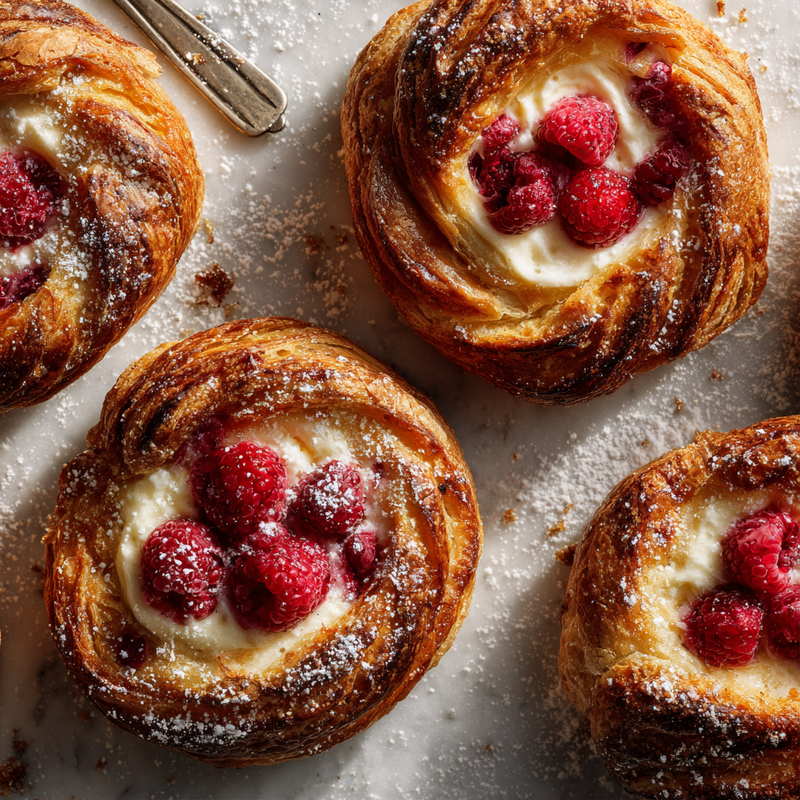
Properly baked sourdough discard raspberry cream cheese danishes should be deep golden brown on all exposed surfaces—not pale yellow, but genuinely golden. The layers should be visible along the cut edges, and the pastry should feel crisp when you tap it gently. The cream cheese filling should look set rather than liquid, though it may still jiggle slightly in the center. Internal temperature should reach around 190-200°F if you want to be precise. If the tops are browning too quickly before the pastries are cooked through, tent them loosely with aluminum foil.
Can I make a larger batch and freeze the baked danishes?
While you can freeze baked danishes, I recommend freezing them unbaked instead for better quality. Baked and frozen danishes lose some of their flaky texture and crispness when thawed and reheated. If you do freeze baked ones, wrap them individually in plastic wrap and then in foil, and freeze for up to one month. Thaw overnight in the refrigerator and reheat in a 300°F oven for 8-10 minutes. The texture won't match fresh-baked, but they'll still taste delicious.
What's the best way to scale this recipe for a large gathering?
The recipe scales well, but your refrigerator space becomes the limiting factor since the dough needs frequent chilling. If you're making multiple batches, prepare the doughs on different days or enlist a second refrigerator. Alternatively, make one large batch of dough and divide it after lamination, freezing half as detailed earlier. For serving a crowd, you might also consider making smaller danishes—cut the dough into smaller squares and adjust the baking time down by a few minutes. Smaller pastries bake more evenly and give guests the option to try multiple pieces.
Sourdough Discard Raspberry Cream Cheese Danishes
Buttery, flaky laminated pastries made with sourdough discard, filled with tangy cream cheese and fresh raspberries for an elegant breakfast or brunch treat.
Prep Time
45 min
Cook Time
18 min
Total Time
8h 3m
Servings
12 danishes
Ingredients
For 12 danishes
- 1 cup (227g) sourdough discard, unfed and at room temperature
- 3/4 cup (180ml) whole milk, lukewarm
- 2 large eggs, room temperature
- 1/4 cup (50g) granulated sugar
- 3 1/2 cups (420g) all-purpose flour
- 1 1/2 teaspoons fine sea salt
- 2 teaspoons vanilla extract
- 1 cup (226g) unsalted European-style butter, cold
- 8 ounces (226g) full-fat cream cheese, room temperature
- 1/4 cup (50g) granulated sugar, for filling
- 1 large egg yolk
- 1 teaspoon vanilla extract, for filling
- 1 tablespoon cornstarch
- 1 1/2 cups (180g) fresh raspberries
- 1 large egg beaten with 1 tablespoon milk, for egg wash
- 2 tablespoons powdered sugar, for dusting (optional)
Instructions
- 1
Mix the dough
In the bowl of a stand mixer fitted with the dough hook, combine sourdough discard, lukewarm milk, eggs, sugar, flour, salt, and vanilla extract. Mix on low speed until the ingredients come together into a shaggy dough, about 2 minutes. Increase to medium speed and knead for 5-6 minutes until the dough is smooth, elastic, and slightly tacky but not sticky. The dough should pull away from the sides of the bowl and spring back when poked gently.
- 2
First chill
Turn the dough out onto a lightly floured surface and shape it into a rough rectangle. Wrap tightly in plastic wrap and refrigerate for at least 2 hours or up to overnight. This rest period allows the gluten to relax and the dough to firm up, making lamination much easier. While the dough chills, prepare your butter block.
- 3
Prepare butter block
Place the cold butter between two sheets of parchment paper. Using a rolling pin, pound and roll the butter into a rectangle approximately 6 by 8 inches. The butter should be cold but pliable—it should bend without cracking. If it becomes too soft, refrigerate for 10-15 minutes. If it's too hard and shatters, let it sit at room temperature for a few minutes.
- 4
Laminate the dough
Roll the chilled dough into a large rectangle approximately 10 by 16 inches. Place the butter block on one half of the dough, leaving a small border around the edges. Fold the other half of the dough over the butter like closing a book, and press the edges to seal completely. Roll this package into a long rectangle about 10 by 20 inches, then perform a letter fold by folding the bottom third up and the top third down. Wrap in plastic and refrigerate for 30-45 minutes. Repeat this rolling and folding process two more times, chilling between each fold, for a total of three folds.
- 5
Make cream cheese filling
In a medium bowl, beat together the room-temperature cream cheese, sugar, egg yolk, vanilla extract, and cornstarch until completely smooth and creamy with no lumps. The mixture should be thick enough to hold its shape when piped—about the consistency of frosting. Cover and refrigerate until ready to use.
- 6
Roll and cut dough
After the final fold and chill, roll the laminated dough into a large rectangle approximately 12 by 18 inches and about 1/4 inch thick. Using a sharp knife or pizza cutter, cut the dough into 12 equal squares (approximately 4 by 4 inches each). Make diagonal cuts from each corner toward the center of each square, stopping about 1 inch from the middle, creating four triangular flaps.
- 7
Shape the danishes
Working with one square at a time, fold alternating points to the center, creating a windmill or pinwheel shape. Press the points firmly into the center to seal. Transfer shaped danishes to parchment-lined baking sheets, spacing them about 3 inches apart. Cover loosely with plastic wrap and let proof at cool room temperature for 45-60 minutes until slightly puffy but not doubled in size.
- 8
Fill and apply egg wash
Preheat oven to 400°F (200°C). Press down gently in the center of each danish to create a well for the filling. Pipe or spoon about 1-2 tablespoons of cream cheese filling into the center of each danish. Place 3-4 fresh raspberries on top of the cream cheese filling. Brush all exposed dough surfaces generously with egg wash, being careful not to let it pool in the creases.
- 9
Bake the danishes
Bake for 8 minutes at 400°F, then reduce the oven temperature to 350°F (175°C) without opening the door. Continue baking for 10-12 more minutes until the danishes are deep golden brown and the layers are visibly separated. The cream cheese filling should be set but may still jiggle slightly. Remove from the oven and let cool on the baking sheet for 5 minutes before transferring to a wire rack.
- 10
Cool and serve
Allow the danishes to cool for at least 15-20 minutes before serving—this lets the filling set properly and allows the flavors to develop. If desired, dust lightly with powdered sugar just before serving. The danishes are best enjoyed within a few hours of baking when the contrast between the crispy exterior and tender interior is most pronounced, but they remain delicious for up to two days when stored in an airtight container at room temperature.
Nutrition Facts
Per serving (estimated)
385 calories
Calories
42g
Carbs
8g
Protein
21g
Fat
2g
Fiber
340mg
Sodium
12g
Sugar