Pineapple Chicken Rice Bowl (Better Than Takeout!)
Master this restaurant-quality Pineapple Chicken Rice Bowl at home! Sweet, savory, and packed with flavor. Complete guide with pro tips and techniques.
cookwithlucia.com/recipes/pineapple-chicken-rice-bowl-better-than-takeout
There's something magical about the way sweet pineapple mingles with savory chicken, creating a dance of flavors that turns a simple rice bowl into something extraordinary. This combination has delighted diners across multiple cuisines for generations, from Asian-inspired stir-fries to tropical fusion plates. The contrast between caramelized edges of juicy pineapple and tender, well-seasoned chicken creates a symphony that makes every bite interesting.
I'll never forget tasting an exceptional version of this dish at a small family-run restaurant where the chef had perfected the balance over decades. The chicken was impossibly tender, the pineapple had that perfect char on the edges while staying juicy inside, and the sauce clung to every grain of rice without making it soggy. That experience taught me that great pineapple chicken rice bowls aren't just about throwing ingredients together—they're about understanding how each component should be prepared to contribute its best qualities to the final dish.
I won't lie to you: making a pineapple chicken rice bowl that truly rivals your favorite takeout spot requires attention to detail and a willingness to master a few techniques. But here's what I promise—every minute you invest in learning the proper method will pay dividends for years to come. This isn't a quick weeknight shortcut; it's a complete guide to understanding the dish from the inside out, so you can make it perfectly every single time and even adapt it to your preferences.
This is your roadmap to mastering a dish that will become a regular request at family gatherings and weekend dinners. We're going deep into technique, ingredient selection, and the small details that separate good from truly exceptional.
The Origins and History
The pairing of pineapple with savory proteins has roots in multiple culinary traditions, though it gained particular prominence in Chinese-American cuisine during the mid-20th century. Sweet and sour dishes featuring pineapple became staples at restaurants catering to Western palates that craved the exotic with familiar comfort. These dishes represented an early form of fusion cooking, adapting traditional Chinese techniques to incorporate ingredients that were becoming more available in American markets.
Interestingly, while pineapple chicken became synonymous with American Chinese takeout, similar combinations appear in Hawaiian regional cuisine, Southeast Asian cooking, and even Caribbean traditions. Each culture brought its own spin: Hawaiians emphasized the natural sweetness of locally grown pineapple with minimal sauce, Thai cooks added fish sauce and chili heat, and Chinese-American restaurants developed the thick, glossy sauce that many people know and love. The rice bowl format itself is deeply rooted in Asian food culture, where a balanced meal served over rice provides both sustenance and satisfaction.
In modern home kitchens, the pineapple chicken rice bowl has evolved beyond its takeout origins. Home cooks have started using fresh pineapple instead of canned, reducing sugar content, and incorporating more vegetables for nutritional balance. The dish has become a canvas for creativity while maintaining its essential character: that irresistible combination of sweet fruit, savory protein, and perfectly cooked rice that makes you reach for just one more bite. Understanding this evolution helps us appreciate why certain techniques matter and how we can honor the dish's heritage while making it our own.
Understanding the Flavor Profile
A truly exceptional pineapple chicken rice bowl delivers a complex flavor experience that hits multiple taste receptors simultaneously. The sweetness comes not just from added sugars but from the natural fruit sugars in pineapple that intensify when caramelized under high heat. This sweetness is balanced by savory elements: soy sauce provides umami depth, ginger adds warming spice, and garlic contributes its characteristic pungency. When these flavors are properly balanced, no single element dominates—instead, they create a harmonious whole where you can taste everything yet nothing overpowers.
The sauce in a pineapple chicken rice bowl should have a gentle tanginess that keeps the sweetness from becoming cloying. This typically comes from rice vinegar or a squeeze of citrus, which brightens the entire dish and makes it feel lighter despite its richness. There's often a subtle savory-sweet undercurrent from ingredients like soy sauce or coconut aminos that adds complexity beyond simple sugar and salt. The overall effect should make you want another bite immediately after finishing one—that's the sign of properly balanced flavors.
Texture plays an equally important role in the experience. The chicken should be tender and juicy with slightly crispy edges from proper searing. Pineapple pieces should have caramelized surfaces that provide textural contrast to their juicy interiors. The rice needs to be fluffy with distinct grains that soak up sauce without becoming mushy. When you assemble your bowl, each forkful should include multiple textures—the softness of rice, the bite of chicken, the juiciness of pineapple, and perhaps the crunch of fresh vegetables or cashews.
Essential Ingredients Explained
The chicken you choose fundamentally determines the success of your pineapple chicken rice bowl. Boneless, skinless chicken thighs are my top recommendation because their higher fat content keeps them moist during cooking and they're nearly impossible to dry out. Chicken breast works if you prefer leaner meat, but requires more careful attention to avoid overcooking. Look for organic or naturally raised chicken when possible—the meat has better flavor and texture. Cut your chicken into uniform bite-sized pieces, approximately one inch cubes, so they cook evenly and are easy to eat with rice.
Fresh pineapple versus canned makes a world of difference in the final dish. Fresh pineapple contains enzymes that tenderize meat naturally and provides bright, vibrant flavor that canned versions simply cannot match. Choose a pineapple that's golden yellow on the outside with a slight give when pressed and a sweet aroma at the base. You want to cut it into chunks about the same size as your chicken pieces. If fresh pineapple is truly unavailable, choose canned pineapple packed in juice rather than syrup, and drain it thoroughly before using. The excess liquid from canned fruit can dilute your sauce and prevent proper caramelization.
Soy sauce provides the essential umami foundation that makes this dish deeply satisfying rather than just sweet. Use naturally brewed soy sauce rather than chemical versions—the flavor difference is substantial. For those avoiding soy, coconut aminos make an excellent substitute with a slightly sweeter, less salty profile. Rice vinegar adds the crucial acidic balance that prevents the dish from tasting one-dimensional. Regular white vinegar is too harsh; rice vinegar's gentle sweetness and mild acidity are perfect for this application.
Fresh ginger and garlic are non-negotiable for authentic flavor. Pre-minced versions from jars lack the volatile oils that give these aromatics their characteristic punch. Ginger should be peeled and minced finely or grated on a microplane. Garlic cloves should be freshly minced just before cooking. The jasmine or basmati rice you choose forms the foundation of your bowl, so invest in quality long-grain rice that cooks up fluffy and aromatic. Day-old cooked rice actually works better than fresh because it's drier and won't turn gummy when mixed with sauce.
Cornstarch serves as the secret weapon for creating that restaurant-quality glossy sauce that clings to every ingredient. It also helps create a protective coating on the chicken that keeps it tender and adds slight crispness when seared. Brown sugar or honey provides sweetness that can be adjusted to your preference—start with less and add more rather than making the dish too sweet initially. Sesame oil used as a finishing touch adds nutty depth that makes everything taste more complex and professional.
Mastering the Technique
The foundation of an exceptional pineapple chicken rice bowl begins with proper mise en place—having everything prepped and ready before you turn on the heat. This dish comes together quickly once cooking starts, so you need all ingredients measured, cut, and within arm's reach. Cut your chicken into uniform pieces and pat them completely dry with paper towels; surface moisture is the enemy of a good sear. Toss the chicken pieces with a light coating of cornstarch, salt, and pepper, ensuring each piece is evenly covered. This coating creates a barrier that seals in juices and develops a slightly crispy exterior that adds textural interest.
Heat management separates restaurant-quality results from disappointing home versions. Your pan or wok needs to be screaming hot before the chicken goes in—we're talking visible shimmer when you add oil. Use an oil with a high smoke point like avocado or refined coconut oil. Add chicken in a single layer without overcrowding; work in batches if necessary. Overcrowding drops the pan temperature and causes steaming rather than searing. Let each piece sit undisturbed for 90 seconds to develop a golden-brown crust before flipping. This crust isn't just about appearance—it's where concentrated flavor develops through the Maillard reaction.
Once the chicken is mostly cooked with good color, remove it temporarily and add your aromatics to the pan. The residual heat and oil will be perfect for blooming the flavors of ginger and garlic without burning them. Stir constantly for about 30 seconds until fragrant, then add your pineapple chunks. This is where patience pays off: resist the urge to keep stirring. Let the pineapple sit for a minute or two to develop caramelized edges that add complexity and visual appeal. The natural sugars in the fruit will concentrate and create those beautiful golden-brown spots that make the dish look as good as it tastes.
Sauce construction requires attention to proportions and technique. Mix your sauce ingredients separately before adding them to the pan—this ensures even distribution and prevents clumping. When you pour the sauce into the hot pan with the pineapple, it should immediately bubble and begin to thicken. The cornstarch activates with heat and moisture, transforming thin liquid into a glossy coating. Return the chicken to the pan and toss everything together, ensuring each piece gets coated evenly. The sauce should cling to the ingredients without pooling in the bottom of the pan.
The final assembly stage is where your bowl transforms from a collection of components into a cohesive dish. Start with a generous base of hot, fluffy rice in your serving bowl. The rice should be steaming and fresh, or properly reheated if using day-old rice. Spoon the chicken and pineapple mixture over the rice, making sure to include plenty of that beautiful sauce. The heat from the chicken and sauce will slightly warm the rice, and the rice will absorb some of the sauce, creating flavor throughout rather than just on top. Garnish thoughtfully with fresh herbs, sesame seeds, or sliced green onions for color contrast and fresh flavor notes.
Common Pitfalls and How to Fix Them
One of the most frequent mistakes is using chicken that hasn't been properly dried before cooking, resulting in pieces that steam rather than sear. If you notice your chicken releasing a lot of liquid into the pan and turning gray instead of golden brown, your heat was too low or the chicken was too wet. The fix for next time is simple: always pat chicken dry with paper towels and ensure your pan is fully heated before adding protein. If you're already mid-cook and notice this happening, increase the heat and resist the urge to stir, allowing the liquid to evaporate and the chicken to finally brown.
Overly sweet pineapple chicken rice bowls plague many home cooks who follow recipes that add too much sugar or honey. The pineapple itself contributes substantial sweetness, especially when caramelized, so additional sweeteners should be used judiciously. If your finished dish tastes too sweet, balance it immediately by adding more rice vinegar, a squeeze of lime juice, or even a small splash of soy sauce. The acid and salt will counteract the sweetness without requiring you to start over. For future batches, cut the sugar in half from what the recipe calls for, then taste and adjust upward if needed.
Mushy rice ruins an otherwise perfect pineapple chicken rice bowl faster than almost any other issue. This usually happens when too much sauce pools at the bottom of the bowl or when the rice was overcooked initially. The texture should be fluffy with distinct grains that can absorb sauce without falling apart. If your rice tends to get mushy, try using day-old refrigerated rice that's been properly reheated—it has less surface moisture and maintains its structure better. Also, serve the chicken and pineapple slightly to the side of the rice rather than directly on top, allowing diners to mix according to preference.
Burned garlic creates a bitter undertone that persists throughout the entire dish. Garlic burns quickly because of its small size and sugar content, especially in a hot pan. If you notice your garlic browning too fast, immediately add liquid or other ingredients to stop the cooking process. The prevention strategy is to add garlic after other ingredients have slightly cooled the pan, or to add it alongside liquid components rather than to dry, scorching-hot oil. Remember that garlic continues cooking from residual heat even after you add other ingredients, so it should barely be golden when you move to the next step.
Watery sauce that won't thicken typically results from not mixing the cornstarch properly before adding it to the pan or from insufficient heat. Cornstarch needs to reach a certain temperature to activate its thickening properties. If your sauce remains thin, make sure it's at a full bubble—not just a simmer—and give it another minute or two. If it still won't thicken, mix a teaspoon of cornstarch with a tablespoon of cold water to create a slurry, then stir it into the bubbling sauce. Within 30 seconds, you should see noticeable thickening. Just be careful not to add too much, or you'll end up with sauce that's too gluey.
Regional Twists Worth Trying
The Hawaiian interpretation of pineapple chicken rice bowls emphasizes the natural sweetness of local pineapple with minimal additional seasonings, creating a lighter, more fruit-forward version. Hawaiian cooks often add bell peppers in multiple colors for visual appeal and a slight vegetal crunch. They might use a teriyaki-style sauce that's less thick and more soy-forward than the Chinese-American version, allowing the pineapple to truly shine. Some versions include macadamia nuts for added richness and crunch, creating textural contrast that makes each bite interesting. This approach works beautifully when you have access to exceptionally sweet, ripe pineapple that doesn't need much enhancement.
Thai-inspired versions of this dish incorporate fish sauce for deeper umami, Thai basil for aromatic complexity, and often a touch of chili heat that balances the sweetness. The sauce might include lime juice instead of rice vinegar, creating a brighter, more citrus-forward profile. Some Thai cooks add coconut milk to create a creamier sauce that's less glossy but more indulgent. Fresh cilantro and mint as garnishes add herbaceous notes that make the dish feel lighter despite the richness. If you enjoy layered flavors with a bit of heat, this variation offers exciting complexity.
A Caribbean-inspired approach brings warm spices like allspice and a hint of cinnamon into the marinade, creating a jerk-adjacent flavor profile that pairs wonderfully with pineapple's sweetness. Coconut rice instead of plain white rice adds another layer of tropical flavor that ties the dish together. Some versions include black beans or red beans mixed into the rice for added protein and a beautiful color contrast. Fresh mango might join the pineapple for even more fruit sweetness, while Scotch bonnet pepper sauce on the side allows heat lovers to customize their experience. This version feels festive and bold, perfect for gathering with loved ones.
Korean-influenced pineapple chicken rice bowls incorporate gochujang (Korean chili paste) into the sauce for a spicy-sweet profile with fermented complexity. Kimchi served alongside provides probiotic benefits and cuts through the richness with its tangy, spicy character. Sesame seeds and sesame oil feature more prominently, and the dish might be garnished with crispy seaweed strips for additional umami and texture. The rice is often mixed with a touch of sesame oil and salt, making it flavorful even on its own. This version appeals to those who love bold, spicy flavors with layers of complexity.
The Perfect Spread
A well-composed pineapple chicken rice bowl can certainly stand alone as a complete meal, but thoughtful accompaniments elevate the experience and add nutritional variety. Consider starting with a light, refreshing salad that provides contrast to the richness of the main dish. A simple cucumber salad with rice vinegar, sesame oil, and a touch of sugar cleanses the palate between bites. The cool, crisp texture of cucumber offers relief from the warm, savory bowl, and the mild flavor doesn't compete with the main event.
Steamed or stir-fried vegetables add color, nutrition, and textural variety to your meal. Broccolini or regular broccoli florets work beautifully, as do snap peas, carrots, or bok choy. Keep the seasoning minimal—just a touch of oil and salt—so the vegetables complement rather than compete with the bold flavors of the pineapple chicken rice bowl. If you want to incorporate vegetables directly into the bowl, consider bell peppers, snap peas, or edible pod peas that add crunch and sweetness without overwhelming the dish.
For those who enjoy soup as part of their meal, a simple miso soup or clear broth with scallions and mushrooms provides warmth and umami without filling you up before the main course. The Japanese tradition of serving soup alongside rice dishes creates a satisfying rhythm to the meal. Alternatively, a light coconut soup with lemongrass offers tropical notes that harmonize with the pineapple in your main dish.
Don't overlook the power of simple garnishes and condiments served on the side. Sriracha or sambal oelek allows heat lovers to customize their spice level. Toasted cashews or peanuts add crunch and richness. Fresh herbs like cilantro, Thai basil, or mint provide brightness and aromatic complexity. Lime wedges offer the option to add extra acidity for those who prefer a more tangy profile. These small additions transform a good meal into an interactive experience where everyone can customize their bowl to their exact preferences.
Keeping and Reheating
Proper storage ensures your pineapple chicken rice bowl maintains quality for several days, making it an excellent candidate for meal preparation. Store the chicken and pineapple mixture separately from the rice in airtight containers in the refrigerator. This prevents the rice from absorbing too much sauce and becoming soggy. The chicken mixture will keep well for three to four days, while cooked rice maintains optimal quality for up to five days when properly stored. Make sure everything cools to room temperature before refrigerating, but don't leave it out for more than two hours to maintain food safety.
Interestingly, the flavors in this dish actually deepen and meld overnight, making day-two portions potentially even more delicious than the fresh version. The pineapple continues to release juices that blend with the sauce, creating more complex flavor integration. The chicken absorbs some of the sauce while resting, becoming even more flavorful throughout rather than just coated on the surface. This is one of those happy instances where leftovers improve rather than decline, making it perfect for preparing ahead for busy weeknight dinners.
Reheating requires a gentle approach to preserve texture and prevent drying. The best method is to reheat the chicken and pineapple mixture in a pan over medium-low heat with a tablespoon or two of water or chicken stock. Cover the pan and let the mixture steam gently until heated through, stirring occasionally. This prevents the chicken from drying out and helps revive the sauce's glossy consistency. Microwave reheating works in a pinch—use 50% power in 30-second intervals, stirring between each, until evenly heated. Add a splash of water before microwaving to create steam.
Rice reheats best when you add a tiny bit of moisture back into it. Sprinkle a tablespoon of water over the rice, cover it, and either microwave for one to two minutes or steam it in a covered pan on the stovetop. The added moisture creates steam that revives the rice's fluffy texture without making it mushy. Alternatively, fried rice made from leftover components creates an entirely new dish—add an egg, some vegetables, and additional soy sauce, and you've transformed yesterday's dinner into today's exciting lunch.
Your Questions Answered
Can I make this pineapple chicken rice bowl ahead of time for a family gathering?
Absolutely, and it's actually a smart strategy for stress-free entertaining. Prepare the chicken and pineapple mixture up to a day in advance, then reheat gently while you cook fresh rice or reheat prepared rice. The flavors will have melded beautifully overnight, and you'll only need about fifteen minutes of active work before serving. Keep the components separate until serving time for the best texture, then assemble individual bowls or set up a DIY bowl station where guests can customize their portions with various toppings and garnishes.
What's the best way to cut fresh pineapple for this recipe?
Start by cutting off the top and bottom of the pineapple, then stand it upright and slice away the skin in downward strokes, following the curve of the fruit. Remove any remaining brown "eyes" with the tip of your knife. Cut the pineapple lengthwise into quarters, then slice away the tough core from each quarter. Cut the remaining flesh into bite-sized chunks, roughly one inch in size, so they match your chicken pieces. This ensures even cooking and makes the final dish easier to eat with rice.
Can I substitute chicken with another protein in this pineapple rice bowl?
Definitely—this preparation method works beautifully with shrimp, which actually cooks even faster than chicken. Firm white fish like cod or halibut also works wonderfully, though it's more delicate and requires gentle handling. For plant-based versions, extra-firm tofu that's been pressed and cubed makes an excellent substitute; just ensure you get good caramelization on the tofu for texture contrast. Each protein brings its own character while the pineapple and sauce remain the stars of the show.
Why does my sauce sometimes turn out too thick or too thin?
Sauce consistency depends on the balance between liquid and cornstarch, as well as cooking temperature. If your sauce is too thick, simply whisk in chicken stock or water one tablespoon at a time until you reach the desired consistency. If it's too thin, make a quick slurry with equal parts cornstarch and cold water, then stir it into the bubbling sauce and cook for another minute. Remember that cornstarch needs to reach full boiling temperature to activate its thickening properties, so make sure your sauce is actively bubbling, not just simmering.
How can I reduce the sugar content without sacrificing flavor?
The beauty of this dish is that pineapple provides substantial natural sweetness, especially when properly caramelized. Start by cutting any added sugar in half from what a recipe calls for, then taste before adding more. The caramelization of pineapple concentrates its natural sugars, creating sweetness without added sugar. You can also increase the rice vinegar slightly and add a squeeze of fresh lime juice to brighten flavors without relying on sweetness. The savory elements—soy sauce, garlic, ginger—become more prominent when you reduce sugar, creating a more balanced, sophisticated flavor profile.
What type of rice works best for pineapple chicken rice bowls?
Jasmine rice is my top choice because its subtle floral aroma complements the sweet and savory elements beautifully without competing for attention. The grains cook up fluffy and slightly sticky, perfect for absorbing sauce while maintaining structure. Basmati rice works wonderfully if you prefer longer, more separate grains with a nutty flavor. For a nutritional upgrade, brown jasmine rice or brown basmati provides more fiber and nutrients, though cooking time increases significantly. Whatever rice you choose, rinse it thoroughly before cooking to remove excess starch that can make the finished product gummy rather than fluffy.
Pineapple Chicken Rice Bowl (Better Than Takeout!)
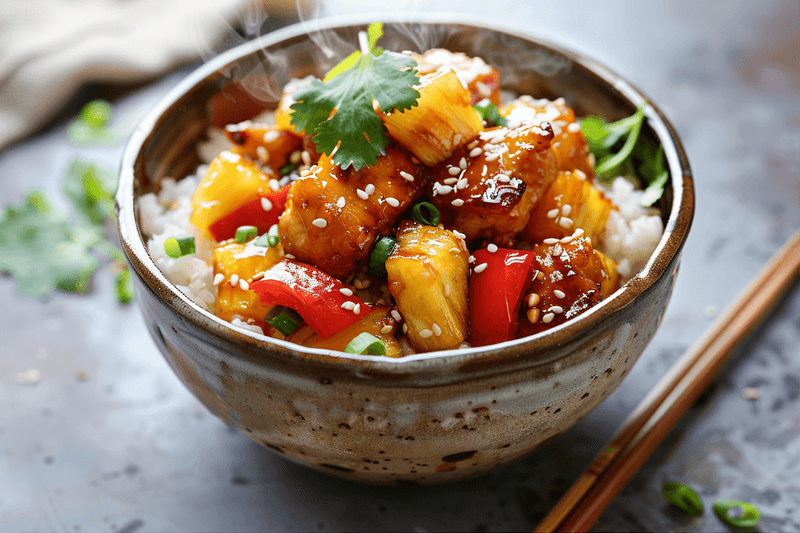
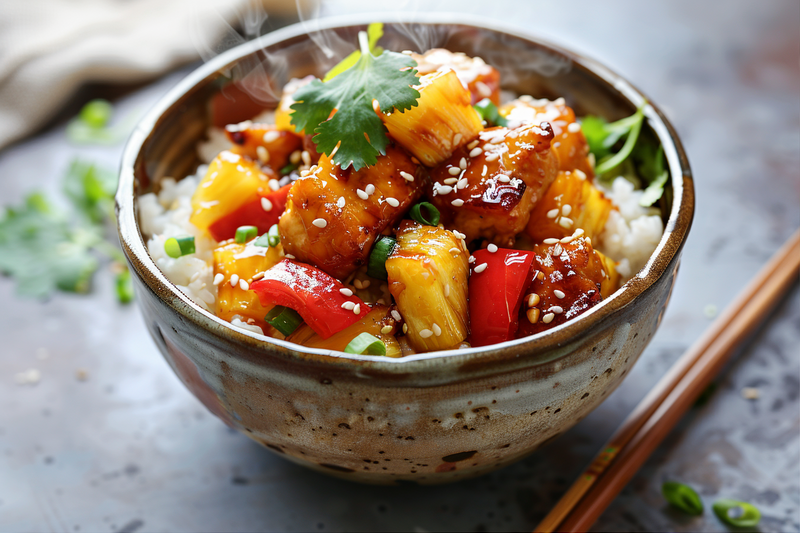
A restaurant-quality pineapple chicken rice bowl with tender chicken, caramelized pineapple, and perfectly balanced sweet-savory sauce served over fluffy rice. Better than any takeout version!
Prep Time
20 min
Cook Time
25 min
Total Time
45 min
Servings
4 servings
Ingredients
For 4 servings
- 1½ pounds boneless, skinless chicken thighs, cut into 1-inch pieces
- 2 cups fresh pineapple, cut into 1-inch chunks
- 3 cups cooked jasmine rice, preferably day-old
- 3 tablespoons soy sauce
- 2 tablespoons rice vinegar
- 2 tablespoons brown sugar or honey
- 1 tablespoon cornstarch, plus 2 tablespoons for coating chicken
- ⅓ cup chicken stock or water
- 3 cloves garlic, minced
- 1 tablespoon fresh ginger, minced
- 2 tablespoons avocado oil or refined coconut oil
- 1 red bell pepper, cut into 1-inch pieces
- 1 teaspoon sesame oil
- ½ teaspoon salt
- ¼ teaspoon black pepper
- 2 green onions, sliced, for garnish
- 1 tablespoon sesame seeds, for garnish
- Fresh cilantro, for garnish (optional)
Instructions
- 1
Prepare the chicken
Pat the chicken pieces completely dry with paper towels and place them in a medium bowl. Add 2 tablespoons of cornstarch, salt, and black pepper, then toss until each piece is evenly coated. This coating will help create a crispy exterior and seal in the juices. Set aside while you prepare the sauce and other ingredients.
- 2
Make the sauce mixture
In a small bowl, whisk together the soy sauce, rice vinegar, brown sugar, 1 tablespoon cornstarch, and chicken stock until the cornstarch is fully dissolved and no lumps remain. Set this sauce mixture aside where you can easily reach it once cooking begins. Having the sauce pre-mixed ensures even distribution and prevents clumping when added to the hot pan.
- 3
Sear the chicken
Heat a large skillet or wok over high heat until very hot, then add 1 tablespoon of oil. Add the chicken pieces in a single layer, working in batches if necessary to avoid overcrowding. Let the chicken cook undisturbed for 90 seconds to develop a golden-brown crust, then flip and cook for another 2-3 minutes until mostly cooked through. Remove the chicken to a plate and set aside.
- 4
Cook aromatics and pineapple
Add the remaining tablespoon of oil to the same pan. Add the minced garlic and ginger, stirring constantly for about 30 seconds until fragrant but not browned. Immediately add the pineapple chunks and bell pepper pieces. Let them sit undisturbed for 1-2 minutes to develop caramelized edges, then stir and cook for another 2 minutes until the pineapple has golden-brown spots and the peppers are slightly softened.
- 5
Add sauce and combine
Give the sauce mixture a quick stir to recombine any settled cornstarch, then pour it into the pan with the pineapple and peppers. The sauce should immediately bubble and begin to thicken. Stir constantly for about 1 minute until the sauce becomes glossy and coats the back of a spoon. Return the cooked chicken to the pan and toss everything together until the chicken is fully coated with sauce and heated through.
- 6
Finish and taste
Remove the pan from heat and stir in the sesame oil for added depth and aroma. Taste the mixture and adjust seasoning if needed—add more soy sauce for saltiness, rice vinegar for tanginess, or a touch more sugar for sweetness. The sauce should be balanced between sweet, savory, and tangy notes with no single flavor dominating.
- 7
Prepare rice
If using day-old rice, reheat it in the microwave with a tablespoon of water, covered, for 1-2 minutes until steaming hot. If using freshly cooked rice, fluff it with a fork to separate the grains. The rice should be hot and fluffy, ready to absorb some of the delicious sauce from the chicken and pineapple mixture.
- 8
Assemble and serve
Divide the hot rice among four serving bowls, creating a generous base in each. Spoon the pineapple chicken mixture over the rice, making sure each bowl gets plenty of sauce, chicken pieces, and pineapple chunks. Garnish with sliced green onions, sesame seeds, and fresh cilantro if desired. Serve immediately while hot for the best texture and flavor experience.
Nutrition Facts
Per serving (estimated)
485 calories
Calories
58g
Carbs
32g
Protein
12g
Fat
3g
Fiber
820mg
Sodium
18g
Sugar