Monte Cristo Breakfast Casserole - Simply Quick Bites
This Monte Cristo Breakfast Casserole transforms the classic sandwich into an easy make-ahead brunch dish. Perfect for family gatherings with layers of flavor!
cookwithlucia.com/recipes/monte-cristo-breakfast-casserole-simply-quick-bites
There's something magical about waking up to the aroma of a golden, bubbling casserole fresh from the oven. The first time I made this Monte Cristo Breakfast Casserole, I was searching for a way to capture all those beloved flavors of the classic Monte Cristo sandwich without the fuss of dipping and frying individual portions. What emerged from my oven that morning was nothing short of spectacular—a custardy, savory-sweet masterpiece with tender bread soaked in a rich egg mixture, layered with succulent turkey and ham alternatives, melted cheese, and a subtle hint of sweetness that makes every bite unforgettable.
I'll never forget serving this Monte Cristo Breakfast Casserole at a family gathering last spring. My aunt, who's notoriously hard to impress in the kitchen, went back for seconds and then insisted I write down the recipe on the spot. That's when I knew this dish was a keeper. The beauty of this breakfast casserole lies in its versatility and convenience—you can assemble it the night before, pop it in the oven the next morning, and have a restaurant-quality brunch ready with minimal effort.
In this post, I'm going to walk you through everything you need to know to create this show-stopping Monte Cristo Breakfast Casserole in your own kitchen. From selecting the perfect bread to mastering the custard ratio, understanding the best cheese combinations, and discovering creative variations that'll keep this dish exciting every time you make it. Whether you're hosting a weekend brunch or simply want to elevate your morning routine, this recipe will become your new go-to.
What is Monte Cristo Breakfast Casserole?
Have you ever wished you could enjoy the indulgent flavors of a Monte Cristo sandwich without standing over a hot skillet for an hour? That's exactly what this Monte Cristo Breakfast Casserole delivers. This ingenious dish takes all the elements that make the classic Monte Cristo so beloved—the combination of savory turkey and halal-certified deli meats, Swiss and cheddar cheese, and that signature eggy coating—and transforms them into an easy-to-serve casserole format.
The original Monte Cristo sandwich has a fascinating history, believed to be an American variation of the French Croque Monsieur. Traditionally, it's a sandwich dipped in egg batter and pan-fried until golden, then often dusted with powdered sugar and served with preserves. This breakfast casserole version maintains that delightful sweet-and-savory balance while making it infinitely more practical for feeding a crowd.
The flavor profile of a Monte Cristo Breakfast Casserole is truly unique—imagine rich, custardy French toast meeting a hearty breakfast sandwich. You get the pleasant tang from Swiss cheese, the creaminess from the egg custard, slight sweetness from a touch of sugar, and the satisfying substance of quality deli meats. Every forkful offers different textures, from crispy golden edges to soft, pudding-like centers. Trust me, once you try this approach, you'll wonder why you ever made Monte Cristos any other way.
Why You'll Love This Monte Cristo Breakfast Casserole
It's Ridiculously Easy to Prepare: Unlike traditional Monte Cristo sandwiches that require careful assembly and individual frying, this Monte Cristo Breakfast Casserole comes together in about twenty minutes of active prep time. You simply cube your bread, layer your ingredients in a baking dish, pour the custard over everything, and let the oven work its magic. There's no flipping, no spattering oil, and no standing over the stove for extended periods.
Make-Ahead Magic: This is perhaps my favorite feature of this Monte Cristo Breakfast Casserole. You can assemble the entire dish the night before, cover it, refrigerate it, and simply bake it fresh the next morning. This makes it absolutely perfect for those occasions when you want to enjoy time with family rather than being stuck in the kitchen. The overnight rest actually improves the texture as the bread fully absorbs the custard.
Crowd-Pleasing Perfection: I've served this Monte Cristo Breakfast Casserole to picky eaters, adventurous foodies, and everyone in between—it's always met with enthusiasm. The combination of familiar breakfast flavors presented in an exciting format appeals to all age groups. Kids love the cheesy, French toast-like quality, while adults appreciate the sophisticated flavor balance.
Budget-Friendly Elegance: Despite tasting like something from an upscale brunch menu, this casserole is remarkably economical. A loaf of bread, some deli meat, cheese, and eggs create enough servings to feed eight to ten people generously. Compare that to the cost of taking your family out to brunch, and you'll see the incredible value.
Infinitely Customizable: The beauty of this Monte Cristo Breakfast Casserole is how adaptable it is to your preferences and dietary needs. Want it spicier? Add some mustard to the custard. Prefer different meats? Swap them out. Need a vegetarian version? It's easily done. This flexibility means you'll never get bored with the recipe.
Fantastic Leftovers: If you somehow have any Monte Cristo Breakfast Casserole remaining after your meal, you're in for a treat. This dish reheats beautifully and actually tastes amazing even at room temperature, making it perfect for meal prep or quick weekday breakfasts throughout the week.
Key Ingredients and What They Bring
Let's talk about what goes into making this Monte Cristo Breakfast Casserole truly exceptional, because understanding your ingredients is the first step toward cooking success. The bread forms the foundation of your casserole, and I strongly recommend using a sturdy white bread like challah, brioche, or French bread. These varieties have the perfect structure to absorb the custard without disintegrating into mush, and they bring a subtle sweetness that complements the savory elements beautifully. Day-old bread actually works better than fresh because it's slightly drier and soaks up more custard.
The eggs create that signature custardy texture that makes this Monte Cristo Breakfast Casserole so incredibly satisfying. When combined with milk and whisked together, they form a rich binding agent that holds everything together while creating pockets of creamy goodness throughout the dish. I typically use whole milk for the richest flavor, but you can substitute with your preferred milk alternative if needed.
For the meat component, I use a combination of sliced turkey breast and halal-certified chicken or beef deli slices to recreate that classic Monte Cristo flavor profile. The turkey provides a mild, slightly sweet base, while the other meat adds depth and a touch of saltiness. Make sure to choose quality deli meats from your halal butcher—the flavor difference is noticeable. You'll want to dice these rather than laying them in whole slices so that every portion of your casserole contains a good distribution of meat.
Cheese is where the magic really happens in a Monte Cristo Breakfast Casserole. I use a combination of Swiss and sharp cheddar cheese. The Swiss brings that nutty, slightly sweet flavor that's traditional to Monte Cristo sandwiches, while the cheddar adds a bold, tangy richness and gorgeous color. Both cheeses melt beautifully and create those irresistible cheese pulls when you serve the casserole. Freshly shredded cheese melts more smoothly than pre-shredded varieties, which contain anti-caking agents.
The sweetness in this recipe comes from just a tablespoon or two of sugar mixed into the custard, along with a dusting of powdered sugar before serving. This subtle sweetness is what distinguishes a Monte Cristo Breakfast Casserole from a regular savory breakfast bake. It's not overwhelming—just enough to create that signature sweet-and-savory balance that makes people ask, "What makes this taste so special?"
Finally, the seasonings and flavor enhancers shouldn't be overlooked. A pinch of nutmeg in the custard adds warmth and depth, while a touch of Dijon mustard brings a gentle tang that cuts through the richness. These small additions might seem insignificant, but they're what elevate your Monte Cristo Breakfast Casserole from good to absolutely phenomenal.
How to Make Monte Cristo Breakfast Casserole — Quick Overview
Let me walk you through the basic process of creating this stunning Monte Cristo Breakfast Casserole so you can see just how manageable it truly is. The journey begins with preparing your bread—you'll cube about eight to ten cups of sturdy bread into roughly one-inch pieces. These cubes get spread in a greased baking dish, creating the base layer that will soak up all that glorious custard. The irregular shapes of hand-cut cubes actually work to your advantage, creating nooks and crannies that capture extra custard and cheese.
Next comes the layering, which is where your Monte Cristo Breakfast Casserole really starts taking shape. You'll distribute your diced turkey and halal deli meats evenly over the bread cubes, followed by a generous sprinkling of your cheese mixture. Some recipes call for distinct layers, but I prefer mixing everything together somewhat—it ensures every serving has a perfect balance of ingredients. Then you'll whisk together your custard mixture of eggs, milk, a touch of sugar, salt, pepper, and those secret flavor enhancers.
The custard gets poured slowly and evenly over the entire casserole, and here's where patience pays off. I like to press down gently on the bread with a spatula to help it absorb the liquid, then let the dish sit for at least fifteen minutes before baking. If you're making it ahead, this is when you'd cover and refrigerate it overnight. The baking process takes about forty-five to fifty-five minutes at 350°F, during which your kitchen will fill with the most incredible aroma.
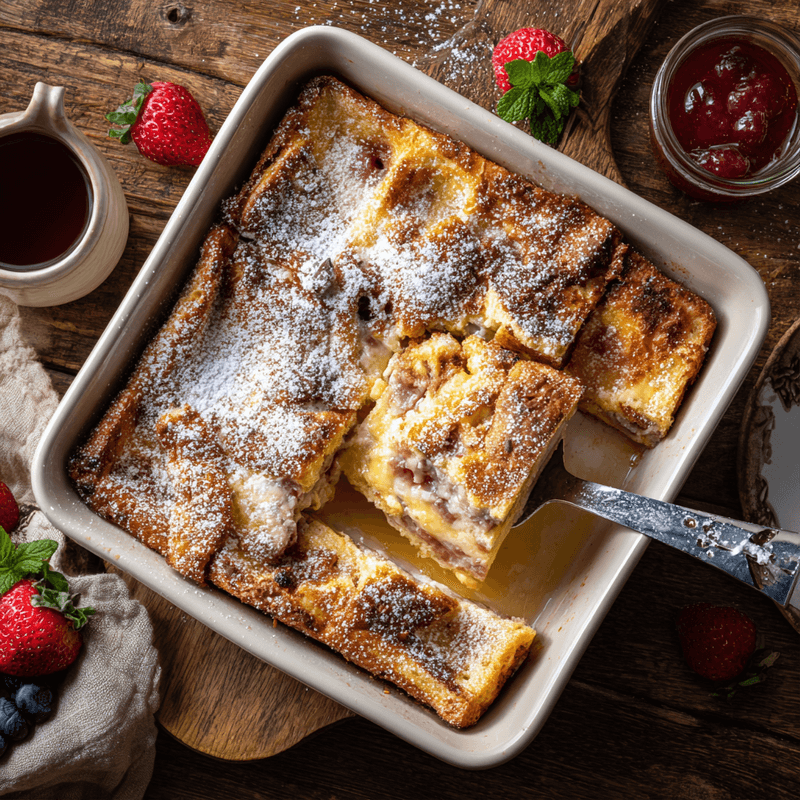
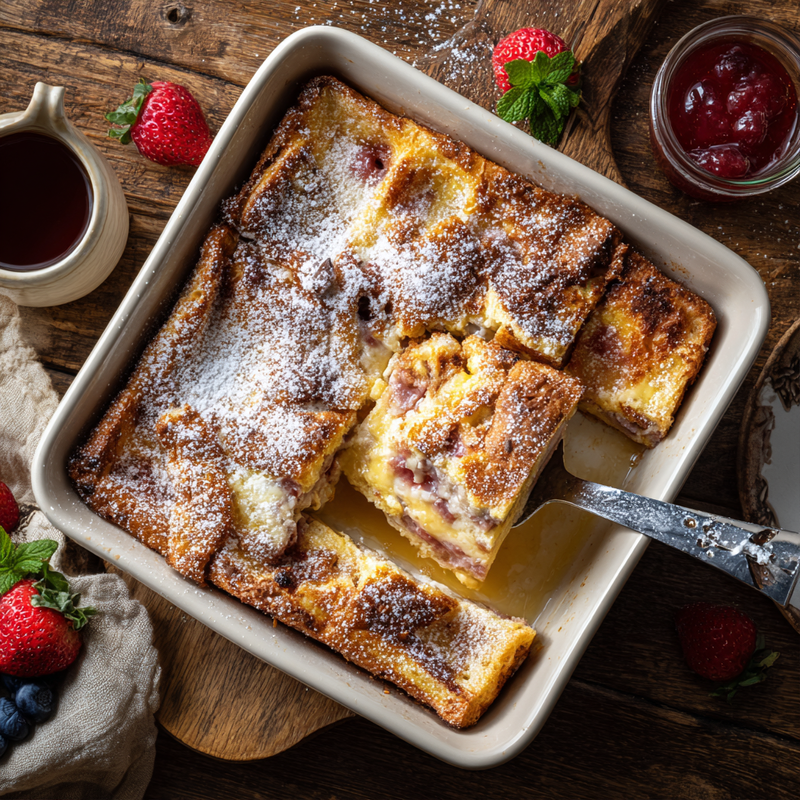
When your Monte Cristo Breakfast Casserole emerges from the oven, it should be puffed, golden brown on top with some darker crispy edges, and set in the center with just a slight jiggle. After a brief rest to let everything settle, you'll dust it with powdered sugar, slice it into generous squares, and serve it with your choice of accompaniments. From start to finish, you're looking at about fifteen minutes of active prep time and under an hour of mostly hands-off baking—absolutely doable for even the busiest morning.
Top Tips for Perfecting Monte Cristo Breakfast Casserole
After making countless batches of Monte Cristo Breakfast Casserole, I've learned some tricks that make all the difference between a good casserole and an absolutely stellar one. First and foremost, don't skip the resting period after pouring the custard over your bread. Whether you let it sit for twenty minutes on the counter or overnight in the refrigerator, this time allows the bread to fully absorb the liquid, resulting in that perfect custardy texture rather than eggy puddles with dry bread pockets.
When it comes to bread selection for your Monte Cristo Breakfast Casserole, resist the temptation to use regular sandwich bread. It simply doesn't have the structure to hold up to all that custard. Splurge a little on challah, brioche, or a good French loaf. If you can only find fresh bread, leave it uncovered on your counter for several hours or even overnight to let it dry out slightly. Alternatively, you can cube it and toast the pieces lightly in a 300°F oven for about ten minutes.
Temperature control is crucial for achieving that perfect texture in your Monte Cristo Breakfast Casserole. If your oven runs hot, reduce the temperature by twenty-five degrees and extend the baking time slightly. You want the casserole to cook through evenly without the edges burning before the center sets. I always rotate my baking dish halfway through cooking to ensure even browning. If the top starts getting too dark before the center is set, simply tent it loosely with foil for the remaining baking time.
Seasoning your custard mixture properly makes an enormous difference. Don't be shy with the salt—remember, you're seasoning a large volume of bread and eggs. I use about a teaspoon of salt for a nine-by-thirteen-inch Monte Cristo Breakfast Casserole. Taste your custard mixture before pouring it over the bread. It should taste slightly over-seasoned on its own because the bread will dilute those flavors.
The cheese distribution throughout your Monte Cristo Breakfast Casserole impacts both flavor and texture. I like to reserve about a third of my cheese and sprinkle it on top during the last fifteen minutes of baking. This creates a gorgeous golden, slightly crispy cheese crust on top while ensuring you have plenty of melted cheese throughout the interior layers.
For the most appealing presentation, let your Monte Cristo Breakfast Casserole rest for at least ten minutes after removing it from the oven before cutting into it. This resting period allows the custard to set fully, making it much easier to cut clean squares that hold their shape. If you cut into it immediately, you'll get a sloppy, soupy mess—still delicious, but not nearly as impressive.
Finally, consider your serving vessel when making this Monte Cristo Breakfast Casserole. A white or light-colored baking dish shows off the golden color beautifully and helps you monitor browning through the sides. Glass dishes work wonderfully because they conduct heat evenly and allow you to check the bottom for doneness. Whatever you choose, make sure to grease it thoroughly—there's nothing worse than a stuck casserole that falls apart when you try to serve it.
Variations and Flavor Twists
One of my favorite things about this Monte Cristo Breakfast Casserole is how easily it adapts to different flavor profiles and dietary preferences. For a spicier version, try adding sliced jalapeños between the layers and mixing a tablespoon of hot sauce into your custard. The heat plays beautifully against the sweetness, creating a sweet-spicy-savory combination that's absolutely addictive. You can also substitute pepper jack cheese for half of the cheddar to add a subtle kick throughout.
If you want to create a lighter, vegetarian-friendly Monte Cristo Breakfast Casserole, simply omit the meat and increase the cheese slightly, or add sautéed mushrooms and spinach for substance and nutrition. The mushrooms provide that savory, umami quality that makes you not miss the meat at all. I like to use a combination of cremini and shiitake mushrooms, diced small and cooked until all their moisture has evaporated before adding them to the casserole.
For a more indulgent version, try my "stuffed" variation where you create a cream cheese layer in the middle of your Monte Cristo Breakfast Casserole. Mix softened cream cheese with a bit of preserves (strawberry or apricot works wonderfully), spread it over your first layer of bread and meat, then continue layering as usual. When you cut into the finished casserole, you'll discover this luscious, creamy surprise in the center.
A Mediterranean twist transforms this Monte Cristo Breakfast Casserole into something entirely new. Replace the turkey and deli meat with halal grilled chicken, swap the Swiss for feta cheese, add sundried tomatoes and fresh basil to the layers, and include a bit of garlic powder in your custard. The result is a Greek-inspired breakfast bake that's equally delicious and perfect for those who prefer bolder, more herbaceous flavors.
For those watching their carbohydrate intake, you can create a lower-carb version of this Monte Cristo Breakfast Casserole by reducing the bread by half and adding extra vegetables like zucchini, bell peppers, and onions. While it won't have quite the same custardy texture, it's still absolutely delicious and lets you enjoy the flavors with fewer carbs.
What to Serve with Monte Cristo Breakfast Casserole
This Monte Cristo Breakfast Casserole is substantial enough to serve as the star of your brunch spread, but the right accompaniments truly complete the meal. The traditional pairing is fruit preserves—strawberry, raspberry, or apricot work particularly well. The sweet-tart flavor of the preserves echoes the slight sweetness in the casserole while providing a bright contrast to the rich, savory elements. I like to warm the preserves slightly and serve them in a small bowl for drizzling or dipping.
A fresh fruit salad brings necessary brightness and acidity to balance the richness of your Monte Cristo Breakfast Casserole. I love combining berries, melon, and citrus segments with a light honey-lime dressing and fresh mint. The juicy, refreshing quality of fresh fruit cleanses your palate between bites and adds beautiful color to your table. Plus, it's an easy make-ahead option that actually benefits from sitting in the refrigerator for an hour or two.
For a more complete savory breakfast spread, consider serving your Monte Cristo Breakfast Casserole alongside some simple roasted potatoes. Cut baby potatoes into halves, toss them with olive oil, salt, pepper, and herbs, then roast them until crispy. The textural contrast between the creamy casserole and crispy potatoes is wonderful, and potatoes are always a crowd-pleaser at breakfast.
A simple green salad might seem like an unusual breakfast choice, but it pairs beautifully with this Monte Cristo Breakfast Casserole, especially for a late brunch. Use mixed greens with a light vinaigrette—the acidity and freshness cut through the richness perfectly. I particularly enjoy arugula with a lemon vinaigrette and shaved parmesan for a peppery, bright contrast.
Beverage-wise, this Monte Cristo Breakfast Casserole pairs wonderfully with both coffee and tea. The slight sweetness complements a robust dark roast coffee, while the savory elements stand up well to black tea. For a special occasion, sparkling juice or a fruity mocktail adds a festive touch that guests always appreciate.
Storing and Reheating Tips
Proper storage ensures your Monte Cristo Breakfast Casserole remains delicious for several days after baking, which is fantastic news for meal prep enthusiasts. Once your casserole has cooled to room temperature, cover the baking dish tightly with plastic wrap or aluminum foil, or transfer individual portions to airtight containers. Refrigerated, your Monte Cristo Breakfast Casserole will stay fresh for up to four days. The flavors actually meld and develop over time, so day-two casserole is often even more delicious than fresh from the oven.
For longer storage, this Monte Cristo Breakfast Casserole freezes remarkably well. I recommend freezing it in individual portions wrapped tightly in plastic wrap, then placed in freezer bags with as much air removed as possible. Properly stored, frozen portions will maintain their quality for up to three months. You can also freeze the entire casserole in its baking dish, though this requires more freezer space and makes it less convenient to thaw only what you need.
When it comes to reheating your Monte Cristo Breakfast Casserole, the oven method yields the best results. Preheat your oven to 350°F, place your portion in an oven-safe dish, cover it loosely with foil to prevent over-browning, and heat for about fifteen to twenty minutes until warmed through. The foil keeps the top from drying out while the interior comes to temperature. For a crispier top, remove the foil for the last five minutes of reheating.
The microwave works for quick individual portions of Monte Cristo Breakfast Casserole, though the texture won't be quite as ideal as oven reheating. Place a portion on a microwave-safe plate, cover it with a damp paper towel to maintain moisture, and heat in thirty-second intervals until warmed through. The damp paper towel is key—it creates steam that prevents the eggs from becoming rubbery.
If you're reheating frozen Monte Cristo Breakfast Casserole, the best approach is to let it thaw in the refrigerator overnight, then reheat using the oven method described above. In a pinch, you can reheat from frozen, but you'll need to extend the heating time significantly and keep it covered for most of the reheating process to ensure it heats evenly without burning the edges.
Frequently Asked Questions
Can I Make Monte Cristo Breakfast Casserole Ahead of Time?
Absolutely, and I actually recommend it! Assembling your Monte Cristo Breakfast Casserole the night before is not only convenient but actually improves the final texture. The extended soaking time allows the bread to fully absorb the custard, resulting in a more uniform, custardy consistency throughout. Simply prepare the casserole completely, cover it tightly with plastic wrap or foil, refrigerate it overnight, and bake it fresh in the morning. You may need to add five to ten extra minutes to the baking time since you're starting with a cold casserole.
Can I Use Different Types of Bread for This Recipe?
While I recommend challah, brioche, or French bread for the best results in your Monte Cristo Breakfast Casserole, you can experiment with other varieties. Sourdough adds a pleasant tanginess, whole wheat provides more fiber and a nuttier flavor, and even croissants create an ultra-decadent version. The key is choosing bread with enough structure to hold up to the custard without disintegrating. Avoid very soft sandwich breads, as they tend to become mushy rather than achieving that desirable custardy texture.
How Do I Know When My Monte Cristo Breakfast Casserole Is Done?
Your Monte Cristo Breakfast Casserole is perfectly done when the center is set but still has a slight jiggle, the edges are golden brown and pulling away slightly from the sides of the dish, and an instant-read thermometer inserted in the center reads 160°F. The top should be puffed and golden with some darker crispy bits. If you insert a knife in the center, it should come out mostly clean with just a bit of moisture, not raw egg mixture.
Can I Make This Monte Cristo Breakfast Casserole Without Meat?
Definitely! A vegetarian Monte Cristo Breakfast Casserole is equally delicious. You can simply increase the cheese quantity slightly and add vegetables like sautéed mushrooms, bell peppers, zucchini, or spinach for substance and flavor. The mushrooms are particularly good at providing that savory, satisfying quality that makes you not miss the meat. Make sure to cook your vegetables first to remove excess moisture, which could make your casserole soggy.
How Can I Scale This Recipe for a Larger or Smaller Crowd?
This Monte Cristo Breakfast Casserole is wonderfully flexible when it comes to scaling. The recipe as written in a nine-by-thirteen-inch dish serves eight to ten people generously. For a smaller group, halve the ingredients and use an eight-by-eight-inch baking dish. For a crowd, you can double the recipe and use two dishes, or make one and a half times the recipe in a very large roasting pan. Just maintain the same ratios of bread to custard, and adjust baking time as needed based on the depth of your casserole.
Why Did My Monte Cristo Breakfast Casserole Turn Out Soggy?
Several factors can lead to a soggy Monte Cristo Breakfast Casserole. The most common culprit is using too much custard relative to the amount of bread, or not allowing sufficient resting time before baking. Make sure your bread fully absorbs the custard before baking. Additionally, if you added vegetables, they must be cooked first to remove excess moisture. Finally, make sure you're baking at the correct temperature—too low, and the casserole will steam rather than bake, resulting in a soggy texture. Using day-old or lightly toasted bread also helps prevent sogginess by giving the bread more absorption capacity.
Monte Cristo Breakfast Casserole
A make-ahead breakfast casserole combining layers of bread, turkey, halal deli meats, and cheese soaked in a sweet custard—perfect for family gatherings and weekend brunches.
Prep Time
20 min
Cook Time
50 min
Total Time
1h 10m
Servings
8 servings
Ingredients
For 8 servings
- 10 cups challah or brioche bread, cut into 1-inch cubes (about 1 pound)
- 8 ounces sliced turkey breast, diced
- 8 ounces halal-certified deli chicken or beef slices, diced
- 2 cups Swiss cheese, shredded
- 2 cups sharp cheddar cheese, shredded
- 8 large eggs
- 2 1/2 cups whole milk
- 2 tablespoons granulated sugar
- 1 teaspoon salt
- 1/2 teaspoon black pepper
- 1/4 teaspoon ground nutmeg
- 1 tablespoon Dijon mustard
- 2 tablespoons unsalted butter, for greasing
- 2 tablespoons powdered sugar, for dusting
- 1/2 cup fruit preserves (strawberry or raspberry), for serving
Instructions
- 1
Prepare the baking dish
Generously grease a 9x13-inch baking dish with butter, making sure to coat the bottom and sides thoroughly. This prevents sticking and ensures easy serving later. Set the prepared dish aside while you prepare the other components.
- 2
Layer the bread
Spread the cubed challah or brioche bread evenly across the bottom of the prepared baking dish. The bread should fill the dish in a relatively even layer, though some overlap is fine. If your bread is very fresh, consider toasting the cubes lightly in a 300°F oven for 10 minutes first to help them absorb the custard better.
- 3
Add meats and cheese
Distribute the diced turkey and halal deli meats evenly over the bread cubes, tucking some pieces down into the crevices. Sprinkle two-thirds of the Swiss and cheddar cheese mixture over the meat and bread, reserving the remaining third for topping later. Press down gently to compact the layers slightly.
- 4
Prepare the custard
In a large mixing bowl, whisk together the eggs, milk, granulated sugar, salt, black pepper, nutmeg, and Dijon mustard until completely smooth and well combined. The mixture should be uniform in color with no streaks of egg white visible. Taste the custard and adjust seasoning if needed—it should taste slightly over-seasoned.
- 5
Pour and soak
Slowly pour the custard mixture evenly over the entire casserole, making sure to cover all the bread cubes. Use a spatula to gently press down on the bread, helping it absorb the liquid. Let the casserole sit at room temperature for at least 15-20 minutes, pressing down occasionally, until the bread has absorbed most of the custard.
- 6
Refrigerate if making ahead
If preparing ahead, cover the dish tightly with plastic wrap or aluminum foil at this point and refrigerate for up to 24 hours. This extended soaking time actually improves the texture. When ready to bake, remove from refrigerator and let sit at room temperature for 20 minutes while preheating the oven.
- 7
Preheat and prepare for baking
Preheat your oven to 350°F. If your casserole was refrigerated, make sure it has come to room temperature slightly. Sprinkle the reserved cheese over the top of the casserole for a beautiful golden crust.
- 8
Bake the casserole
Place the casserole in the preheated oven and bake for 45-55 minutes, rotating the dish halfway through for even browning. The casserole is done when the center is set with just a slight jiggle, the edges are golden brown and pulling away from the sides, and the internal temperature reaches 160°F. If the top browns too quickly, tent loosely with foil for the remaining baking time.
- 9
Rest and garnish
Remove the casserole from the oven and let it rest for 10-15 minutes before serving. This allows the custard to set fully and makes cutting much easier. Just before serving, dust the top generously with powdered sugar using a fine-mesh sieve for an elegant presentation.
- 10
Serve and enjoy
Cut the Monte Cristo Breakfast Casserole into generous squares using a sharp knife or offset spatula. Serve warm with fruit preserves on the side for drizzling or dipping. Each portion should have a golden, slightly crispy top, creamy interior, and visible layers of cheese and meat throughout.
Nutrition Facts
Per serving (estimated)
485 calories
Calories
38g
Carbs
32g
Protein
22g
Fat
2g
Fiber
890mg
Sodium
12g
Sugar