Lemon Garlic Shrimp and Asparagus (20-Minutes)
Quick and elegant lemon garlic shrimp and asparagus ready in 20 minutes. Restaurant-quality seafood dinner with bright citrus and tender vegetables.
cookwithlucia.com/recipes/lemon-garlic-shrimp-and-asparagus-20-minutes
There's something magical about the sizzle of shrimp hitting a hot pan, the way garlic perfumes the entire kitchen within seconds, and how fresh lemon juice brightens everything it touches. This combination is found in coastal kitchens around the Mediterranean, from Spanish tapas bars to Italian trattorias, where simplicity and quality ingredients reign supreme. The beauty of lemon garlic shrimp and asparagus lies not in complex techniques or hard-to-find ingredients, but in the careful balance of flavors and the respect for each component's natural qualities.
What makes this approach to seafood so special is the Mediterranean philosophy of cooking: let excellent ingredients speak for themselves. Rather than masking flavors with heavy sauces, this style uses aromatics, citrus, and herbs to enhance what's already delicious. The shrimp becomes sweeter when properly seared, the asparagus develops nutty notes when cooked just until tender-crisp, and the garlic mellows into fragrant softness that ties everything together.
This home version captures that restaurant-quality elegance while respecting your weeknight schedule. In just twenty minutes, you can transform simple ingredients into something that looks and tastes like it required far more effort. The secret is understanding how heat, timing, and a few flavor-building steps create depth without complexity. You'll discover that this lemon garlic shrimp and asparagus isn't just fast—it's a masterclass in efficient, flavorful cooking that honors Mediterranean traditions while fitting perfectly into modern life.
A Taste of the Culture
In Mediterranean coastal regions, this style of cooking represents the daily reality of communities where the sea provides abundance and simplicity is celebrated. Lemon garlic shrimp appears on tables from casual beach tavernas to elegant city restaurants, equally at home as a quick family dinner or a dish worthy of guests. It embodies the Mediterranean principle that the best meals don't require hours of preparation—they require understanding your ingredients and treating them with care.
The flavor philosophy here centers on brightness and balance. Mediterranean cooking uses acid generously, whether from citrus, vinegars, or tomatoes, to awaken the palate and cut through richness. Garlic provides aromatic depth without overwhelming, while high-quality olive oil acts as both cooking medium and flavor carrier. Fresh herbs aren't garnishes—they're essential components that add green, grassy notes that make dishes taste alive and vibrant.
This approach to seafood reflects coastal values of freshness and seasonality. Fishermen's families have cooked this way for generations, understanding that shrimp caught that morning needs little more than heat, fat, and a few aromatics to shine. The addition of asparagus represents the Mediterranean love of pairing proteins with seasonal vegetables, creating complete meals that feel light yet satisfying.
Regional variations abound across the Mediterranean. Spanish versions might include smoked paprika and a splash of sherry vinegar, while Italian interpretations favor fresh parsley and sometimes a whisper of red pepper flakes. Greek cooks might add oregano and finish with crumbled feta. What unites them all is the commitment to quick, high-heat cooking that preserves the shrimp's tender texture and the vegetables' fresh character.
The Ingredients That Define This Dish
The shrimp themselves are the star, and their quality determines your final result. Look for shrimp that smell fresh and ocean-sweet, never fishy or ammonia-like. Large shrimp work beautifully for lemon garlic shrimp and asparagus because they stay juicy through quick cooking and provide satisfying bites. Whether you buy them fresh or frozen, ensure they're properly deveined and peeled—though leaving tails on adds visual appeal and gives diners something to hold while eating.
Fresh garlic is non-negotiable here. Pre-minced garlic from jars simply cannot deliver the pungent, sweet complexity of freshly minced cloves. When garlic hits hot oil, it should bloom and perfume the air within seconds, creating layers of flavor that jarred versions never achieve. Use at least four to six cloves—what seems like a lot raw becomes mellow and fragrant when briefly sautéed, coating each shrimp with aromatic goodness.
Lemon provides the essential brightness that makes this dish sing. You'll need both zest and juice, each contributing different dimensions. The zest contains aromatic oils that add intense lemon flavor without acidity, while the juice provides the tart punch that balances the shrimp's sweetness and the butter's richness. Always use fresh lemons—bottled juice tastes flat and one-dimensional in comparison.
Asparagus should be vibrant green with tight, compact tips. Medium-thickness spears work best, cooking in the same timeframe as the shrimp without becoming mushy. The woody ends need trimming, but don't discard too much—just bend each spear until it naturally snaps at the point where tender meets tough. Asparagus brings earthy, slightly grassy notes that ground the dish and add textural variety.
Olive oil serves as both cooking fat and flavor component. Extra virgin olive oil adds fruity, peppery notes that complement seafood beautifully, though you can use regular olive oil for the initial cooking if you're watching the budget. A drizzle of your best extra virgin at the end adds a final layer of richness.
Butter enriches the sauce and helps it cling to the shrimp and vegetables. Just a few tablespoons create that glossy, restaurant-quality finish. Fresh herbs—parsley is classic, though basil or chives work beautifully—add color and fresh, green flavors that make every bite taste garden-fresh. Red pepper flakes are optional but traditional, adding subtle warmth that enhances rather than overwhelms.
Cooking the Authentic Way
The foundation of perfect lemon garlic shrimp and asparagus is proper preparation. Before you turn on the stove, have everything ready: shrimp patted completely dry with paper towels, asparagus trimmed and cut into two-inch pieces, garlic minced, lemon zested and juiced, herbs chopped. Mediterranean cooking moves quickly once heat is applied, and having everything within reach ensures nothing overcooks while you're searching for ingredients.
Start with your asparagus, as it needs a minute or two head start. Heat olive oil in a large skillet over medium-high heat until it shimmers but doesn't smoke. Add the asparagus in a single layer and let it cook undisturbed for two minutes—this initial sear creates light browning that develops nutty, caramelized flavors. Toss once and cook another minute or two until tender-crisp and bright green. The asparagus should still have some bite; it will continue cooking slightly even after you remove it from the heat. Transfer to a plate and set aside.
Now for the shrimp, which require quick, high-heat cooking to achieve that perfect texture—tender and juicy inside with slightly golden edges. Add another splash of olive oil to your pan and increase the heat slightly. Season your dried shrimp generously with salt and pepper. When the oil is very hot, add the shrimp in a single layer without crowding. They should sizzle immediately upon contact. Cook without moving them for about ninety seconds until the bottom side turns pink and opaque with golden edges.
Flip each shrimp and immediately add the minced garlic and red pepper flakes if using. This timing is crucial—adding garlic to an empty hot pan risks burning it, but introducing it when you flip the shrimp allows it to bloom in the oil while the shrimp finish cooking. Stir everything together, letting the garlic become fragrant but not brown, about thirty seconds. The aromatics should perfume your entire kitchen.
Now build the sauce that defines lemon garlic shrimp and asparagus. Reduce heat to medium and add butter, lemon zest, and lemon juice. The butter will melt and emulsify with the lemon juice and pan juices, creating a light sauce that coats everything beautifully. Swirl the pan to help the sauce come together, then return the asparagus to the skillet. Toss everything together, letting the vegetables warm through and absorb the lemon-garlic flavors, about thirty seconds.
Finish with fresh herbs and a final taste for seasoning. The dish should taste bright and balanced, with the lemon's acidity cutting through the butter's richness and the garlic providing aromatic depth. If it needs more brightness, add a squeeze of lemon. If it tastes too sharp, another small pat of butter will round it out. This final adjustment is what separates good from extraordinary.
Bringing It All Together
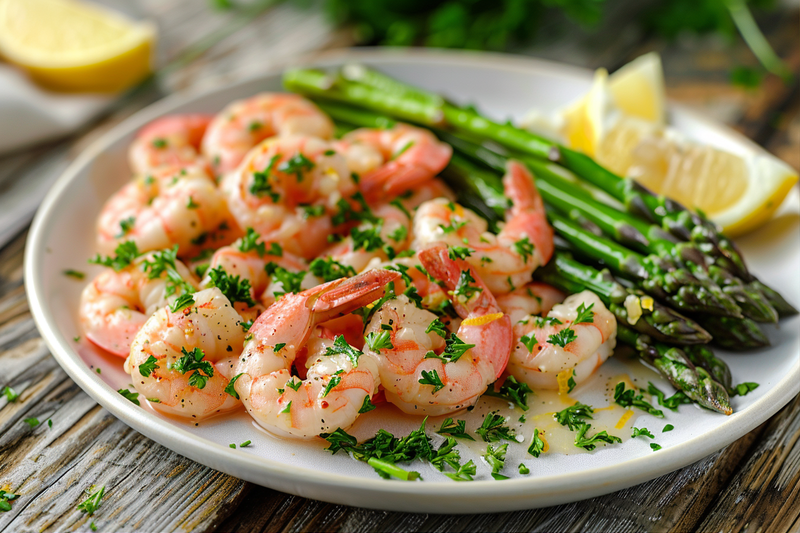
On the plate, lemon garlic shrimp and asparagus should look vibrant and inviting. The pink shrimp contrast beautifully with the bright green asparagus, while the golden garlic bits and flecks of fresh herbs add visual interest. The light sauce should glisten on everything without pooling heavily at the bottom—just enough to make each component look glossy and appetizing.
Traditional accompaniments keep things simple to let the main dish shine. Crusty bread is essential for soaking up every drop of that lemony, garlicky sauce—it's too delicious to waste. A simple arugula salad dressed with olive oil and lemon provides peppery contrast and adds more greens to the meal. For something heartier, serve the shrimp and asparagus over pasta, rice, or creamy polenta, allowing the sauce to dress the starch.
The eating experience should feel light yet satisfying. Each bite combines tender shrimp, crisp-tender asparagus, and that bright, aromatic sauce. The lemon keeps everything tasting fresh rather than heavy, while the garlic adds depth that makes you want another bite. It's the kind of meal that feels special enough for company yet simple enough for a Tuesday evening, elegant without being fussy.
Garnishing thoughtfully elevates the presentation. Extra lemon wedges on the side allow diners to add more brightness to taste. A light sprinkle of lemon zest over the finished dish adds aromatic oils and visual appeal. If you're feeling fancy, a drizzle of your finest extra virgin olive oil adds richness and a peppery finish that enhances the Mediterranean character.
Make It Your Own
While this lemon garlic shrimp and asparagus is perfect as written, it welcomes creative adaptations. For an Asian-inspired fusion, add fresh ginger alongside the garlic and finish with a splash of tamari and sesame oil instead of butter. Sprinkle with toasted sesame seeds and sliced green onions for a completely different but equally delicious direction. The cooking technique remains the same while the flavors travel to a new culinary destination.
Spice level adjusts easily to accommodate different preferences. The traditional pinch of red pepper flakes adds subtle warmth without real heat—perfect for those who want complexity without fire. If you love spice, increase the red pepper flakes or add thinly sliced fresh chili peppers when you add the garlic. For the heat-averse, simply omit the pepper entirely and let the lemon and garlic shine on their own.
Protein swaps work beautifully with this cooking method. Scallops cook in almost the same timeframe as shrimp and pair wonderfully with lemon and asparagus. Firm white fish cut into chunks works well, though it needs gentler handling. For a land-based version, chicken breast cut into bite-sized pieces needs a few extra minutes but absorbs the flavors beautifully. Even firm tofu, pressed well and cubed, creates a satisfying vegetarian option.
Vegetable variations let you adapt to seasons and preferences. When asparagus isn't at its peak, try green beans, sugar snap peas, or broccoli florets using the same technique. Cherry tomatoes added in the last minute create bursts of sweetness. Spinach or arugula wilted into the finished dish adds greens and a peppery note. The lemon-garlic combination is so versatile that it enhances almost any vegetable you pair it with.
Keeping and Reusing Leftovers
Lemon garlic shrimp and asparagus is best enjoyed fresh, but leftovers store reasonably well for up to two days in an airtight container in the refrigerator. The shrimp will be slightly less tender than when first cooked, and the asparagus may soften a bit, but the flavors often deepen overnight as everything marinates together. Reheat gently over low heat with a splash of olive oil or broth to prevent the shrimp from becoming rubbery.
The beauty of leftovers lies in their transformation potential. Chilled lemon garlic shrimp and asparagus makes an excellent salad topper, adding protein and vegetables to mixed greens with no additional cooking required. The cold shrimp are delicious as-is, and the lemony sauce becomes a light dressing when tossed with the greens.
Turn leftovers into a completely new meal by tossing them with hot pasta and a bit of reserved pasta water. The starchy water helps recreate a silky sauce, and you've got a new dish in under five minutes. Add some halved cherry tomatoes and fresh basil for even more freshness and color.
For meal prep purposes, you can cook the components separately and store them for quick assembly. The asparagus keeps well for three days, and you can cook shrimp in advance, though they're so quick that cooking them fresh is often just as easy. The garlic-lemon-butter sauce reheats beautifully and can be made ahead, then warmed and tossed with freshly cooked shrimp and reheated asparagus for a nearly-fresh meal.
Your Questions Answered
Can I use frozen shrimp for this recipe?
Absolutely, and frozen shrimp are often fresher than "fresh" shrimp at many markets since they're frozen immediately after harvest. Thaw them overnight in the refrigerator or use the quick-thaw method by placing them in a colander under cold running water for about ten minutes. The most important step is patting them completely dry before cooking—excess moisture prevents proper searing and makes your lemon garlic shrimp and asparagus watery rather than beautifully sautéed.
How can I tell when the shrimp are perfectly cooked?
Shrimp cook incredibly quickly and go from perfect to rubbery in mere seconds, so watch them carefully. They're done when they turn pink and opaque throughout, and they'll curl into a loose C-shape. Overcooked shrimp curl tightly into an O-shape and become tough and chewy. Since lemon garlic shrimp and asparagus cooks so quickly, it's better to undercook slightly than overdo it—residual heat will finish the cooking even after you remove the pan from the heat.
What should I serve alongside this dish?
Keep accompaniments simple to complement rather than compete with the bright flavors. Crusty bread, rice, pasta, or quinoa all work beautifully to soak up the delicious sauce. A simple green salad with a light vinaigrette adds freshness and crunch. For a heartier meal, roasted potatoes or creamy polenta provide satisfying substance. The dish is naturally light, so you can afford to add more substantial sides if you're feeding hungry appetites.
Is this recipe authentic to a specific region?
This style of cooking is authentically Mediterranean in approach rather than belonging to one specific country. You'll find similar preparations along the entire Mediterranean coast, from Spain through Italy and Greece to the Eastern Mediterranean. Each region adds its own touches—Spanish cooks might add paprika, Italians might include white wine, Greeks might finish with fresh oregano—but the core technique of quickly sautéing seafood with garlic and lemon is universally loved. This recipe captures that essential spirit while remaining accessible to home cooks everywhere.
Can I make this less garlicky for sensitive palates?
While garlic is central to lemon garlic shrimp and asparagus, you can certainly adjust it to your preference. Reduce the amount to two or three cloves instead of six for a milder garlic presence that still provides aromatic depth. You might also try using whole garlic cloves that you remove before serving, which infuse the oil with flavor without the intensity of minced garlic. Alternatively, very thinly sliced garlic provides a gentler garlic flavor than minced, and it creates beautiful crispy bits if you let it cook a moment longer.
What can I pair with this for a complete meal plan?
This dish works beautifully as part of a Mediterranean-inspired menu. Start with a simple mezze platter of hummus, olives, and fresh vegetables while the main dish cooks. Serve the lemon garlic shrimp and asparagus alongside or over rice pilaf or orzo pasta. Finish with fresh fruit—sliced oranges with a sprinkle of cinnamon or fresh berries with a dollop of yogurt and honey. The entire meal maintains that bright, fresh quality that makes Mediterranean cuisine so appealing and healthful.
Lemon Garlic Shrimp and Asparagus (20-Minutes)
Quick and elegant shrimp sautéed with fresh asparagus in a bright lemon-garlic sauce. A restaurant-quality meal ready in just 20 minutes.
Prep Time
10 min
Cook Time
10 min
Total Time
20 min
Servings
4 servings
Ingredients
For 4 servings
- 1½ pounds large shrimp, peeled and deveined
- 1 pound fresh asparagus, trimmed and cut into 2-inch pieces
- 6 cloves garlic, minced
- 2 lemons (1 zested and both juiced, about ⅓ cup juice)
- 3 tablespoons olive oil, divided
- 3 tablespoons unsalted butter
- ¼ teaspoon red pepper flakes (optional)
- ¾ teaspoon salt, divided
- ½ teaspoon black pepper, divided
- ¼ cup fresh parsley, chopped
- Lemon wedges for serving
Instructions
- 1
Prepare ingredients
Pat the shrimp completely dry with paper towels and season with ½ teaspoon salt and ¼ teaspoon black pepper. Trim the woody ends from asparagus and cut into 2-inch pieces. Mince the garlic, zest one lemon, and juice both lemons. Chop the fresh parsley and have all ingredients ready near the stove.
- 2
Cook the asparagus
Heat 1½ tablespoons olive oil in a large skillet over medium-high heat until shimmering. Add the asparagus in a single layer and season with ¼ teaspoon salt and ¼ teaspoon black pepper. Cook without stirring for 2 minutes, then toss and cook another 1-2 minutes until tender-crisp and bright green. Transfer to a plate and set aside.
- 3
Sear the shrimp
Add the remaining 1½ tablespoons olive oil to the same skillet and increase heat to high. When the oil is very hot and shimmering, add the seasoned shrimp in a single layer without crowding. Cook without moving for 90 seconds until the bottoms turn pink and develop golden edges.
- 4
Add aromatics
Flip each shrimp to the other side and immediately add the minced garlic and red pepper flakes if using. Stir everything together and cook for 30-45 seconds until the garlic becomes fragrant and the shrimp are almost cooked through, being careful not to let the garlic burn.
- 5
Create the sauce
Reduce heat to medium and add the butter, lemon zest, and lemon juice to the skillet. Swirl the pan to melt the butter and help it emulsify with the lemon juice and pan drippings, creating a light, glossy sauce that coats the shrimp.
- 6
Combine and finish
Return the cooked asparagus to the skillet and toss everything together to coat with the lemon-garlic sauce. Cook for just 30 seconds to warm the asparagus through and allow the flavors to meld.
- 7
Season and serve
Remove from heat and stir in the fresh chopped parsley. Taste and adjust seasoning with additional salt, pepper, or lemon juice if needed. The sauce should taste bright and balanced, with the lemon's acidity cutting through the butter's richness.
- 8
Plate and garnish
Transfer the shrimp and asparagus to a serving platter or individual plates, spooning the sauce over everything. Garnish with extra lemon wedges on the side and serve immediately while hot for the best texture and flavor.
Nutrition Facts
Per serving (estimated)
285 calories
Calories
9g
Carbs
28g
Protein
15g
Fat
3g
Fiber
620mg
Sodium
3g
Sugar