Japanese Strawberry Shortcake Recipe: Light Fluffy Sponge
Master the art of Japanese strawberry shortcake with this detailed recipe. Learn the secrets to a cloud-like sponge cake, silky cream, and perfect assembly.
cookwithlucia.com/recipes/japanese-strawberry-shortcake-recipe-light-fluffy-sponge-cake
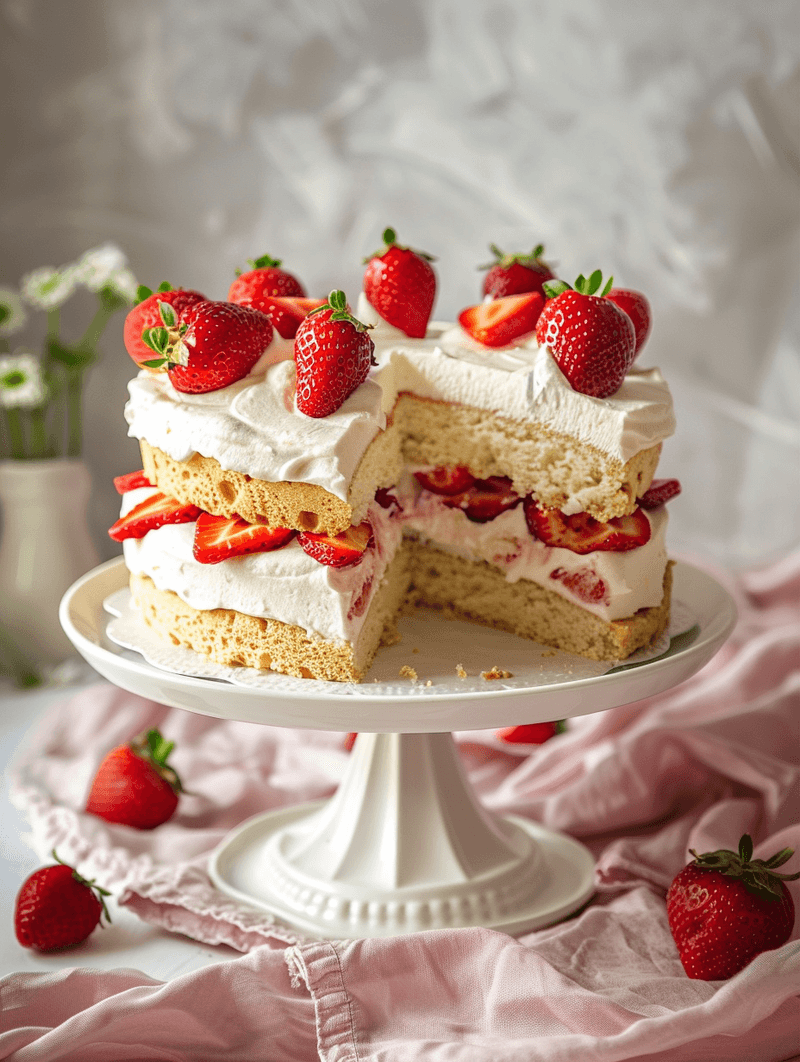
There's something almost magical about cutting into a Japanese strawberry shortcake and watching your fork glide through layers of impossibly light sponge, billowy whipped cream, and jewel-bright strawberries. Unlike dense Western layer cakes, this Japanese strawberry shortcake recipe creates something that feels like eating a sweet cloud—delicate enough to melt on your tongue, yet sturdy enough to hold its beautiful structure. The technique behind this beloved dessert isn't complicated, but it does require understanding a few key principles that transform ordinary ingredients into something extraordinary.
I know that sponge cakes can seem intimidating at first. The fear of deflating your batter, the worry about achieving that perfect golden color without drying out the crumb—these concerns are completely valid. But here's what I want you to know: once you understand why each step matters, the how becomes intuitive. This Japanese strawberry shortcake recipe breaks down every technique into clear, manageable stages that build your confidence as you go. The secret isn't in having professional equipment or years of experience. It's in recognizing the subtle cues your batter gives you—the ribbon stage of your eggs, the gentle folding motion that preserves air, the precise moment your cake is perfectly baked. Master these fundamentals, and you'll find yourself making this stunning dessert for weekend gatherings, celebratory meals, and those moments when only something truly special will do.
The Science Behind the Method
The foundation of any Japanese strawberry shortcake recipe lies in understanding how a genoise sponge actually works. Unlike American cakes that rely on chemical leaveners like baking powder, this sponge gets its incredible lift entirely from air whipped into whole eggs. When you beat eggs with sugar at high speed, you're creating millions of tiny air bubbles surrounded by protein networks. As the cake bakes, these bubbles expand from heat, the proteins set to hold the structure, and you're left with that characteristic feathery texture that makes Japanese sponge cake so distinctive.
The gentle warming of eggs before whipping isn't just tradition—it's chemistry in action. Warm eggs (around 110°F) reach a greater volume when whipped because the proteins unfold more easily, trapping more air. This is why many bakers use a warm water bath during the initial beating stage. The sugar you add serves multiple purposes: it stabilizes those air bubbles, adds structure, and contributes to the tender crumb by interfering slightly with gluten development.
The folding technique you'll use to incorporate flour preserves all that hard-won air. Vigorous stirring would pop those delicate bubbles, leaving you with a dense, flat result. Understanding this helps you see why every instruction matters—it's not fussiness, it's physics. When you grasp that each gentle fold protects the structure you've built, you'll naturally develop the light hand that separates good sponge cakes from transcendent ones.
Tools and Ingredients You'll Need
For a successful Japanese strawberry shortcake recipe, your equipment makes a genuine difference, though you don't need to break the bank. A stand mixer with a whisk attachment is ideal for achieving the volume needed in your eggs, but a hand mixer absolutely works—you'll just need to be patient and plan for about twelve to fifteen minutes of whipping time instead of eight. Make sure your mixing bowl is spotlessly clean and completely dry, as even a drop of fat can prevent eggs from reaching full volume. Metal or glass bowls work better than plastic, which can retain oils even after washing.
You'll need two eight-inch round cake pans with straight sides and at least two inches of depth. Lining the bottoms with parchment paper is non-negotiable—this delicate cake can tear easily if it sticks. A balloon whisk for folding, a fine-mesh sieve for sifting flour, and a large rubber spatula complete your essential toolkit. For assembly, offset spatulas in both large and small sizes give you better control when frosting, though a regular butter knife can work in a pinch.
Ingredient quality genuinely matters here. Use the freshest eggs you can find—they whip to greater volume and create better structure. Cake flour is strongly preferred over all-purpose because its lower protein content produces that signature tender crumb. If you must substitute, use all-purpose but remove two tablespoons per cup and replace with cornstarch. For the cream component, seek out heavy whipping cream with at least 36% fat content, which whips to stable, luxurious peaks. Fresh strawberries should be bright red, fragrant, and firm—avoid any with soft spots or signs of mold. A small amount of vanilla extract enhances without overwhelming, and just a touch of lemon juice brightens the cream beautifully.
The Method, Step by Step
Begin by preparing your workspace completely before you touch a single ingredient. Preheat your oven to 340°F, position a rack in the center, and prepare your two eight-inch pans by buttering them lightly, dusting with flour, and lining the bottoms with parchment circles. This Japanese strawberry shortcake recipe moves quickly once you start mixing, so having everything ready prevents panic.
Create a warm water bath by filling a large bowl or pot with water heated to about 120°F—hot tap water usually works perfectly. Place your mixing bowl over this bath and add your eggs and sugar. Whisk gently by hand for two to three minutes, just until the sugar begins dissolving and the mixture feels warm to the touch, around 100-110°F. This warming step is crucial for maximum volume. Transfer the bowl to your mixer and whip on high speed for eight to twelve minutes. You're looking for the ribbon stage: when you lift the whisk, the batter should fall in thick ribbons that sit on the surface for several seconds before dissolving back in. The mixture should be pale yellow, tripled in volume, and have a smooth, mousse-like consistency.
While your eggs whip, sift your cake flour three times. This isn't excessive—it aerates the flour thoroughly, making it easier to fold in without deflating your batter. If you're adding any melted butter for richness (traditional in some variations), have it slightly cooled but still liquid, around 100°F. Once your eggs reach ribbon stage, reduce the mixer to low and beat for two more minutes. This step stabilizes the bubbles and evens out the texture, giving you a more resilient batter to work with.
Now comes the critical folding stage. Sift one-third of your flour over the surface of the whipped eggs. Using a large balloon whisk or rubber spatula, cut down through the center of the batter, sweep along the bottom of the bowl, and bring the spatula up the side, rotating the bowl a quarter turn with your other hand. Repeat this motion about eight to ten times—just until the flour mostly disappears. Add the second third of flour and repeat, then the final third. Your goal is thoroughness without overdoing it. A few tiny flour streaks are better than an overmixed, deflated batter. If you're adding melted butter, drizzle it down the side of the bowl and fold just until incorporated, about five more strokes.
Divide your batter evenly between the prepared pans—they should be about two-thirds full. Tap each pan firmly on the counter twice to release any large air bubbles, then immediately transfer to your preheated oven. Bake for twenty-five to thirty minutes without opening the oven door. The cakes are done when they're golden on top, spring back when gently pressed, and just barely begin pulling away from the pan sides. A toothpick inserted in the center should come out clean or with just a few moist crumbs. Let the cakes cool in their pans for five minutes, then run a thin knife around the edges and invert onto a cooling rack. Peel off the parchment and flip the cakes right-side up to cool completely—this prevents the tops from developing indentations.
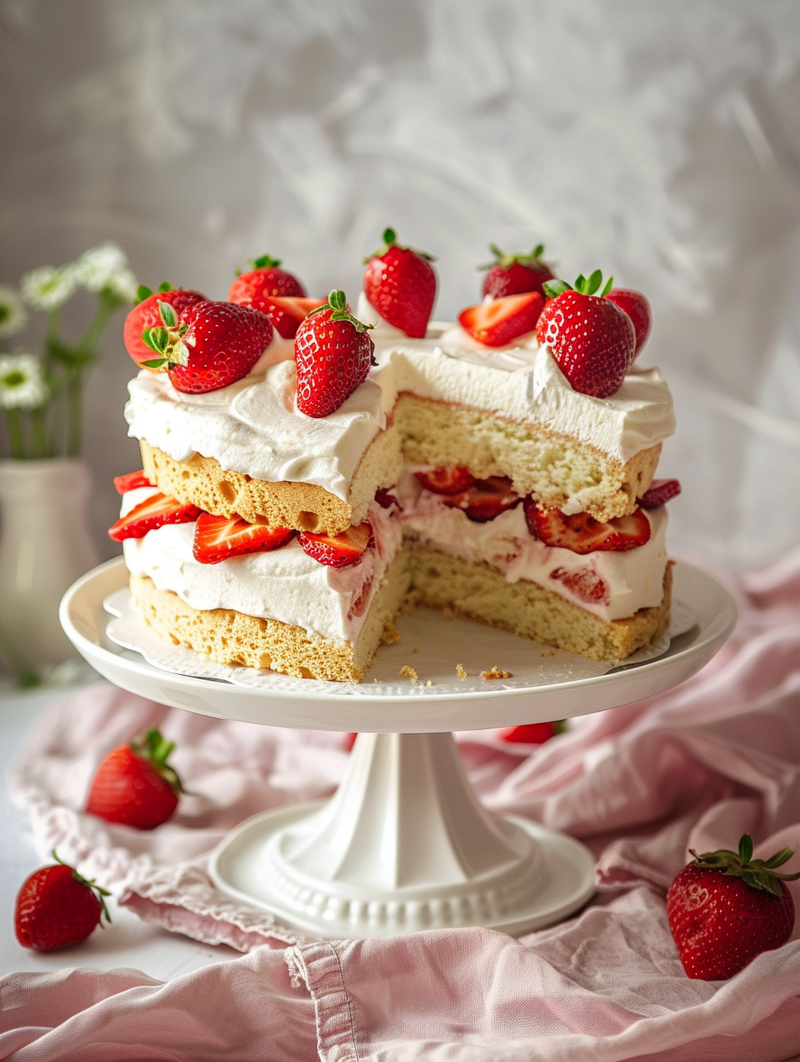
For assembly, prepare your whipped cream by chilling your bowl and beaters for fifteen minutes. Whip cold heavy cream with sugar and vanilla just until stiff peaks form—overwhipping makes the cream grainy and harder to spread. Slice your cooled cakes horizontally to create four layers total if you want an impressive tall cake, or keep them as two layers for a simpler assembly. Brush each layer lightly with simple syrup if desired—this keeps the cake moist and adds a subtle sweetness. Place your first layer on your serving plate, spread with whipped cream, and arrange sliced strawberries in a single layer. Repeat with remaining layers, then frost the exterior with the remaining cream. Decorate the top with whole or halved strawberries, and refrigerate for at least one hour before serving to let everything set.
Troubleshooting Guide
If your cake layers turn out dense and flat rather than light and fluffy, the most likely culprit is deflated batter. This happens when flour is added too quickly, folded too vigorously, or the batter sits too long before baking. The solution is to work more gently and efficiently—have your oven preheated and pans ready before you begin mixing. Make sure your eggs reached proper ribbon stage before you started folding; underwhipped eggs can't hold the structure no matter how carefully you fold. Next time, whip an extra minute or two until the ribbons truly hold their shape.
Overbaked, dry sponge cake is another common frustration. Japanese strawberry shortcake is meant to be incredibly moist, almost tender to the point of fragility. If yours seems dry, you likely baked it five to ten minutes too long or at too high a temperature. Oven thermometers are inexpensive and reveal whether your oven runs hot—many do. Set your timer for the minimum baking time and check with a light touch; the cake should feel soft but not liquid. The carryover heat will finish cooking it as it cools.
When your whipped cream won't stiffen or turns grainy, temperature and timing are your culprits. Cream must be very cold to whip properly—if your kitchen is warm, place the bowl over ice while whipping. Graininess means you've gone past stiff peaks into butter territory. There's no fixing overwhipped cream, but you can prevent it by stopping as soon as the peaks hold their shape without folding over. If you need to whip cream ahead, slightly underwhip it and give it a few more strokes just before assembly.
If your cake layers stick to the pans or tear when removing, your pan preparation needs adjustment. Both butter and parchment are essential—the butter helps the parchment adhere and the parchment creates a fail-safe release. Let the cakes cool exactly five minutes before unmolding; too soon and they're too fragile, too long and they stick. A thin, flexible knife run carefully around the edges helps tremendously.
Lopsided or domed cakes that make assembly difficult usually result from uneven heat distribution. Rotating your pans halfway through baking helps, though try not to open the oven during the first fifteen minutes when the structure is setting. Baking strips wrapped around the outside of your pans create more even baking by insulating the edges, though they're not essential for this Japanese strawberry shortcake recipe. If you do end up with domed cakes, carefully slice off the rounded top with a serrated knife to create flat layers—this is standard practice even in professional kitchens.
Taking It to the Next Level
Once you've mastered the basic Japanese strawberry shortcake recipe, small refinements create professional-quality results. Try adding a tablespoon of light corn syrup to your whipped cream—it stabilizes the structure beautifully, allowing you to frost the cake hours ahead without weeping or deflating. Some bakers swear by a tiny pinch of cream of tartar added to the eggs before whipping, which stabilizes the foam even further and creates a more resilient batter.
For deeper flavor complexity, infuse your simple syrup with a vanilla bean or a strip of lemon zest. Brush this onto each layer before adding cream—the cake soaks it up like a delicate sponge, adding moisture and subtle aromatics. Some variations include a thin layer of strawberry preserves between the cream and cake, which adds intensity and a beautiful visual stripe when you slice. Just make sure any preserves are at room temperature and spreadable, and use a light hand to avoid overwhelming the delicate sponge.
Consider macerating your strawberries with a touch of sugar thirty minutes before assembly. This draws out their natural juices, concentrating their flavor and creating a light syrup that soaks deliciously into the cake layers. Strain and reduce this juice slightly, then brush it onto the cake for an intensely strawberry experience. For a stunning presentation, reserve your most beautiful berries for decorating and cut them in decorative ways—fans, roses, or perfect halves arranged in concentric circles create visual drama worthy of the most elegant gatherings.
Storing Your Results
Japanese strawberry shortcake is always best the day it's assembled, but with proper storage, you can prepare components ahead and still achieve beautiful results. The unfrosted sponge layers actually improve slightly after a day, becoming more tender and easier to handle. Wrap them tightly in plastic wrap once completely cooled and store at room temperature for up to two days, or freeze for up to one month. Frozen layers should thaw completely while still wrapped to prevent condensation from making the surface soggy.
Once assembled, this cake needs refrigeration because of the fresh cream and strawberries. Store it in an airtight container or cover loosely with plastic wrap, being careful not to let the wrap touch the frosting. The cake will keep for two to three days refrigerated, though the strawberries will begin releasing more juice after the first day, which can make the layers slightly soggy—not necessarily bad, just different in texture. Some people actually prefer this softer, more integrated texture.
For the best eating experience, remove the cake from the refrigerator about thirty minutes before serving. The cream softens slightly at room temperature, making the texture even more luxurious, and the flavors become more pronounced as the chill wears off. If you need to transport this cake, keep it cold until the last possible moment and handle it gently—that delicate sponge can compress if jostled too much. A sturdy cake box and a flat surface in your vehicle are essential. The soft, tender crumb that makes this Japanese strawberry shortcake recipe so special also makes it more delicate than denser Western cakes, so treat it with care and it will reward you with every ethereal bite.
Common Questions
Can I make this Japanese strawberry shortcake recipe without a mixer?
Yes, though it requires significant arm strength and patience. You'll need to whisk the warm egg mixture by hand for twenty to thirty minutes to reach proper ribbon stage—this is genuinely exhausting but possible. The key is maintaining consistent speed and using a balloon whisk with thin wires that incorporate maximum air. Many bakers find it helpful to switch hands frequently and take short breaks, keeping the bowl over warm water to maintain temperature.
Why did my cake sink in the middle after baking?
A sunken center typically indicates underbaking or too much agitation while the structure was still setting. The cake needs to bake completely so the protein structure fully sets—pulling it out even two minutes early can cause collapse as it cools. Opening the oven door during the first fifteen minutes can also cause sinking because the sudden temperature drop deflates the delicate foam. Make sure your oven is fully preheated and avoid any door opening until at least the twenty-minute mark.
Can I use frozen strawberries in this recipe?
Fresh strawberries are strongly recommended because frozen berries release too much liquid, which makes the cake layers soggy and dilutes the whipped cream. If you absolutely must use frozen, thaw them completely, drain thoroughly, and pat very dry with paper towels. Use them only between layers where cream can act as a barrier, never for decoration where they'll continue weeping. The texture won't be quite the same as with fresh berries, but the cake will still taste delicious.
How do I cut clean slices without smashing the cake?
Use a long, thin serrated knife and wipe it completely clean between each slice. A gentle sawing motion works better than pressing down, which compresses those delicate layers. Dipping your knife in hot water, then wiping it dry before each cut creates even cleaner slices because the warm blade glides through the cold cream without dragging. Let the assembled cake chill for at least two hours before slicing—this firms up the cream and makes the whole structure easier to cut.
Can I make the sponge layers ahead and freeze them?
Absolutely, and many bakers prefer working this way because it makes assembly less stressful. Once the layers are completely cooled, wrap each one individually in two layers of plastic wrap, then place in a freezer bag with as much air pressed out as possible. They'll keep for up to three months frozen. Thaw overnight in the refrigerator while still wrapped, or at room temperature for two to three hours. The texture actually becomes slightly more tender after freezing, which works beautifully for this Japanese strawberry shortcake recipe.
What other fruits work well in place of strawberries?
This style of sponge cake pairs beautifully with many fruits, though each brings different characteristics. Fresh peaches or nectarines create a summery variation, while mixed berries add visual interest and complex flavor. Mango chunks offer tropical sweetness, and thinly sliced kiwi provides tartness that balances the sweet cream. Whatever fruit you choose, make sure it's ripe but firm enough to hold its shape, and slice it thinly so it doesn't create too much height between the layers. The light, delicate nature of this Japanese strawberry shortcake recipe makes it an ideal canvas for whatever beautiful fruit is in season.
Japanese Strawberry Shortcake Recipe Light Fluffy Sponge Cake
A cloud-like Japanese sponge cake layered with billowy whipped cream and fresh strawberries. This elegant dessert features an impossibly tender genoise base that melts on your tongue.
Prep Time
30 min
Cook Time
28 min
Total Time
58 min
Servings
8 servings
Ingredients
For 8 servings
- 4 large eggs, at room temperature
- 120g granulated sugar
- 120g cake flour, sifted three times
- 2 tablespoons unsalted butter, melted and cooled to 100°F (optional)
- 1 teaspoon vanilla extract
- 480ml heavy whipping cream, cold (36% fat or higher)
- 60g powdered sugar
- 1 teaspoon vanilla extract
- 450g fresh strawberries, hulled and sliced
- 8-10 whole strawberries for decoration
- 3 tablespoons simple syrup (equal parts sugar and water, cooled)
- Pinch of salt
Instructions
- 1
Prepare pans and oven
Preheat your oven to 340°F (170°C) and position a rack in the center. Butter two 8-inch round cake pans, dust lightly with flour, and line the bottoms with parchment paper circles. This preparation prevents sticking and ensures easy removal of the delicate sponge layers.
- 2
Warm eggs and sugar
Create a warm water bath by filling a large bowl with water heated to 120°F. Place your mixing bowl over the water bath and add the eggs, granulated sugar, and pinch of salt. Whisk gently by hand for 2-3 minutes until the sugar begins dissolving and the mixture feels warm to the touch (100-110°F). This warming step allows the eggs to reach maximum volume when whipped.
- 3
Whip to ribbon stage
Transfer the warmed egg mixture to your stand mixer fitted with the whisk attachment. Beat on high speed for 8-12 minutes until the mixture reaches ribbon stage—when you lift the whisk, the batter should fall in thick ribbons that hold their shape on the surface for several seconds. The mixture should be pale yellow, tripled in volume, and mousse-like. Reduce speed to low and beat for 2 more minutes to stabilize the bubbles.
- 4
Fold in flour
Sift one-third of the cake flour over the whipped egg mixture. Using a large balloon whisk or rubber spatula, fold gently by cutting down through the center, sweeping along the bottom, and bringing the spatula up the side while rotating the bowl. Fold about 8-10 times until flour mostly disappears. Repeat with the remaining flour in two more additions, folding just until no streaks remain. Work quickly but gently to preserve the air bubbles you've created.
- 5
Add butter if using
If using melted butter for extra richness, drizzle it down the inside of the bowl and fold gently just until incorporated, about 5-6 strokes. The butter should be cooled to around 100°F so it doesn't deflate the batter. This step is optional but adds a slightly richer flavor and more tender crumb to the finished sponge cake.
- 6
Bake the sponge layers
Divide the batter evenly between the prepared pans, filling them about two-thirds full. Tap each pan firmly on the counter twice to release large air bubbles. Bake for 25-30 minutes without opening the oven door, until the tops are golden, the cake springs back when gently pressed, and a toothpick inserted in the center comes out clean. Let cool in pans for 5 minutes, then invert onto cooling racks, peel off parchment, and flip right-side up to cool completely.
- 7
Prepare whipped cream
Chill a large mixing bowl and beaters in the freezer for 15 minutes. Add the cold heavy cream, powdered sugar, and vanilla extract to the chilled bowl. Beat on medium-high speed until stiff peaks form, about 3-5 minutes. The cream should hold its shape firmly without being grainy. Be careful not to overwhip, which can make the cream grainy and buttery.
- 8
Slice strawberries
Hull and slice the strawberries into 1/4-inch thick slices. Reserve the most beautiful whole strawberries for decorating the top of the cake. If desired, toss the sliced strawberries with a tablespoon of sugar and let them macerate for 15 minutes to draw out their juices and intensify their flavor.
- 9
Level and slice layers
If the cooled cakes have domed tops, use a long serrated knife to carefully slice them level. You can leave them as two layers or slice each cake horizontally through the middle to create four thinner layers for a taller, more dramatic presentation. Work slowly with a gentle sawing motion to avoid tearing the delicate sponge.
- 10
Assemble the cake
Place your first layer on a serving plate. Brush lightly with simple syrup if desired. Spread about one-third of the whipped cream evenly over the top, leaving a small border at the edges. Arrange a single layer of sliced strawberries over the cream. Repeat with remaining layers, using most of the cream between the layers and reserving enough to frost the outside.
- 11
Frost and decorate
Spread a thin layer of whipped cream around the sides of the cake to create a crumb coat, then apply the remaining cream more generously for the final coat. Use an offset spatula for smooth, even coverage. Decorate the top with whole or halved strawberries in an attractive pattern—concentric circles, a border around the edge, or a simple cluster in the center all look beautiful.
- 12
Chill and serve
Refrigerate the assembled cake for at least 1-2 hours before serving to allow the layers to set and the flavors to meld. Remove from the refrigerator 20-30 minutes before slicing to allow the cream to soften slightly for the best texture. Use a long, thin knife dipped in hot water and wiped dry between slices for the cleanest cuts through the delicate layers.
Nutrition Facts
Per serving (estimated)
385 calories
Calories
38g
Carbs
6g
Protein
24g
Fat
2g
Fiber
95mg
Sodium
26g
Sugar