Jalapeño Peach Chicken: Sweet Heat Perfection
Master jalapeño peach chicken with this detailed guide. Learn to balance sweet caramelized peaches with spicy jalapeños for juicy, flavorful chicken.
cookwithlucia.com/recipes/jalapeno-peach-chicken
There's something magical about the moment sweet fruit meets savory meat over high heat. When you combine the bright, floral sweetness of ripe peaches with the grassy kick of fresh jalapeños, all while cooking tender chicken to golden perfection, you create a dish that stops conversations at the dinner table. Jalapeño peach chicken isn't just another weeknight recipe—it's a masterclass in balancing contrasting flavors that somehow belong together.
I know what you might be thinking: fruit with chicken can go wrong quickly, turning either too sweet or muddled and confusing. But here's the beautiful truth about this technique. Once you understand how sugars caramelize, how capsaicin cuts through richness, and how timing affects texture, you'll find yourself applying these principles to dozens of other recipes. The jalapeño peach chicken becomes your gateway to an entire world of sweet-heat cooking.
This isn't complicated cooking that requires special equipment or exotic ingredients. It's about understanding relationships between flavors and knowing exactly when to add each component so everything shines. The result? Chicken with a gorgeous caramelized exterior, flesh so juicy it practically melts, and a glaze that walks the perfect line between fruit-forward sweetness and just enough heat to keep you reaching for another bite. Let me show you exactly how to make this happen in your own kitchen.
The Science Behind the Method
When you cook jalapeño peach chicken properly, you're orchestrating three distinct chemical processes that happen to complement each other beautifully. First, the Maillard reaction browns the chicken's exterior, creating hundreds of complex flavor compounds that taste savory, nutty, and deeply satisfying. This requires direct heat and a relatively dry surface, which is why we pat the chicken completely dry before it hits the pan.
Simultaneously, the natural sugars in fresh peaches undergo caramelization when exposed to heat. Unlike simple browning, caramelization breaks down sugar molecules into new compounds that taste richer and more complex than raw fruit ever could. This is why cooked peaches develop that almost honeyed, butterscotch-like quality that makes them perfect for savory applications. The heat also softens the fruit's cell walls, releasing trapped juices that form the base of your glaze.
The jalapeños bring capsaicin to the party, that famous compound responsible for heat. But capsaicin does more than just create spiciness. It actually enhances your perception of other flavors by stimulating different taste receptors and increasing salivation. This is why the peach flavor tastes more vibrant when paired with jalapeño rather than cloying or one-dimensional. The slight acidity in both the peaches and peppers also helps tenderize the chicken's surface proteins while preventing the dish from feeling heavy. Understanding these interactions means you can adjust heat levels, sweetness intensity, and cooking times with confidence rather than just following instructions blindly.
Tools and Ingredients You'll Need
For equipment, a large heavy-bottomed skillet is your most important tool when making jalapeño peach chicken. Cast iron works beautifully because it holds heat evenly and develops those gorgeous fond bits that become part of your sauce. A 12-inch stainless steel skillet is equally excellent and makes it easier to see when you've achieved the right color. If you only have nonstick, that works too, though you'll get less fond development and slightly less complex flavor.
You'll also want a reliable meat thermometer, preferably instant-read. Chicken breasts cook quickly, and the difference between perfectly juicy and disappointingly dry is just a few degrees. A sharp chef's knife is essential for dicing peaches and jalapeños uniformly, which ensures even cooking. A wooden spoon or silicone spatula helps you scrape up all those flavorful browned bits without damaging your pan's surface.
For ingredients, start with boneless, skinless chicken breasts of uniform thickness. If yours are thick on one end, pound them gently to an even thickness so they cook at the same rate. Fresh, ripe peaches are non-negotiable during summer months—their juice content and natural sugar make the glaze come together perfectly. Off-season, frozen peaches work surprisingly well since they're picked at peak ripeness. Fresh jalapeños should be firm with smooth, shiny skin. The heat level varies wildly between individual peppers, so taste a tiny piece raw to gauge intensity. You'll also need a good quality neutral oil with a high smoke point like avocado or vegetable oil, plus aromatics like garlic and shallots to build depth. A splash of vinegar balances the sweetness, while a touch of honey or brown sugar can intensify the glaze if your peaches aren't quite ripe enough.
The Method, Step by Step
Begin by preparing your ingredients with intention, because once the cooking starts, everything moves quickly. Pat your chicken breasts completely dry with paper towels—any surface moisture will steam rather than sear, preventing that golden crust we're after. Season generously with salt and black pepper on both sides. Don't be shy here; proper seasoning at this stage is what separates good jalapeño peach chicken from transcendent versions. Let the seasoned chicken sit at room temperature for about fifteen minutes while you prep everything else.
Dice your peaches into roughly half-inch pieces, keeping them uniform so they cook evenly. Remove the seeds from your jalapeños and mince them finely—unless you want serious heat, in which case leave some seeds in. Mince your garlic and dice your shallot. Have everything ready in small bowls near your stove because you won't have time to chop once cooking begins. This mise en place approach is how professional kitchens maintain control during service, and it works just as well at home.
Heat your skillet over medium-high heat until a drop of water sizzles and evaporates within two seconds. Add just enough oil to coat the bottom—about two tablespoons for a twelve-inch pan. When the oil shimmers and barely starts to smoke, carefully lay your chicken breasts in the pan, making sure they don't touch each other. You should hear an immediate, aggressive sizzle. Don't touch them for four to five minutes. This is crucial: moving chicken too early prevents proper browning. You're looking for a deep golden color with darker edges before you flip.
Flip the chicken only once and cook the second side for another three to four minutes, depending on thickness. Use your thermometer to check for 155°F in the thickest part—it will coast up to the safe 165°F during resting. Transfer the chicken to a plate and tent loosely with foil. This resting period allows juices to redistribute throughout the meat rather than running out onto your cutting board.
In the same pan, reduce heat to medium and add your shallots, cooking until softened and translucent, about two minutes. Add the garlic and jalapeños, stirring constantly for thirty seconds until fragrant. Now add your peaches along with any accumulated juices. Let them cook undisturbed for two to three minutes so they start to caramelize on the bottom. Then stir and cook for another three to four minutes until they break down into a chunky sauce. The peaches will release their juices, which will combine with the fond from the chicken to create a glaze with incredible depth.
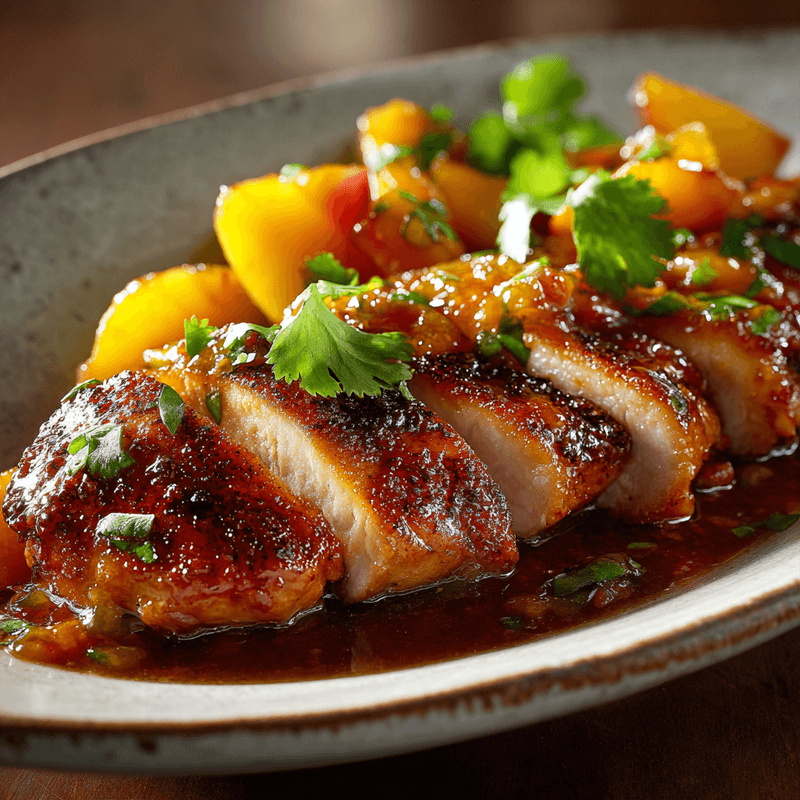
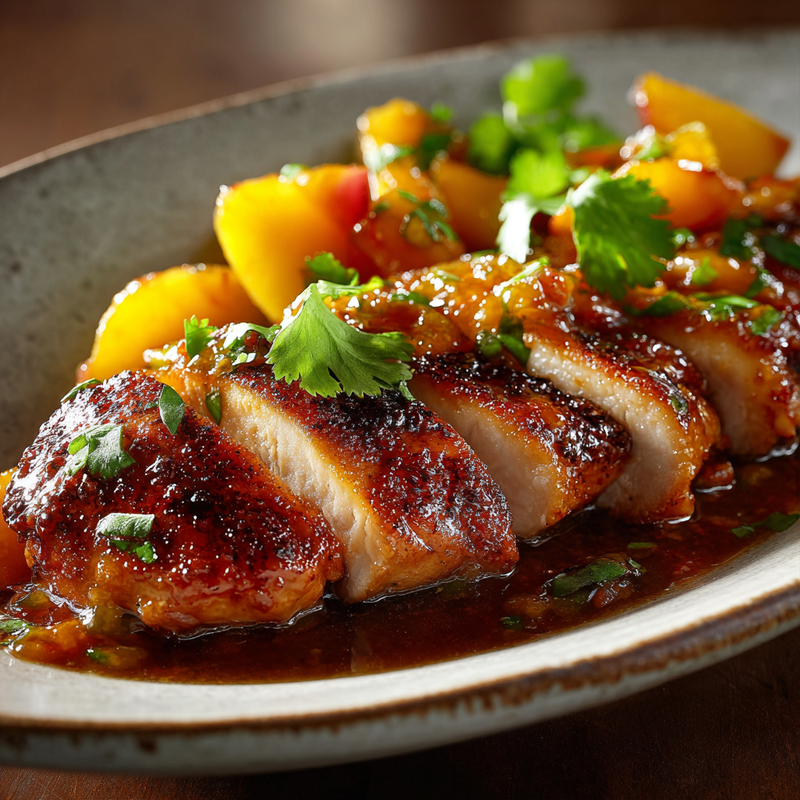
Add a tablespoon of vinegar and a tablespoon of honey, stirring to combine. Let this bubble for about a minute until it thickens slightly. Taste and adjust—you're looking for a balance where you can taste both the sweet and the heat without either dominating. Slice your rested chicken on a bias into thick strips and return it to the pan, spooning the jalapeño peach glaze over top. Let everything warm together for just a minute, then serve immediately while the glaze is glossy and the chicken is at its juiciest peak.
Troubleshooting Guide
If your chicken turns out dry and tough, you likely overcooked it or used heat that was too high for too long. Chicken breast has very little fat to protect it during cooking, so it goes from perfect to overdone quickly. The solution is twofold: invest in that instant-read thermometer so you can pull it at exactly 155°F, and consider using chicken thighs instead. Thighs have more intramuscular fat and stay juicy even if you accidentally overcook them by a few degrees. They also pair beautifully with the sweet-heat profile of this dish.
When the glaze turns out too thin and watery, your peaches likely weren't ripe enough or you added liquid too early. Fix this by letting the glaze simmer longer to reduce and concentrate. You can also mix half a teaspoon of cornstarch with a tablespoon of cold water, then stir it into the bubbling glaze and cook for another minute until thickened. For next time, choose peaches that give slightly when pressed near the stem—that indicates perfect ripeness and maximum sugar content.
If your jalapeño peach chicken tastes overwhelmingly spicy, you encountered particularly hot peppers or left too many seeds and membranes in. The heat is in the white pith and seeds, not the flesh. Cool down an overly spicy batch by stirring in a spoonful of honey or a splash of cream, both of which temper capsaicin effectively. For future batches, start with just half a jalapeño, taste the raw pepper first, and remember you can always add more heat but can't take it away.
Peaches that turn mushy and disappear into the sauce mean you either cooked them too long or chose overripe fruit. While ripe peaches are essential for flavor, they should still have some structure. Cut them slightly larger next time—closer to three-quarter-inch pieces—and add them later in the cooking process. You want them softened and caramelized but still holding their shape enough to provide textural contrast against the tender chicken.
When the chicken sticks to the pan and tears when you try to flip it, you moved too soon. That golden crust we're after actually releases naturally from the pan when it's properly formed. If you try to flip and feel resistance, give it another minute. Also ensure your pan was properly preheated and you used enough oil. A properly hot pan with adequate fat creates a barrier that prevents sticking while promoting even browning.
Taking It to the Next Level
Once you've mastered the basic jalapeño peach chicken technique, there are countless ways to elevate and vary it. Try adding a splash of balsamic vinegar instead of regular vinegar for deeper, more complex acidity that complements the peaches beautifully. Fresh herbs like basil or cilantro stirred in at the very end add brightness and a professional touch. A small knob of cold butter swirled into the finished glaze creates a silky, restaurant-quality sheen and richer mouthfeel.
For a smokier dimension, toast some cumin seeds in the dry pan before adding oil, or add a pinch of smoked paprika when seasoning your chicken. Some cooks like to add a cinnamon stick to the glaze while it simmers, fishing it out before serving—this adds warmth without obvious cinnamon flavor. You can also char your jalapeños directly over a gas flame or under the broiler before dicing them, which adds a roasted complexity that takes the dish in a slightly different direction.
If you're cooking for guests, butterfly your chicken breasts, stuff them with fresh herbs or a mixture of crushed nuts and spices, then secure with toothpicks before searing. The jalapeño peach glaze becomes a sophisticated sauce for this more elegant presentation. Another professional technique is to finish the dish under the broiler for ninety seconds after returning the sliced chicken to the pan, which caramelizes the sugars even further and creates appealing color variation.
Storing Your Results
Jalapeño peach chicken keeps beautifully for three to four days when stored properly in the refrigerator. Let it cool to room temperature first—putting hot food directly into the fridge raises the internal temperature and can affect other items. Transfer the chicken and glaze to an airtight container, making sure the chicken pieces are well-coated with sauce. The glaze acts as a protective barrier that keeps the meat moist during storage.
For longer storage, this dish freezes reasonably well for up to two months, though the peach texture will soften further upon thawing. Freeze in individual portions in freezer-safe containers or bags, pressing out as much air as possible. Label with the date and contents. To thaw, transfer to the refrigerator overnight rather than using the microwave, which can create hot spots that dry out the chicken.
Reheating requires a gentle touch to preserve the chicken's texture. The microwave works in a pinch—use fifty percent power in thirty-second intervals, stirring the glaze and rearranging chicken pieces between each interval. Even better is reheating gently in a covered skillet over medium-low heat with a splash of water or broth to loosen the glaze. This method takes about five to seven minutes but preserves the texture and flavors far better than microwave reheating. The stovetop method also lets you refresh the dish with a squeeze of fresh lime juice or a sprinkle of fresh herbs right before serving.
Common Questions
Can I make jalapeño peach chicken without fresh peaches?
Absolutely, and you have several good options depending on the season. Frozen peaches work wonderfully since they're picked at peak ripeness and flash-frozen, preserving their sugar content and flavor. Thaw them completely and drain excess liquid before using, or you'll end up with a watery glaze. Canned peaches in juice (not syrup) also work in a pinch—drain them well and expect a slightly less complex flavor. You might need to add a touch less honey since canned fruit can be sweeter.
What if I can't handle any spice at all?
The beauty of jalapeño peach chicken is that you control the heat level completely. Start by using just a quarter of a jalapeño with all seeds and membranes removed—you'll get the fresh green pepper flavor without significant heat. You can also substitute a small amount of bell pepper for bulk with just a tiny pinch of red pepper flakes for a whisper of warmth. The dish is really about the sweet-savory combination, and the fruit shines even without aggressive spice.
How do I scale this recipe for a crowd?
Jalapeño peach chicken scales beautifully, but you'll need to work in batches to maintain proper browning. Overcrowding the pan traps steam and prevents the Maillard reaction we're after. For eight servings, sear the chicken in two batches, then make a double batch of glaze in your largest skillet. You can keep the first batch of chicken warm in a low oven while you cook the second batch, then combine everything at the end. The glaze actually benefits from being made in larger quantities since there's more volume to caramelize and develop flavor.
Can I use chicken thighs instead of breasts?
Definitely, and many cooks prefer thighs for their richer flavor and more forgiving texture. Bone-in, skin-on thighs work beautifully—just start them skin-side down to render the fat and crisp the skin, which adds another textural element. They'll take a bit longer to cook through, about seven to eight minutes per side. Boneless, skinless thighs cook in similar time to breasts but stay juicier due to higher fat content. The jalapeño peach glaze complements the slightly richer flavor of dark meat perfectly.
Why does my glaze separate or look oily?
This usually happens when there's too much residual fat in the pan from cooking the chicken. After removing your seared chicken, pour off all but about a tablespoon of the fat before starting your glaze. The small amount remaining helps cook your aromatics and adds flavor, but too much prevents the peach juices from properly emulsifying into a cohesive sauce. If it's already separated, a quick whisk while the glaze simmers usually brings it back together. Adding that final knob of cold butter also helps emulsify a broken sauce.
Can I prepare any components ahead of time?
Yes, and doing so makes weeknight cooking much more manageable. You can dice your peaches, jalapeños, garlic, and shallots up to a day ahead, storing them in separate airtight containers in the refrigerator. You can also season your chicken and refrigerate it covered for up to twenty-four hours—just remember to let it come to room temperature before cooking. However, I don't recommend making the entire dish ahead and reheating, as the chicken won't have that same perfect texture. The actual cooking process only takes about twenty minutes once your prep is done, so save that final step for right before serving.
Jalapeño Peach Chicken
Tender chicken breasts seared to golden perfection and glazed with caramelized fresh peaches and spicy jalapeños, creating a perfectly balanced sweet and spicy dish.
Prep Time
15 min
Cook Time
25 min
Total Time
40 min
Servings
4 servings
Ingredients
For 4 servings
- 4 boneless, skinless chicken breasts (about 6 oz each), pounded to even thickness
- 2 teaspoons salt, divided
- 1 teaspoon black pepper
- 2 tablespoons avocado oil or vegetable oil
- 3 medium ripe peaches, pitted and diced into 1/2-inch pieces
- 2 medium jalapeño peppers, seeded and finely minced
- 1 large shallot, finely diced
- 3 cloves garlic, minced
- 2 tablespoons honey
- 1 tablespoon apple cider vinegar
- 1/4 cup chicken broth or water
- 1 tablespoon unsalted butter (optional)
- Fresh cilantro or basil for garnish (optional)
Instructions
- 1
Prepare the chicken
Pat the chicken breasts completely dry with paper towels, removing all surface moisture. Season both sides generously with salt and black pepper. Let the chicken rest at room temperature for 15 minutes while you prepare the remaining ingredients.
- 2
Prep ingredients
Dice the peaches into uniform half-inch pieces. Remove seeds and membranes from jalapeños and mince finely. Mince the garlic and dice the shallot. Have all ingredients measured and ready near your cooking area.
- 3
Sear the chicken
Heat a large heavy-bottomed skillet over medium-high heat. Add the oil and heat until shimmering. Carefully place chicken breasts in the pan without touching each other. Sear without moving for 4-5 minutes until deep golden brown on the bottom.
- 4
Finish cooking chicken
Flip the chicken breasts and cook for another 3-4 minutes until the internal temperature reaches 155°F in the thickest part. Transfer chicken to a plate, tent loosely with foil, and let rest while you make the glaze.
- 5
Start the glaze
Reduce heat to medium. In the same skillet, add the diced shallot and cook for 2 minutes until softened and translucent. Add the minced garlic and jalapeños, stirring constantly for 30 seconds until fragrant but not browned.
- 6
Caramelize the peaches
Add the diced peaches to the pan and let them cook undisturbed for 2-3 minutes to develop caramelization on the bottom. Stir and continue cooking for another 3-4 minutes until the peaches break down into a chunky sauce and release their juices.
- 7
Build the sauce
Add the honey, apple cider vinegar, and chicken broth to the peach mixture. Stir well, scraping up any browned bits from the bottom of the pan. Let the mixture bubble and simmer for 2-3 minutes until it thickens into a glaze consistency.
- 8
Finish and serve
Taste the glaze and adjust seasoning with additional salt if needed. Slice the rested chicken breasts on a bias into thick strips and return them to the pan, spooning the jalapeño peach glaze over top. If using, stir in the butter for extra richness. Warm everything together for 1 minute, then serve immediately garnished with fresh herbs if desired.
Nutrition Facts
Per serving (estimated)
385 calories
Calories
28g
Carbs
42g
Protein
12g
Fat
3g
Fiber
650mg
Sodium
22g
Sugar