Italian Lemon Chicken Pasta Recipe - Fresh & Flavorful
This Italian lemon chicken pasta combines tender chicken, bright citrus, and silky pasta in a restaurant-quality dish you can make at home in 30 minutes.
cookwithlucia.com/recipes/italian-lemon-chicken-pasta
Close your eyes and imagine a sunlit trattoria in the Italian countryside, where the air carries the scent of fresh basil and citrus groves. The sound of pasta water bubbling mingles with animated conversations, while plates of golden chicken nestled in glossy, lemony sauce arrive at neighboring tables. This is the world of Italian lemon chicken pasta—a dish that captures the essence of Italian cooking with its commitment to simplicity, quality ingredients, and bold, clean flavors. What makes this dish truly special is how it embodies the Italian philosophy of cucina povera, transforming humble ingredients into something extraordinary through technique and respect for each component.
In Italian home kitchens, meals are built around what's fresh, seasonal, and available, and this Italian lemon chicken pasta is no exception. The bright acidity of lemon cuts through rich chicken and pasta, creating balance that keeps you reaching for another forkful. While you might find variations of this dish in upscale restaurants, the beauty lies in how achievable it is at home. You don't need specialty equipment or years of culinary training—just good ingredients, proper technique, and about thirty minutes. This recipe brings that sunlit trattoria into your kitchen, proving that authentic Italian flavor is within reach any evening of the week.
A Taste of the Culture
Italian lemon chicken pasta represents the modern evolution of Italian cooking, where traditional techniques meet contemporary tastes. While not an ancient dish passed down through centuries, it follows the fundamental principles that have guided Italian cooks for generations: respect your ingredients, don't overcomplicate, and let natural flavors shine. This philosophy transforms everyday meals into celebrations of taste and texture.
In Italian cuisine, balance is everything. The interplay of fat, acid, salt, and aromatic herbs creates dishes that feel complete and satisfying without being heavy. Italian lemon chicken pasta exemplifies this perfectly—the richness of olive oil and chicken balances against the bright acidity of fresh lemon juice, while garlic and herbs provide aromatic depth. Italians rarely use just one or two lemons when cooking; they embrace the whole fruit, using both zest and juice to build layers of citrus flavor that taste complex yet clean.
This dish reflects the Italian lifestyle of gathering around the table for meals that nourish both body and soul. It's not formal dining or rushed eating—it's the in-between space where family and friends connect over food that's thoughtfully prepared but unpretentious. Whether served on a weeknight after work or during a leisurely weekend dinner, Italian lemon chicken pasta carries that same spirit of making ordinary moments special through the care we put into cooking.
Regional variations exist throughout Italy, with southern regions favoring more lemon due to abundant citrus groves, while northern preparations might incorporate cream for richness. Some versions stay light and oil-based, while others develop into more substantial cream sauces, but all maintain that essential brightness that defines the dish.
The Ingredients That Define This Dish
The foundation of exceptional Italian lemon chicken pasta starts with selecting ingredients that each play a distinct role in building flavor. Chicken breast is the protein of choice here—when properly prepared, it becomes tender and juicy, providing a neutral canvas for the bright sauce. Look for chicken breasts of uniform thickness, or plan to pound them gently to ensure even cooking. The key is not overcooking, which transforms succulent chicken into dry, stringy pieces that no amount of sauce can rescue.
Pasta selection matters more than many home cooks realize. Long pasta shapes like linguine, fettuccine, or spaghetti work beautifully because they catch the silky sauce and intertwine with tender chicken pieces. The pasta water becomes a crucial ingredient too—that starchy liquid helps emulsify the sauce, creating a glossy coating that clings to every strand rather than pooling at the bottom of the bowl. Always reserve at least a cup before draining.
Fresh lemons are non-negotiable for this Italian lemon chicken pasta. You'll need both zest and juice, and the difference between fresh and bottled is astronomical. Fresh lemon juice tastes bright, complex, and alive, while bottled juice carries a flat, one-dimensional sourness. Plan on three to four medium lemons for a pound of pasta—this gives you enough zest for aromatic oil and sufficient juice for that signature tang. Room temperature lemons yield more juice, so leave them on the counter rather than using them straight from the refrigerator.
Extra virgin olive oil provides the fat base that carries flavors and creates silkiness. Italian cooking relies heavily on quality olive oil, and this dish showcases it prominently. You don't need an expensive bottle, but choose one that tastes fruity and peppery when you sample it straight—those flavors will come through in the finished pasta.
Garlic brings pungent depth that balances the lemon's brightness. Fresh cloves, thinly sliced or minced, release their oils when gently cooked in olive oil, creating an aromatic foundation. The goal is fragrant golden garlic, not burned brown bits, so watch your heat carefully. Fresh parsley adds color and a subtle herbaceous note that complements without overwhelming. Flat-leaf Italian parsley has more flavor than the curly variety and stays true to authentic Italian cooking.
Parmesan cheese—specifically Parmigiano-Reggiano—adds nutty, salty depth and helps create a cohesive sauce when tossed with hot pasta. Buy a wedge and grate it yourself rather than using pre-grated cheese, which contains anti-caking agents that prevent smooth melting. The difference in both flavor and texture justifies the minimal extra effort.
Chicken broth enriches the sauce and adds savory depth. Look for quality broth with minimal additives, or make your own if you have time. The broth combines with pasta water, lemon juice, and olive oil to create a sauce that's flavorful but not heavy, coating each element without drowning it.
Cooking the Authentic Way
Creating perfect Italian lemon chicken pasta requires orchestrating several components that come together in a final harmonious toss. The process follows traditional Italian technique, where each step builds on the previous one to develop layers of flavor and proper texture.
Begin by preparing your chicken for even cooking. If your chicken breasts are thick, place them between plastic wrap and gently pound to an even thickness of about three-quarters of an inch. This ensures they cook through at the same rate, preventing dry edges while waiting for thick centers to finish. Season both sides generously with salt and black pepper—this is your opportunity to season the protein itself, not just the sauce. Heat olive oil in a large skillet over medium-high heat until it shimmers but doesn't smoke. Add the chicken and resist the urge to move it around. Let it cook undisturbed for five to six minutes until a golden crust forms, then flip and cook another five minutes. The crust adds flavor and texture, while proper timing keeps the interior juicy. Remove the chicken to a plate and tent loosely with foil to rest.
While the chicken rests, bring a large pot of water to a rolling boil and salt it generously—it should taste like the sea. This is your only chance to season the pasta itself, so don't be shy. Add your pasta and cook according to package directions until al dente, which means tender but with a slight bite in the center. This texture is crucial because the pasta will continue cooking slightly when tossed with the hot sauce. Set a timer and taste a strand a minute before the package suggests—you want it just barely underdone. Before draining, scoop out at least one cup of pasta water and set it aside.
Using the same skillet where you cooked the chicken, reduce heat to medium and add another drizzle of olive oil if the pan looks dry. Add minced or sliced garlic and cook for about sixty seconds, stirring constantly, until fragrant and just beginning to turn golden. This technique, called blooming aromatics, releases the garlic's essential oils into the fat, creating a flavor base. Pour in chicken broth and fresh lemon juice, scraping up any browned bits stuck to the pan—those flavorful bits add depth to your sauce. Let this mixture simmer for two to three minutes, reducing slightly and concentrating flavors.
Slice your rested chicken into strips or bite-sized pieces and return it to the skillet along with any accumulated juices. The resting period allows juices to redistribute through the meat rather than running out onto your cutting board. Add the drained pasta directly to the skillet and begin tossing everything together. This is where the magic happens—add pasta water a few tablespoons at a time while tossing continuously. The starch in the pasta water combines with the oil and broth to create an emulsified sauce that coats everything glossy and smooth.
Remove the skillet from heat and add fresh lemon zest, grated Parmesan, and chopped parsley. Toss again, and the residual heat will melt the cheese without making it stringy or clumpy. Taste and adjust—does it need more lemon juice for brightness? More salt for depth? A crack of black pepper for subtle heat? This final seasoning adjustment separates good Italian lemon chicken pasta from transcendent versions. The sauce should coat the pasta in a light, glossy sheen, not pool in the bottom of the bowl. If it seems dry, add more pasta water a splash at a time. If it's too loose, a bit more grated Parmesan will help bind it together.
Bringing It All Together
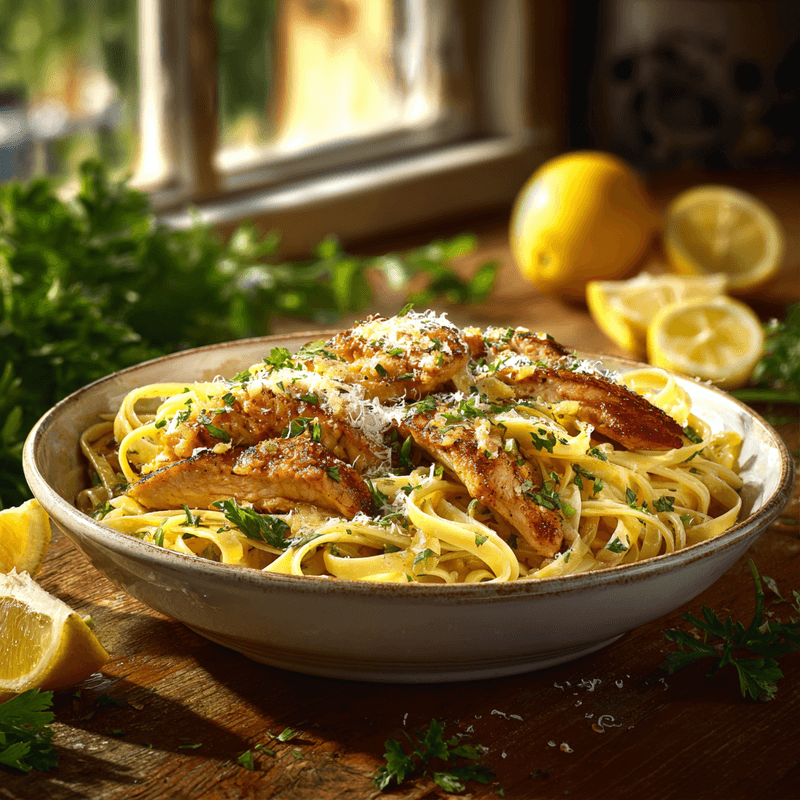
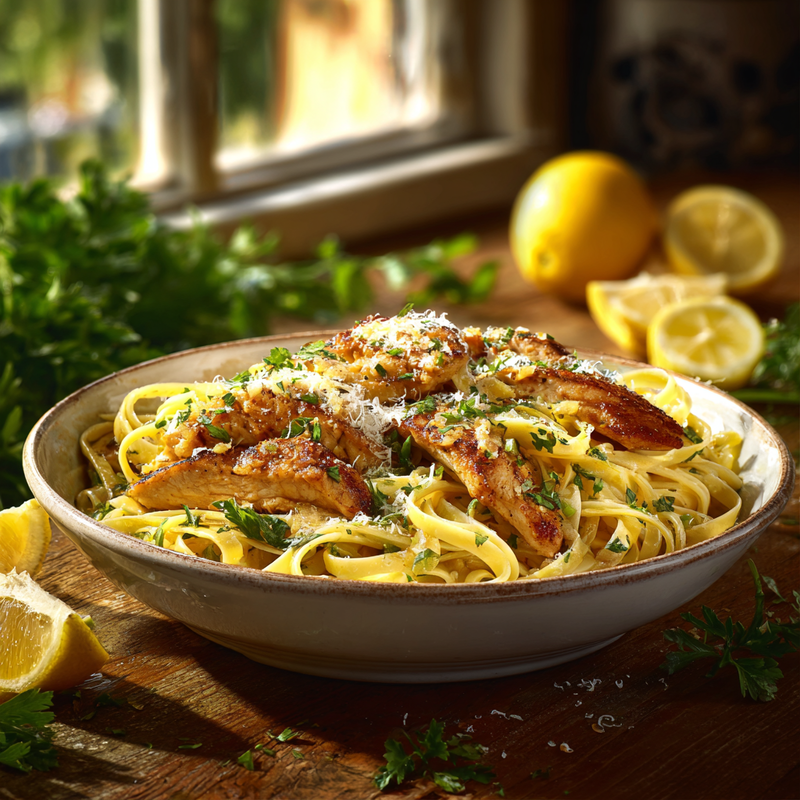
When Italian lemon chicken pasta comes together properly, it's a study in harmony and restraint. The pasta serves as the foundation, each strand coated in that silky, lemony sauce that glistens under the light. Nestled throughout are tender pieces of golden chicken, their edges still slightly crisp from the initial sear, their interior juicy and flavorful. Fresh parsley adds flecks of green that signal freshness, while wisps of lemon zest catch your eye and promise aromatic intensity.
Traditional Italian presentation focuses on simplicity that highlights the food itself. Serve the pasta in shallow bowls or on plates with slight rims to contain the sauce. Use tongs to twirl portions into neat nests, distributing chicken pieces evenly throughout. A final shower of freshly grated Parmesan at the table allows each person to adjust to their taste—some prefer just a whisper of cheese, while others love the nutty, salty contrast it provides against bright lemon.
The eating experience centers on that first forkful where all the components come together—the tender pasta, the juicy chicken, the bright citrus notes, the aromatic garlic and herbs. Italian meals are meant for conversation and connection, so this Italian lemon chicken pasta works beautifully as the centerpiece of a relaxed dinner where everyone lingers at the table. Serve it family-style from a large serving bowl, allowing people to help themselves and go back for seconds. The informality matches the dish's unpretentious nature while still feeling special and thoughtfully prepared.
Consider serving crusty bread alongside to soak up any extra sauce—Italians waste nothing delicious. A simple green salad dressed with olive oil and vinegar provides a crisp, refreshing contrast to the rich pasta. The meal doesn't need elaborate side dishes or complicated accompaniments; the Italian lemon chicken pasta shines brightest when allowed to be the star.
Make It Your Own
Once you've mastered the foundational technique for Italian lemon chicken pasta, endless variations await. The formula of protein, pasta, and bright citrus sauce adapts beautifully to different preferences and dietary needs without losing its essential character. Consider these approaches as starting points for your own creativity rather than rigid rules.
For those who prefer seafood, shrimp makes an excellent substitute for chicken. Use large shrimp, peeled and deveined, and reduce cooking time to just two to three minutes per side—they're done when they turn pink and opaque. Shrimp's natural sweetness plays beautifully against lemon's acidity. You could also use firm white fish like halibut or cod, cut into chunks and gently poached right in the sauce. Both options maintain the dish's light, bright character while offering different textures and flavors.
Vegetarian adaptations work surprisingly well for Italian lemon chicken pasta. Replace the chicken with chickpeas for protein and satisfying texture, or use thick slices of grilled zucchini and yellow squash for a vegetable-forward version. Roasted cherry tomatoes add bursts of sweetness and acidity that complement the lemon beautifully. Consider adding baby spinach or arugula in the final toss—the residual heat wilts the greens just enough while maintaining their fresh flavor.
Spice levels can easily be adjusted by adding red pepper flakes when you cook the garlic, infusing gentle heat throughout the dish. Start with a quarter teaspoon and increase to taste—the heat should enhance rather than overpower the delicate lemon flavor. For richer versions, stir in a few tablespoons of cream or mascarpone cheese at the end, creating a luxurious sauce that's still brighter than traditional cream pasta. This approach softens the lemon's edge while maintaining its presence.
Introducing this dish to hesitant eaters often succeeds because the flavors are familiar and accessible despite being distinctly Italian. The lemon tastes fresh rather than sour when properly balanced, and the garlic adds savory depth without being overwhelming. For children or those sensitive to strong flavors, reduce the garlic slightly and use a lighter hand with the lemon zest, which contains potent oils. You can always offer extra lemon wedges at the table for those who want more brightness.
Keeping and Reusing Leftovers
Italian lemon chicken pasta stores reasonably well, though like most pasta dishes, it's best enjoyed fresh when the textures and flavors are at their peak. If you have leftovers, transfer them to an airtight container and refrigerate for up to three days. The pasta will continue absorbing sauce as it sits, so expect a slightly drier texture when reheating. The lemon flavor may also intensify overnight, which some people prefer while others find it too pronounced.
Reheating requires a gentle approach to prevent the chicken from drying out and the pasta from turning mushy. The microwave works in a pinch—transfer a portion to a microwave-safe bowl, add a tablespoon or two of water or chicken broth, cover with a damp paper towel, and heat in thirty-second intervals, stirring between each. The added moisture helps rehydrate the pasta and creates steam that gently warms everything through.
For better results, reheat on the stovetop. Place the leftover Italian lemon chicken pasta in a skillet over medium-low heat and add a few tablespoons of water, broth, or even olive oil. Toss gently and frequently, allowing the added liquid to loosen the sauce and coat the pasta again. This method gives you more control and produces results closer to the original texture.
Creative repurposing transforms leftovers into entirely new meals. Cold Italian lemon chicken pasta makes an excellent base for a pasta salad—add halved cherry tomatoes, diced cucumber, and a handful of fresh greens, then adjust the seasoning with more lemon juice and olive oil. The flavors work beautifully at room temperature or chilled. You can also roughly chop the leftovers and use them as filling for omelets or frittatas, where eggs add richness and bind everything together.
Freezing is not recommended for this dish because the sauce tends to break when thawed, and the pasta texture deteriorates significantly. The lemon flavor also becomes muted and slightly bitter after freezing. If you regularly have leftovers, consider making smaller batches or planning for specific next-day uses rather than freezing portions.
Your Questions Answered
Can I make Italian lemon chicken pasta ahead of time for entertaining?
You can prepare components separately and assemble just before serving. Cook the chicken and refrigerate it, make the sauce base without adding lemon juice, and have your pasta water ready to boil. When guests arrive, cook fresh pasta, reheat the chicken in the sauce, and finish with lemon juice, zest, and cheese. This approach takes about fifteen minutes and delivers much better results than fully preparing and reheating.
What if I don't have fresh lemons—will bottled juice work?
Fresh lemons are truly essential for this Italian lemon chicken pasta because the brightness and complexity of fresh citrus defines the entire dish. Bottled lemon juice tastes flat and slightly bitter, lacking the aromatic oils and nuanced flavor of fresh lemons. If you absolutely must substitute, use half the amount of bottled juice and expect a noticeably different result. Fresh lemons are inexpensive and widely available, making them worth the effort.
How do I know when the sauce consistency is right?
The sauce for Italian lemon chicken pasta should coat the pasta in a light, glossy sheen rather than pooling in the bowl. When you lift pasta with tongs, you should see a thin coating clinging to each strand, and a small amount of sauce should remain in the pan. If the pasta looks wet or soupy, continue tossing over low heat to reduce slightly. If it looks dry or the strands stick together, add pasta water a tablespoon at a time until it loosens.
Can I use chicken thighs instead of breasts?
Absolutely—chicken thighs bring more flavor and stay juicier than breasts, making them an excellent choice for Italian lemon chicken pasta. Use boneless, skinless thighs and cook them the same way, though they may need an extra minute or two since thigh meat is slightly denser. The richer flavor of dark meat stands up beautifully to the bright lemon sauce, creating a more robust version of the dish.
What type of pasta shape works best?
Long pasta shapes like linguine, fettuccine, spaghetti, or angel hair work best because they tangle with the chicken pieces and capture the sauce beautifully. Linguine is traditional and provides the perfect width for this style of sauce. Avoid short shapes like penne or rigatoni, which don't integrate as well with the components. If you prefer short pasta, choose something like gemelli or casarecce that has curves and ridges to catch sauce.
Is this dish authentically Italian or Italian-American?
This Italian lemon chicken pasta represents modern Italian cooking that's evolved with contemporary tastes rather than a centuries-old traditional recipe. Italy's cuisine is not frozen in time—Italian cooks constantly adapt and create new dishes using their foundational techniques and flavor principles. While you might not find this exact dish in a historical Italian cookbook, the methods and ingredient combinations are thoroughly Italian in spirit and execution, making it authentic in the ways that matter most.
Italian Lemon Chicken Pasta
A bright, flavorful pasta dish featuring tender chicken, fresh lemon, garlic, and Parmesan in a light, silky sauce that comes together in just 30 minutes.
Prep Time
15 min
Cook Time
20 min
Total Time
35 min
Servings
4 servings
Ingredients
For 4 servings
- 1 pound boneless, skinless chicken breasts, pounded to even thickness
- 12 ounces linguine or fettuccine pasta
- 3 medium lemons (zest and juice, about 6 tablespoons juice)
- 4 tablespoons extra virgin olive oil, divided
- 4 cloves garlic, minced
- 1 cup chicken broth
- 1 cup reserved pasta water
- 3/4 cup freshly grated Parmesan cheese, plus more for serving
- 1/3 cup fresh flat-leaf parsley, chopped
- 1 teaspoon salt, plus more for pasta water
- 1/2 teaspoon freshly ground black pepper
- 1/4 teaspoon red pepper flakes, optional
Instructions
- 1
Prepare the chicken
Place chicken breasts between plastic wrap and gently pound to an even 3/4-inch thickness. Season both sides generously with salt and black pepper. This ensures even cooking and allows the seasoning to penetrate the meat.
- 2
Sear the chicken
Heat 2 tablespoons of olive oil in a large skillet over medium-high heat until shimmering. Add chicken breasts and cook without moving for 5 to 6 minutes until golden brown. Flip and cook another 5 minutes until cooked through and internal temperature reaches 165°F. Transfer to a plate and tent with foil to rest.
- 3
Cook the pasta
Bring a large pot of water to a rolling boil and add enough salt so it tastes like seawater. Add pasta and cook according to package directions until al dente, usually 8 to 10 minutes. Before draining, reserve 1 cup of pasta water, then drain the pasta.
- 4
Build the sauce base
Return the skillet to medium heat and add remaining 2 tablespoons olive oil. Add minced garlic and cook for 60 seconds, stirring constantly, until fragrant and just beginning to turn golden. Don't let it burn or it will taste bitter.
- 5
Create the lemon sauce
Pour in chicken broth and fresh lemon juice, scraping up any browned bits from the bottom of the pan with a wooden spoon. Let the mixture simmer for 2 to 3 minutes to reduce slightly and concentrate the flavors.
- 6
Add chicken and pasta
Slice the rested chicken into strips or bite-sized pieces and return to the skillet with any accumulated juices. Add the drained pasta directly to the skillet and begin tossing everything together with tongs.
- 7
Emulsify the sauce
Add reserved pasta water a few tablespoons at a time while tossing continuously. The starch from the pasta water will help create a silky, glossy sauce that coats each strand. Add enough pasta water until the sauce reaches your desired consistency.
- 8
Finish with aromatics
Remove the skillet from heat and add lemon zest, grated Parmesan cheese, and chopped parsley. Toss well to combine—the residual heat will melt the cheese without making it stringy. The sauce should coat the pasta in a light, glossy sheen.
- 9
Season and serve
Taste and adjust seasoning, adding more salt, black pepper, lemon juice, or Parmesan as needed. Serve immediately in shallow bowls or plates, topped with additional Parmesan cheese and a crack of black pepper. Garnish with extra lemon zest if desired.
Nutrition Facts
Per serving (estimated)
585 calories
Calories
62g
Carbs
42g
Protein
18g
Fat
3g
Fiber
720mg
Sodium
3g
Sugar