Honey Glazed Salmon Bowl Recipe – Sweet & Savory Dinner
Learn to make restaurant-quality honey glazed salmon bowls at home. Perfect balance of sweet, savory, and umami with crispy salmon and fresh vegetables.
cookwithlucia.com/recipes/honey-glazed-salmon-bowl-recipe-sweet-savory-healthy-dinner-bowl
There's something magical about the moment when honey meets heat and transforms into a glossy, caramelized coating that clings to perfectly cooked salmon. This honey glazed salmon bowl recipe brings together that beautiful marriage of sweet and savory in a way that feels both indulgent and nourishing. The salmon itself becomes jewel-toned and burnished, while the glaze creates little pockets of concentrated flavor that contrast beautifully with fresh, crisp vegetables and fluffy grains.
Building a successful salmon bowl is about understanding layers—not just of ingredients, but of temperatures, textures, and tastes. You want that contrast between the warm, caramelized protein and cool, crunchy elements. You need something creamy to tie it all together, and you want each component to shine individually while contributing to a harmonious whole.
Many home cooks feel intimidated by cooking salmon, worried about overcooking or underseasoning this delicate fish. But here's what I've learned: when you have a bold, flavorful glaze working for you, the salmon becomes nearly foolproof. The honey glazed salmon bowl recipe I'm sharing today gives you a roadmap for achieving restaurant-quality results in your own kitchen, with techniques that work whether you're cooking for yourself on a Tuesday night or preparing a special meal for guests.
Once you understand how to balance the glaze, control your cooking temperature, and build complementary flavors in your bowl, you'll find yourself returning to this formula again and again, tweaking vegetables with the seasons and adjusting flavors to match your mood.
The Science Behind the Method
When honey meets high heat in the presence of protein, several fascinating reactions occur simultaneously. The natural sugars in honey begin to caramelize, creating new flavor compounds that taste richer and more complex than raw honey ever could. At the same time, those sugars interact with the amino acids in the salmon through the Maillard reaction—the same process that makes seared steaks and toasted bread so irresistible.
This double dose of browning reactions is what gives our honey glazed salmon bowl recipe its signature depth of flavor. The fish develops a beautifully burnished exterior while staying moist inside, thanks to salmon's natural fat content acting as an insulator. The glaze itself thickens and reduces as water evaporates, concentrating flavors and creating that glossy coating we're after.
Understanding this process helps you make better decisions in the moment. If your glaze is browning too quickly, you know to reduce the heat before those sugars burn and turn bitter. If it's staying thin and watery, you know you need more heat or more time for proper caramelization. The key is finding that sweet spot where the salmon cooks through just as the glaze reaches perfect consistency.
This knowledge extends far beyond this single recipe. Once you understand how sugars behave under heat and how proteins respond to different cooking methods, you can apply these principles to countless other dishes. You're not just following steps—you're developing intuition that makes you more confident and creative in the kitchen.
Tools and Ingredients You'll Need
For the salmon itself, you'll want a heavy-bottomed skillet—cast iron or stainless steel both work beautifully. These materials retain heat well and promote even browning. A non-stick pan will work in a pinch, but you won't get quite the same caramelization. The pan should be large enough that your salmon fillets have at least an inch of space between them; crowding creates steam, which prevents proper searing.
A good instant-read thermometer takes the guesswork out of doneness. Salmon is best at 125-130°F internally, where it's just cooked through but still tender and slightly translucent in the center. You'll also need a silicone brush for applying glaze—silicone won't melt or shed bristles like natural fiber brushes might. For building your bowls, wide, shallow bowls work better than deep ones, allowing you to see and access all the beautiful components.
Ingredient quality matters tremendously in this honey glazed salmon bowl recipe. Look for salmon with firm, moist flesh that springs back when pressed. The color should be vibrant—whether deep coral for sockeye or lighter pink for coho—without any brown discoloration. Avoid any fish with a strong odor; fresh salmon smells clean and slightly sweet, like the ocean.
For honey, choose a variety with good flavor since it's a star ingredient here. Darker honeys like buckwheat or wildflower bring more complexity, while lighter varieties like clover or acacia are more delicate. Avoid artificial honey blends. Your soy sauce should be naturally brewed—check the ingredient list for just soybeans, wheat, salt, and water. Fresh ginger and garlic are non-negotiable; the pre-minced versions in jars lack the brightness we need. Rice vinegar adds essential acidity to balance the sweetness, and a touch of sesame oil brings nutty depth.
The Method, Step by Step
Begin by preparing your glaze, which allows the flavors to meld while you prep everything else. In a small bowl, whisk together honey, soy sauce, rice vinegar, minced garlic, grated fresh ginger, and a small amount of sesame oil. The mixture should taste balanced—sweet with savory depth and a bright acidic edge. If it's too sweet, add more vinegar; if too sharp, add a touch more honey. This is your flavor foundation, so take a moment to get it right.
Next, prepare your salmon by patting it completely dry with paper towels. This step is crucial and often overlooked. Any surface moisture will create steam instead of allowing proper searing, and it will prevent the glaze from adhering properly. Season the flesh side lightly with salt—the glaze will add plenty of flavor, so you don't need much. Let the salmon sit at room temperature for about ten minutes while you prep your bowl components; this ensures even cooking from edge to center.
While your protein comes to temperature, prepare your bowl ingredients. Cook your grain of choice—white rice, brown rice, or quinoa all work beautifully in this honey glazed salmon bowl recipe. I love short-grain rice for its slightly sticky texture that holds together well with chopsticks. While the grain cooks, prep your vegetables: thinly slice cucumber, shred cabbage or lettuce, julienne carrots, slice avocado, and prepare any other fresh elements you're using. Everything should be ready to assemble the moment your salmon is done.
Heat your skillet over medium-high heat until a drop of water sizzles and evaporates immediately. Add a high-heat oil like avocado or grapeseed—just enough to lightly coat the bottom. Place your salmon skin-side up in the pan (or presentation-side down if your fillets are skinless). Don't touch it. Let it sear undisturbed for three to four minutes, until you see the edges becoming opaque and a golden crust forming underneath.
Flip the salmon carefully using a thin spatula, then immediately reduce heat to medium. This is when you begin glazing. Brush the seared top generously with your honey mixture, letting it drip down the sides. The glaze will begin to bubble and caramelize against the hot pan. After two minutes, brush on another layer of glaze. Continue cooking until the salmon reaches your desired doneness—I recommend 125°F internal temperature for salmon that's cooked through but still tender and juicy.
In the final minute of cooking, spoon some of the caramelized glaze from the pan over the top of each fillet, creating multiple layers of flavor. The salmon should be deeply golden with darker spots where the glaze has concentrated. Remove from heat and let rest for two minutes—this allows the juices to redistribute throughout the fish. During this rest, any residual glaze in the pan will thicken further; you can drizzle this over your assembled bowls for extra flavor.
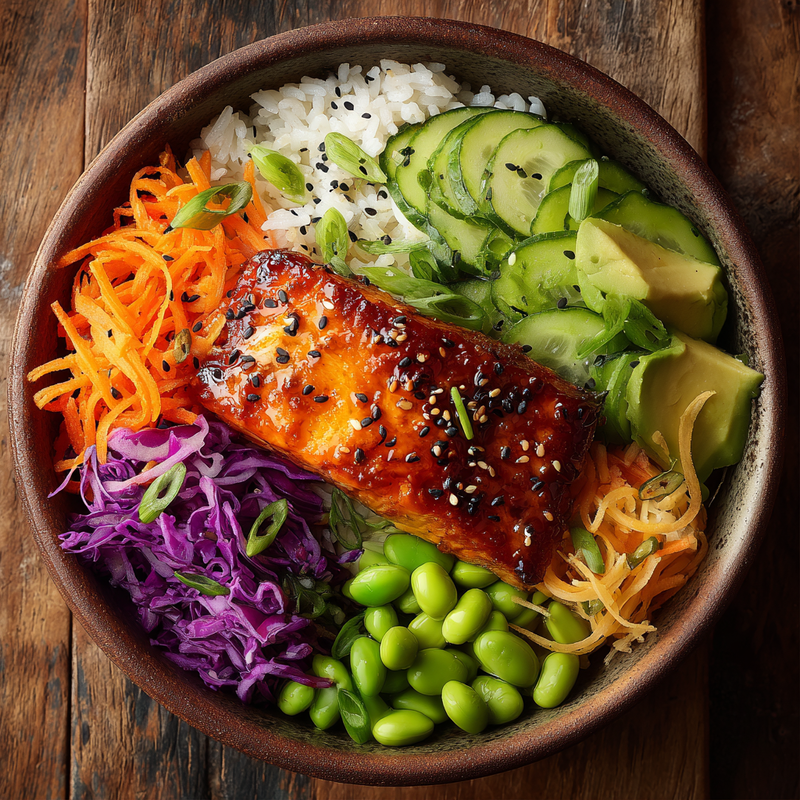
Now comes the satisfying part: building your bowls. Start with your warm grain as a base, creating a bed that covers about half the bowl bottom. Arrange your salmon prominently on one side, then compose your fresh vegetables around it in separate sections rather than mixing them all together. This approach, borrowed from Japanese donburi tradition, lets each ingredient maintain its distinct identity. Add any additional elements like sliced avocado, pickled vegetables, edamame, or a soft egg. Finish with garnishes: sesame seeds, sliced green onions, and perhaps a sprinkle of nori strips for umami depth.
Troubleshooting Guide
If your glaze is burning before your salmon cooks through, your heat is too high. Honey contains sugars that caramelize quickly, and once they cross into burning territory, they turn bitter and acrid. Next time, start with medium heat rather than medium-high, and remember that reducing temperature after the initial sear is essential. You can also dilute your glaze with a tablespoon of water if you notice it darkening too rapidly during cooking.
When salmon sticks to the pan and tears when you try to flip it, the culprit is usually insufficient preheating or flipping too early. The fish needs to develop a proper crust before it will release naturally from the cooking surface. Wait until you can slide your spatula underneath easily—if you meet resistance, give it another thirty seconds. Using enough oil also helps; the pan bottom should glisten but not pool with fat.
Dry, overcooked salmon is perhaps the most common problem with any honey glazed salmon bowl recipe. Salmon continues cooking from residual heat after you remove it from the pan, so pull it off about five degrees before your target temperature. Remember that thicker portions cook slower than thin ends—you may need to remove smaller pieces earlier, or fold thin tail sections under to create more even thickness.
If your glaze stays thin and runny instead of thickening into a proper coating, you may need to cook it longer or use less liquid in your initial mixture. The glaze thickens through reduction as water evaporates. You can also reserve half your glaze and reduce it separately in a small saucepan until syrupy, then use that for final drizzling while using the thinner version for mid-cooking application.
When your bowl feels unbalanced flavor-wise—perhaps too sweet or lacking brightness—the fix is usually in your accompaniments rather than the salmon itself. Add pickled vegetables or a squeeze of fresh lime to cut through richness. A dollop of plain yogurt or a drizzle of spicy mayonnaise can provide cooling contrast. Remember that each element should contribute: if everything is rich and sweet, nothing stands out. You need those fresh, acidic, and crunchy components to create contrast and keep each bite interesting.
Taking It to the Next Level
Once you've mastered the basic honey glazed salmon bowl recipe, consider infusing your glaze with additional aromatics. A bruised stalk of lemongrass simmered in the glaze for ten minutes brings subtle citrus complexity. A star anise pod adds mysterious warmth, while a small piece of kombu (dried kelp) deepens the umami foundation. Strain these aromatics out before brushing onto your salmon.
For restaurant-level presentation, try searing your salmon in a very hot cast iron pan to create a dramatic crust, then finishing it under the broiler while basting with glaze. This technique creates incredible caramelization and allows you to glaze the top without flipping. Watch carefully though—broilers are powerful and the line between beautifully caramelized and burnt is thin.
Experiment with different acids in your glaze to change the flavor profile entirely. Lime juice and a touch of fish sauce move the dish toward Southeast Asian flavors. A splash of pomegranate molasses creates Middle Eastern notes. Even a small amount of tamarind paste brings complex sweet-tart depth that's absolutely addictive.
Consider smoking your salmon before glazing for an extra dimension of flavor. Even fifteen minutes in a stovetop smoker or on a grill with wood chips adds incredible depth. The smoke flavor plays beautifully with honey's sweetness, creating a taste experience that's simultaneously refined and primal.
Storing Your Results
Cooked salmon keeps well for up to three days when stored properly, though the texture is best within the first day. Let your salmon cool to room temperature, then transfer to an airtight container and refrigerate. Store the grain and vegetables separately to maintain their distinct textures—nothing is worse than soggy lettuce or mushy cucumber soaking in fish juices.
When reheating salmon for your honey glazed salmon bowl recipe, gentle heat is essential. The microwave works but can create dry spots; I prefer a gentle reheat in a covered skillet with a splash of water to create steam. Alternatively, enjoy the salmon cold or at room temperature, which is delicious in its own right—the glaze maintains its flavor even when chilled.
If you want to meal prep, consider cooking the salmon and grain in advance but keeping your vegetables fresh and raw until serving time. The contrast between warm protein and grain with cool, crisp vegetables is part of what makes these bowls so satisfying. You can also prep all your components and simply cook the salmon fresh each time—since it only takes about ten minutes, this is quite manageable even on busy evenings.
For longer storage, the glazed salmon freezes reasonably well for up to two months. Wrap individual portions tightly in plastic wrap, then place in a freezer bag with as much air pressed out as possible. Thaw overnight in the refrigerator before reheating. The texture won't be quite as perfect as fresh, but it's certainly acceptable and makes weeknight dinners nearly effortless.
Common Questions
Can I use frozen salmon for this recipe?
Absolutely, and for many home cooks, frozen salmon is actually more accessible and often fresher than what's labeled "fresh" at the counter. Fish is typically frozen on the boat shortly after being caught, locking in quality. Thaw it slowly in the refrigerator overnight, never at room temperature or in hot water. Pat it very dry before cooking since frozen fish releases more moisture than fresh. The honey glazed salmon bowl recipe works beautifully with properly thawed fish.
What if I don't have a thermometer?
You can check doneness by pressing the salmon gently with your finger—it should feel firm but still give slightly, similar to pressing the pad of your thumb when you touch your thumb to your middle finger. You can also check the interior by flaking it gently with a fork at the thickest part; it should separate into layers and appear slightly translucent in the very center. Remember that carryover cooking will finish it off the heat.
Can I make this with other types of fish?
Definitely! This glazing technique works wonderfully with any firm, fatty fish. Try it with trout, Arctic char, or even thick white fish like halibut or cod, though you'll need to adjust cooking times since these are leaner and more delicate. Tuna steaks are spectacular with this treatment, though I recommend leaving them rare in the center. The honey glazed salmon bowl recipe is really a template you can adapt to whatever excellent fish your market offers.
How do I prevent the honey from burning?
The key is applying the glaze in layers rather than all at once, and not applying it too early in the cooking process. Let the salmon sear and get mostly cooked through before you start glazing, then add thin layers that caramelize quickly rather than one thick coating that burns on the outside before reducing properly. Medium heat rather than high is your friend once you start glazing. If you notice burning, immediately reduce heat and add a splash of water to the glaze to thin it.
Can I prep the glaze in advance?
Yes, the glaze actually benefits from sitting for a few hours or even overnight, which allows the garlic and ginger flavors to permeate the honey and soy sauce. Store it in an airtight container in the refrigerator for up to a week. Bring it back to room temperature before using, or it will cool down your pan too much when you start brushing it on. You can even make a double or triple batch and use it throughout the week for this honey glazed salmon bowl recipe or other proteins like chicken.
What grain alternatives work best?
Beyond traditional white or brown rice, this bowl shines with quinoa, farro, or even cauliflower rice if you're looking for a lower-carb option. Pearl couscous gives wonderful texture, and soba noodles create a completely different but delicious experience. Each grain brings its own character—nutty farro, fluffy quinoa, chewy brown rice—so choose based on the texture and flavor you're craving. I've even made this with warm lentils for an earthier, more protein-rich base that complements the sweet glaze beautifully.
Honey Glazed Salmon Bowl Recipe – Sweet & Savory Healthy Dinner Bowl
Restaurant-quality salmon bowls featuring caramelized honey-glazed salmon served over rice with fresh vegetables. A perfect balance of sweet, savory, and umami flavors in a nutritious, satisfying meal.
Prep Time
15 min
Cook Time
20 min
Total Time
35 min
Servings
4 servings
Ingredients
For 4 servings
- 4 salmon fillets (6 ounces each), skin on or off
- 3 tablespoons honey
- 3 tablespoons soy sauce
- 1 tablespoon rice vinegar
- 3 cloves garlic, minced
- 1 tablespoon fresh ginger, grated
- 1 teaspoon sesame oil
- 2 tablespoons avocado oil or grapeseed oil
- 3 cups cooked short-grain rice or grain of choice
- 1 cup cucumber, thinly sliced
- 1 cup red cabbage, shredded
- 1 cup carrots, julienned
- 1 avocado, sliced
- 1/2 cup edamame, shelled and cooked
- 2 green onions, sliced
- 2 tablespoons sesame seeds
- Nori strips for garnish, optional
- Salt to taste
Instructions
- 1
Prepare the glaze
In a small bowl, whisk together honey, soy sauce, rice vinegar, minced garlic, grated ginger, and sesame oil until well combined. Taste and adjust the balance of sweet, salty, and acidic elements to your preference. Set aside to let flavors meld while you prepare other components.
- 2
Prepare the salmon
Pat the salmon fillets completely dry with paper towels, removing all surface moisture. Season the flesh side lightly with salt. Let the salmon sit at room temperature for 10 minutes to ensure even cooking from edge to center.
- 3
Prepare bowl components
Cook your rice or grain according to package directions and keep warm. While grain cooks, prepare all vegetables: thinly slice cucumber, shred cabbage, julienne carrots, and slice avocado. Arrange everything so it's ready to assemble immediately after cooking salmon.
- 4
Sear the salmon
Heat a heavy-bottomed skillet over medium-high heat until very hot. Add avocado oil to lightly coat the bottom. Place salmon fillets in the pan skin-side up (or presentation-side down if skinless), leaving space between each piece. Let sear undisturbed for 3-4 minutes until edges become opaque and a golden crust forms underneath.
- 5
Flip and begin glazing
Carefully flip salmon using a thin spatula, then immediately reduce heat to medium. Brush the seared top generously with honey glaze, allowing it to drip down the sides. Let cook for 2 minutes, then brush with another layer of glaze as it begins to bubble and caramelize.
- 6
Finish cooking
Continue cooking until salmon reaches 125-130°F internal temperature, brushing with additional glaze every minute or so. The exterior should be deeply golden with caramelized spots. In the final minute, spoon some of the caramelized glaze from the pan over each fillet. Remove from heat and let rest for 2 minutes.
- 7
Assemble the bowls
Divide warm rice among four wide, shallow bowls, creating a base that covers about half the bowl. Place one salmon fillet prominently in each bowl. Arrange cucumber, cabbage, carrots, avocado, and edamame in separate sections around the salmon rather than mixing together.
- 8
Garnish and serve
Sprinkle each bowl with sliced green onions and sesame seeds. Add nori strips if desired. Drizzle any remaining caramelized glaze from the pan over the bowls for extra flavor. Serve immediately while salmon and rice are still warm and vegetables are crisp.
Nutrition Facts
Per serving (estimated)
585 calories
Calories
52g
Carbs
42g
Protein
22g
Fat
6g
Fiber
680mg
Sodium
15g
Sugar