Greek Chicken with Lemon and Feta Recipe | Authentic & Easy
Learn to make authentic Greek chicken with lemon and feta at home. Tender, herb-marinated chicken with bright citrus and creamy feta in 45 minutes.
cookwithlucia.com/recipes/greek-chicken-with-lemon-and-feta
The Mediterranean air carries the scent of oregano and thyme, mingling with the bright, clean aroma of fresh lemons as chickens roast in kitchens across Greece. This isn't the heavy, sauce-laden cooking of other regions—Greek cuisine celebrates simplicity, allowing each ingredient to shine with clarity and purpose. When you prepare Greek chicken with lemon and feta, you're tapping into thousands of years of culinary wisdom that values quality over complexity, freshness over fuss.
What makes Greek cooking so compelling is its honest approach to flavor. There are no secret techniques or complicated reductions here. Instead, you'll find the pure taste of olive oil pressed from ancient groves, the floral notes of wild mountain herbs, and the tang of sheep's milk cheese that's been made the same way for generations. This Greek chicken with lemon and feta brings all those elements together in a dish that feels both rustic and refined.
The beauty of making this at home is that you don't need specialty equipment or hard-to-pronounce ingredients. Your everyday kitchen becomes a taverna on the Aegean coast. With good olive oil, fresh lemons, quality feta, and a handful of dried herbs, you'll create something that transports your family straight to a whitewashed village overlooking the sea. The result is tender, juicy chicken infused with bright citrus, earthy herbs, and the creamy, salty punch of authentic feta cheese.
A Taste of the Culture
Greek chicken with lemon and feta represents the heart of home cooking throughout Greece. This isn't a dish you'll find in tourist restaurants—it's what Greek families make on busy weeknights when they want something nourishing, flavorful, and uncomplicated. It embodies the Greek principle of "filoxenia," or hospitality, where generous, wholesome food is offered without pretense or elaborate presentation.
The flavor foundation of Greek cuisine rests on a holy trinity: lemon, olive oil, and oregano. These three ingredients appear in countless dishes because they grow abundantly throughout the Mediterranean landscape. Greeks understand that acidity brightens and balances, fat carries flavor and creates richness, and herbs connect the plate to the wild hillsides where goats graze and bees gather pollen. Every bite should taste like sunshine and sea breeze.
This approach to cooking reflects a culture that values communal meals, seasonal eating, and the pleasure of lingering at the table. Greeks don't rush through dinner—they build entire evenings around sharing food, conversation, and connection. The dishes themselves are designed to be passed around, picked at, and enjoyed slowly. A platter of Greek chicken with lemon and feta sits at the center of the table, inviting everyone to tear off pieces, squeeze extra lemon, and soak up the pan juices with crusty bread.
Regional variations exist throughout Greece's islands and mainland. In coastal areas, you might find more lemon and less oregano, while mountain villages lean heavier on dried herbs gathered from nearby slopes. Some families crumble the feta over the chicken before the final moments of cooking, while others serve it fresh and cold alongside the hot meat, creating a temperature contrast that's utterly delicious.
The Ingredients That Define This Dish
The chicken itself should be bone-in and skin-on if possible—thighs are the gold standard here. Greek cooks know that bones add flavor during cooking and the skin becomes gloriously crispy when roasted with olive oil. Boneless, skinless breasts will work in a pinch, but you'll sacrifice some of that authentic richness and texture. Look for chicken with a bit of fat still attached; this isn't the place for ultra-lean meat.
Olive oil is non-negotiable, and quality matters tremendously. You don't need the most expensive bottle in the store, but choose extra virgin olive oil with a harvest date within the last year. Greek olive oil tends to be robust and slightly peppery, with a golden-green color that speaks to its freshness. You'll use it both in the marinade and for drizzling at the end, so select something you'd be happy to taste on its own. The oil carries the oregano and garlic throughout the dish, coating every surface.
Fresh lemons are essential—bottled juice simply won't deliver the same bright, complex acidity. Greek lemons are smaller and more intensely flavored than many supermarket varieties, but any fresh lemon will work beautifully. You'll need both the juice and the zest, so choose lemons with unblemished, fragrant skin. Roll them firmly on the counter before cutting to release more juice. The zest contains aromatic oils that perfume the entire dish.
Authentic Greek feta comes from sheep's milk or a blend of sheep and goat's milk, never cow's milk. It should be stored in brine and have a crumbly yet creamy texture with a pleasantly tangy, salty flavor. Bulgarian or French feta won't give you the same result—seek out blocks labeled "Greek feta" or "made in Greece." Rinse it briefly if it tastes too salty, then crumble it with your fingers rather than cutting it with a knife. Those irregular pieces distribute better and create pockets of creamy richness.
Dried oregano is surprisingly better than fresh in this context. Greek oregano, specifically, has a more concentrated, almost floral quality compared to Italian or Mexican varieties. It grows wild across Greek hillsides, and families often harvest and dry their own. The dried leaves release their essential oils when mixed with olive oil and lemon, creating that unmistakable Greek flavor. Fresh oregano can work, but you'll need three times as much and the flavor will be grassier, less intense.
Garlic should be fresh, with plump, firm cloves. Greek cooking uses garlic generously but not overwhelmingly—it's there to support, not dominate. Minced garlic distributes throughout the marinade, while smashed whole cloves can be tucked around the chicken pieces for a mellower, sweeter garlic presence that softens during roasting. Pre-minced garlic from a jar lacks the pungency and brightness of freshly crushed cloves.
Potatoes often accompany Greek chicken with lemon and feta, though they're technically optional. Choose starchy varieties like Yukon Gold that will crisp on the outside while absorbing all those lemony, garlicky pan juices. Cut them into wedges rather than cubes—more surface area means more crispy edges. Toss them in the same marinade as the chicken so every element of the dish speaks the same flavor language.
Fresh or dried thyme appears in some regional versions, adding an earthy, slightly minty note that complements the oregano. Black pepper should be freshly ground—the volatile oils in whole peppercorns are far more aromatic than pre-ground powder. Sea salt is traditional, and its larger crystals dissolve slowly, seasoning the chicken more evenly as it marinates.
Cooking the Authentic Way
Begin by creating the marinade that will infuse your chicken with all those classic Greek flavors. In a large bowl, whisk together olive oil, fresh lemon juice, lemon zest, minced garlic, dried oregano, fresh thyme if using, salt, and black pepper. The mixture should smell intensely aromatic—bright from the citrus, pungent from the garlic, and herbaceous from the oregano. This is the flavor foundation that will permeate every fiber of the meat.
Add your chicken pieces to the marinade, turning them to coat completely. Use your hands to really work the marinade under the skin and into any crevices. Greek cooks aren't delicate about this—they massage the flavors into the meat with confidence. If you're including potatoes, add them now as well, tossing until every surface glistens with oil and herbs. Cover and refrigerate for at least one hour, though overnight is even better. The acid in the lemon juice begins to tenderize the meat while the oil carries fat-soluble flavor compounds deep into the flesh.
When you're ready to cook, bring the chicken to room temperature for about thirty minutes. This ensures even cooking throughout. Preheat your oven to 400°F (200°C)—hot enough to crisp the skin and caramelize the edges, but not so hot that the outside burns before the inside cooks through. Greek home ovens tend to run hot and small, so dishes cook quickly with good browning.
Arrange the chicken pieces skin-side up in a large roasting pan or baking dish, spacing them so air can circulate. Nestle the potato wedges around and between the chicken, cut sides down for maximum crisping. Pour any remaining marinade over everything, then add a splash of water or chicken broth to the bottom of the pan. This prevents the lemon juice from burning and creates steam that keeps the chicken moist while the top browns beautifully.
Roast for thirty-five to forty-five minutes, depending on the size of your chicken pieces. Halfway through, rotate the pan and baste everything with the accumulated pan juices. The chicken is done when the skin is golden brown and crispy, the juices run clear when you pierce the thickest part with a knife, and an instant-read thermometer registers 165°F (74°C). The potatoes should be tender inside with crispy, golden edges. If the skin isn't as crispy as you'd like, run the pan under the broiler for two to three minutes, watching carefully to prevent burning.
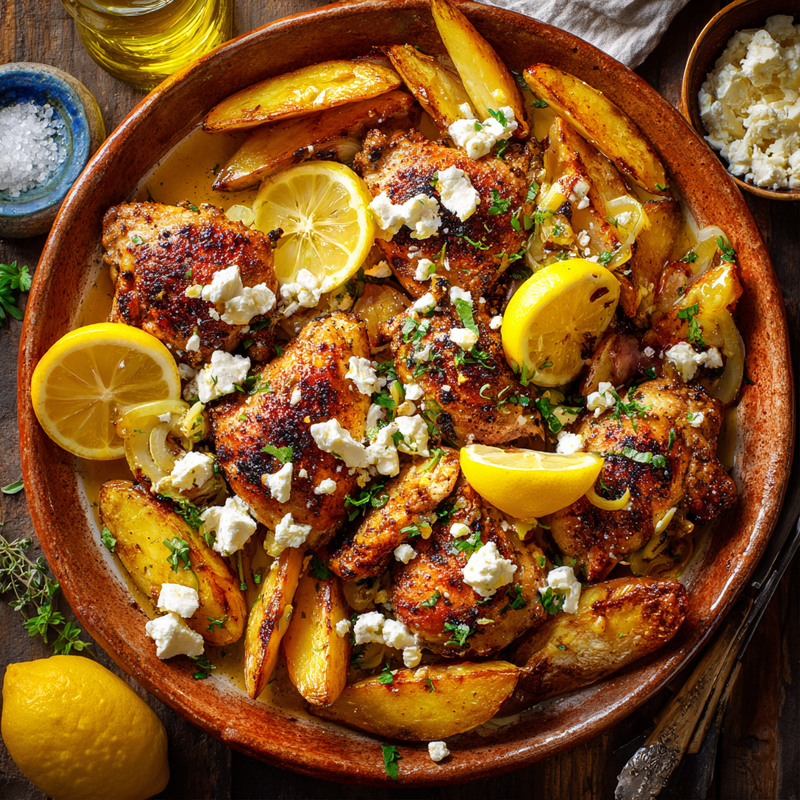
The final step is distinctly Greek—remove the pan from the oven and immediately squeeze fresh lemon juice over everything while it's still sizzling. The hot pan juices will hiss and steam, and that burst of fresh citrus brightens all the roasted, caramelized flavors. Crumble generous amounts of feta cheese over the top, letting some pieces melt slightly from the residual heat while others remain cool and creamy. This temperature and texture contrast is part of what makes Greek chicken with lemon and feta so compelling.
Bringing It All Together
The magic happens when all these simple components meet on the plate. The chicken emerges from the oven with crackling-crisp skin that shatters when you bite through it, giving way to meat that's been infused with lemon, garlic, and oregano. Those pan juices—a mixture of rendered chicken fat, olive oil, lemon juice, and the concentrated essence of herbs—pool at the bottom of the dish, begging to be soaked up with bread or spooned over rice.
The feta provides crucial textural and flavor contrast. Its cool creaminess cuts through the richness of the roasted chicken, while its salty tang plays against the bright acidity of the lemon. As you eat, you'll get bites where the feta has warmed and softened, almost melting into the chicken, and other bites where it remains firm and crumbly, providing that characteristic squeak against your teeth.
Traditional accompaniments are beautifully simple. A village salad (often called Greek salad outside Greece) with tomatoes, cucumbers, red onion, olives, and more feta provides fresh crunch and acidity. Warm pita bread or crusty country bread is essential for mopping up every last drop of those precious pan juices. Some families serve Greek chicken with lemon and feta over rice pilaf or orzo, letting the grains absorb all that lemony goodness.
The eating experience is communal and relaxed. The chicken platter sits in the middle of the table, and everyone reaches in to take what they want. There's no formal plating, no carefully composed presentations. This is food meant to be shared, discussed, and enjoyed without ceremony. Pour some olive oil into a small dish for extra bread-dipping, set out lemon wedges for those who want even more brightness, and let the meal unfold at its own pace.
Make It Your Own
While Greek chicken with lemon and feta is perfect as written, there's room to adapt it to your family's preferences. Try adding artichoke hearts or cherry tomatoes to the roasting pan during the last twenty minutes of cooking. The artichokes absorb the lemony juices beautifully, and the tomatoes burst into sweet-tart little flavor bombs that complement the savory chicken.
For those who prefer milder flavors, reduce the garlic by half and use a lighter hand with the oregano. You can also swap bone-in chicken for boneless thighs, which cook faster and are easier for younger eaters to manage. The trade-off is less flavor development, but a twenty-minute cooking time makes this a legitimate weeknight option. Finish with the same lemon-feta treatment for authentic taste in less time.
Vegetarian versions work surprisingly well with this flavor profile. Thick slices of cauliflower or halved zucchini can be marinated and roasted using exactly the same method. Chickpeas tossed in the marinade and crisped in the oven provide protein and that satisfying texture contrast. The lemon-feta-oregano combination is so fundamentally delicious that it elevates vegetables to main-dish status.
If your family is sensitive to spice, know that authentic Greek chicken with lemon and feta isn't particularly hot—black pepper provides the only heat. For those who want more kick, try adding red pepper flakes to the marinade or finishing with a drizzle of spicy olive oil. Some modern Greek cooks incorporate a touch of honey to balance the lemon's acidity, creating a sweet-tart glaze that caramelizes beautifully.
Keeping and Reusing Leftovers
Greek chicken with lemon and feta stores beautifully for three to four days in the refrigerator. Keep the chicken and potatoes in an airtight container, but store any remaining feta separately—it stays fresher and maintains better texture when not sitting in the pan juices. The flavors actually deepen overnight as the herbs continue to permeate the meat, making leftovers arguably even better than the original meal.
Reheat gently in a covered dish at 325°F (160°C) to prevent the chicken from drying out. Add a splash of water or broth before covering to create steam. The skin won't be as crispy as when first cooked, but you can restore some texture by finishing uncovered under the broiler for a minute or two. Alternatively, shred the leftover chicken and use it in completely different applications where crispy skin isn't the goal.
Transform leftovers into a Greek-style grain bowl by shredding the chicken over quinoa or farro, adding fresh cucumbers, tomatoes, olives, and extra feta, then drizzling with the reserved pan juices mixed with additional lemon juice and olive oil. Stuff the shredded chicken into pita pockets with tzatziki sauce, lettuce, and tomatoes for a quick lunch. Toss it with orzo, spinach, sun-dried tomatoes, and pine nuts for a Mediterranean pasta salad that's perfect for packed lunches.
The potatoes can be roughly mashed and formed into patties, then pan-fried until crispy for a next-day breakfast alongside eggs. Or chop them into a hash with onions and peppers, topped with a fried egg and crumbled feta. The lemony, garlicky flavor works beautifully in morning contexts, especially when you add fresh herbs like dill or parsley.
Your Questions Answered
Can I find Greek feta at regular supermarkets?
Most well-stocked supermarkets carry authentic Greek feta in the specialty cheese section, often near other Mediterranean products. Look for blocks packed in brine rather than pre-crumbled feta, which is usually made from cow's milk and lacks the characteristic tang and creaminess. If your regular store doesn't carry it, Middle Eastern or Mediterranean markets always stock multiple varieties of Greek feta at excellent prices.
Is this dish very spicy or strong-tasting?
Greek chicken with lemon and feta is bright and flavorful but not spicy in the sense of heat. The lemon provides acidity, the oregano gives herbaceous depth, and the feta adds saltiness, but there's no chili or hot pepper involved. The garlic is noticeable but not overwhelming, especially after roasting, which mellows its pungency. Most people, including those with sensitive palates, find the flavors balanced and approachable rather than aggressive.
How do Greeks traditionally serve and eat this meal?
In Greek homes, this would be served family-style on a large platter placed in the center of the table. Everyone takes portions directly from the communal dish, and bread is always present for soaking up the pan juices. The meal unfolds slowly, with multiple courses including appetizers like olives, tzatziki, and vegetables. Greeks rarely rush through dinner—it's a time for conversation, connection, and enjoying food without hurry. Fresh fruit often follows as a light, refreshing finish.
Can I make this more authentic or are shortcuts okay?
The beauty of Greek home cooking is that it's already quite simple and authentic—there aren't many shortcuts to take because the original recipe is straightforward. That said, if you're pressed for time, you can skip the marinade and simply season the chicken generously before roasting, though you'll lose some depth of flavor. Using pre-minced garlic or bottled lemon juice will save minutes but cost you the bright, fresh taste that defines Greek chicken with lemon and feta. The dish is forgiving, but quality ingredients make a noticeable difference.
What should I drink with Greek chicken?
Traditionally, Greeks might enjoy this meal with water, as staying hydrated in the Mediterranean climate is important. Many families also serve fresh lemonade, which echoes the citrus notes in the dish. Herbal teas like mountain tea or chamomile are popular after the meal. The key is choosing beverages that refresh rather than compete with the food's bright, clean flavors. Whatever you choose, the focus remains on the food and the company rather than the drinks.
How can I make this for a crowd without overwhelming my oven?
Greek chicken with lemon and feta scales up beautifully for gatherings. Use multiple shallow roasting pans rather than one deep dish, which allows better air circulation and more even browning. You can marinate everything the night before, then roast in batches, keeping finished portions warm in a low oven while the rest cooks. Alternatively, use your largest sheet pans and rotate them halfway through cooking. The dish holds well and can even be served at room temperature, which is actually quite traditional and takes pressure off your timing.
Greek Chicken with Lemon and Feta
Tender, herb-marinated chicken roasted with lemon, oregano, and garlic, then topped with crumbled feta cheese. A simple, authentic Greek dish bursting with Mediterranean flavors.
Prep Time
15 min
Cook Time
45 min
Total Time
1h
Servings
4 servings
Ingredients
For 4 servings
- 8 bone-in, skin-on chicken thighs (about 3 pounds)
- 1/2 cup extra virgin olive oil
- 1/4 cup fresh lemon juice (about 2 lemons)
- 2 tablespoons lemon zest (from 2 lemons)
- 6 cloves garlic, minced
- 2 tablespoons dried Greek oregano
- 1 tablespoon fresh thyme leaves, or 1 teaspoon dried thyme
- 1 1/2 teaspoons sea salt
- 1 teaspoon freshly ground black pepper
- 1 1/2 pounds Yukon Gold potatoes, cut into wedges
- 1/4 cup water or chicken broth
- 8 ounces Greek feta cheese, crumbled
- 2 additional lemons, cut into wedges for serving
- Fresh parsley for garnish, optional
Instructions
- 1
Prepare the marinade
In a large bowl, whisk together the olive oil, lemon juice, lemon zest, minced garlic, dried oregano, thyme, salt, and black pepper until well combined. The mixture should be fragrant and well-emulsified.
- 2
Marinate chicken and potatoes
Add the chicken thighs and potato wedges to the marinade, tossing to coat completely. Use your hands to massage the marinade under the chicken skin and ensure everything is evenly coated. Cover the bowl and refrigerate for at least 1 hour, or preferably overnight for deeper flavor.
- 3
Bring to room temperature
Remove the chicken and potatoes from the refrigerator 30 minutes before cooking to bring them to room temperature. This ensures even cooking throughout the meat.
- 4
Preheat and prepare pan
Preheat your oven to 400°F (200°C). Arrange the chicken thighs skin-side up in a large roasting pan or baking dish, spacing them apart for good air circulation. Nestle the potato wedges around and between the chicken pieces, placing cut sides down.
- 5
Add liquid and begin roasting
Pour any remaining marinade over the chicken and potatoes. Add the water or chicken broth to the bottom of the pan to prevent burning and create steam. Place the pan in the preheated oven.
- 6
Roast and baste
Roast for 35-45 minutes, rotating the pan and basting everything with the accumulated pan juices halfway through cooking. The chicken is done when the skin is golden brown and crispy, the internal temperature reaches 165°F (74°C), and the potatoes are tender with crispy edges.
- 7
Optional crisping step
If you want extra-crispy skin, place the pan under the broiler for 2-3 minutes, watching carefully to prevent burning. The skin should be deeply golden and crackling.
- 8
Finish with lemon and feta
Remove the pan from the oven and immediately squeeze fresh lemon juice from 1-2 lemons over the hot chicken and potatoes. Generously crumble the feta cheese over the top while everything is still hot, allowing some to melt slightly while keeping some pieces cool and firm.
- 9
Rest and serve
Let the chicken rest for 5 minutes before serving. Transfer to a serving platter, drizzle with the pan juices, and garnish with fresh parsley if desired. Serve with additional lemon wedges on the side for those who want extra brightness.
Nutrition Facts
Per serving (estimated)
685 calories
Calories
28g
Carbs
48g
Protein
42g
Fat
3g
Fiber
890mg
Sodium
2g
Sugar