Easy Easter Poke Cake with Pastel Pudding Swirls
Discover how to make a stunning Easy Easter Poke Cake with Pastel Pudding Swirls. Light, colorful, and perfect for spring gatherings!
cookwithlucia.com/recipes/easy-easter-poke-cake-with-pastel-pudding-swirls
Easy Easter Poke Cake with Pastel Pudding Swirls
Imagine a dessert table adorned with the softest pastel hues, where every slice reveals swirls of creamy pudding in delicate shades of pink, yellow, and blue. This Easy Easter Poke Cake with Pastel Pudding Swirls brings the joy of spring celebrations right to your table with minimal effort and maximum visual impact. The genius of this dessert lies in its simplicity: a tender vanilla cake pierced with rows of holes, then flooded with silky pudding that seeps into every crevice, creating ribbons of color throughout. As you frost the top with billowy whipped cream, you're creating not just a cake, but a centerpiece that captures the essence of spring gatherings.
What makes poke cakes such a beloved tradition in American home baking is their forgiving nature and their ability to stay incredibly moist for days. The technique of poking holes and adding liquid fillings transforms an ordinary cake into something extraordinary, while requiring none of the precision of layer cakes or the patience of elaborate decorating. This particular version celebrates the season with cheerful pastels that make every slice feel festive, whether you're hosting a spring brunch, preparing dessert for a weekend family gathering, or simply welcoming warmer weather with something sweet. The beauty of this Easy Easter Poke Cake with Pastel Pudding Swirls is that it looks like you spent hours in the kitchen, yet it comes together in less time than traditional layer cakes.
A Taste of the Culture
Poke cakes emerged in American home kitchens during the 1970s, born from the creativity of home bakers looking for foolproof desserts that could feed a crowd. The technique quickly became a staple at potlucks, family reunions, and celebrations across the country. What made poke cakes revolutionary was their ability to infuse flavor and moisture throughout the entire cake, not just between layers. This democratic approach to dessert meant every bite was equally delicious, with no dry corners or filling-less edges.
The tradition of poke cakes reflects core American baking values: practicality, creativity, and the ability to make something impressive without professional training. These cakes don't require special pans, piping skills, or architectural engineering to keep layers from sliding. They're baked in a simple rectangular pan, the kind every home baker owns, and they travel well to gatherings without the anxiety of a tilting tower of frosted layers.
The Easy Easter Poke Cake with Pastel Pudding Swirls specifically captures the American love of seasonal celebration through food. Spring desserts in American tradition often feature light flavors, whipped toppings, and cheerful colors that mirror blooming gardens and longer days. Regional variations exist, with Southern bakers often adding extra sweetness and Midwestern cooks favoring practical sheet cake formats. The pastel pudding technique brings an element of surprise and delight when you cut into the cake, revealing the colorful swirls hidden beneath the white frosting.
The Ingredients That Define This Dish
The foundation of this Easy Easter Poke Cake with Pastel Pudding Swirls starts with a white or vanilla cake base. While you can absolutely bake from scratch, a quality white cake mix produces excellent results and keeps the process genuinely easy. Look for mixes that list real ingredients and avoid those with excessive additives. The cake needs to be sturdy enough to hold the pudding without becoming soggy, yet tender enough to absorb the liquid filling.
Instant vanilla pudding mix is the star ingredient, transforming from powder to creamy filling in minutes. You'll need three separate packages to create your pastel swirls, as each color requires its own batch. The instant variety is crucial here because it sets quickly, preventing the colors from bleeding into each other too much. When mixed slightly thinner than package directions suggest, the pudding becomes fluid enough to flow into the poked holes while still maintaining enough body to create defined swirls.
Food coloring gels or liquids in pastel shades bring the visual magic to this dessert. Gel colors provide more vibrant results with less product, and they don't thin out the pudding as much as liquid colors can. For authentic pastel shades, use a toothpick to add color gradually—you want soft pink, baby blue, and pale yellow, not neon brights. Many grocery stores now carry pastel food coloring sets during spring, making it even easier.
Whipped topping forms the crowning glory of your Easy Easter Poke Cake with Pastel Pudding Swirls. You can use store-bought whipped topping for convenience, or whip heavy cream with a touch of sugar and vanilla for a more luxurious finish. The topping should be thick enough to spread smoothly but light enough to complement rather than overpower the delicate cake and pudding layers beneath.
Whole milk is essential for the pudding mixture, as lower-fat alternatives won't create the same creamy consistency. The fat content helps the pudding achieve its signature smooth texture and rich mouthfeel. Some bakers add a splash of vanilla extract to the milk before mixing with the pudding powder, enhancing the overall flavor profile.
Optional decorations like pastel sprinkles, edible flowers, or coconut flakes add the finishing touches. Coconut flakes tinted with food coloring can mimic grass or simply add texture. Choose decorations that complement your color scheme while keeping the overall aesthetic light and springlike.
Cooking the Authentic Way
Begin by baking your cake according to package or recipe directions in a 9x13-inch pan. The key to a successful Easy Easter Poke Cake with Pastel Pudding Swirls is letting the cake cool just enough—about fifteen to twenty minutes—so it's no longer piping hot but still slightly warm. This temperature sweet spot allows the pudding to flow into the holes without melting or causing the cake to crumble. While the cake bakes, prepare your workspace by gathering your pudding mixes, food coloring, and a wooden spoon handle or similar tool for poking.
The poking technique requires some attention to detail. Using the handle of a wooden spoon, a chopstick, or even a straw, create holes about one inch apart across the entire surface of the cake. Press down firmly until you reach nearly to the bottom of the pan, but don't pierce through completely. You want channels that go deep but leave a thin base intact. The holes should be evenly spaced in a grid pattern, which ensures every slice will have colorful swirls running through it. This step transforms an ordinary cake into the signature poke cake texture.
Prepare your three pudding batches separately, each in its own bowl. Mix each package with slightly less milk than directed—about one and three-quarters cups instead of two cups—to create a thinner consistency that flows easily. Tint each batch with your chosen pastel color, stirring thoroughly until no streaks remain. Work quickly once the puddings are mixed, as they begin setting within minutes.
The pouring technique for the Easy Easter Poke Cake with Pastel Pudding Swirls requires a gentle, strategic approach. Start with your first color, slowly spooning or pouring it over one-third of the cake's surface, letting it settle into the holes. Don't worry about perfect coverage—the pudding will find its way down. Add the second color to another third, then finish with the third color. Use a butter knife or offset spatula to gently swirl where the colors meet, creating soft transitions rather than harsh lines. The goal is dreamy, watercolor-like blending.
Refrigerate the cake immediately after adding the pudding, allowing at least two hours for everything to set completely. This chilling time is non-negotiable; it allows the pudding to firm up inside the holes and creates the distinct swirls that make this dessert so stunning when sliced. Overnight chilling is even better, as it allows flavors to meld and the cake to achieve optimal moisture.
When you're ready to serve, spread your whipped topping across the entire surface in thick, generous swoops. Keep the frosting opaque enough to hide the colors beneath, building anticipation for the reveal when you cut the first slice. Add your decorative touches just before serving to keep everything fresh and vibrant.
Bringing It All Together
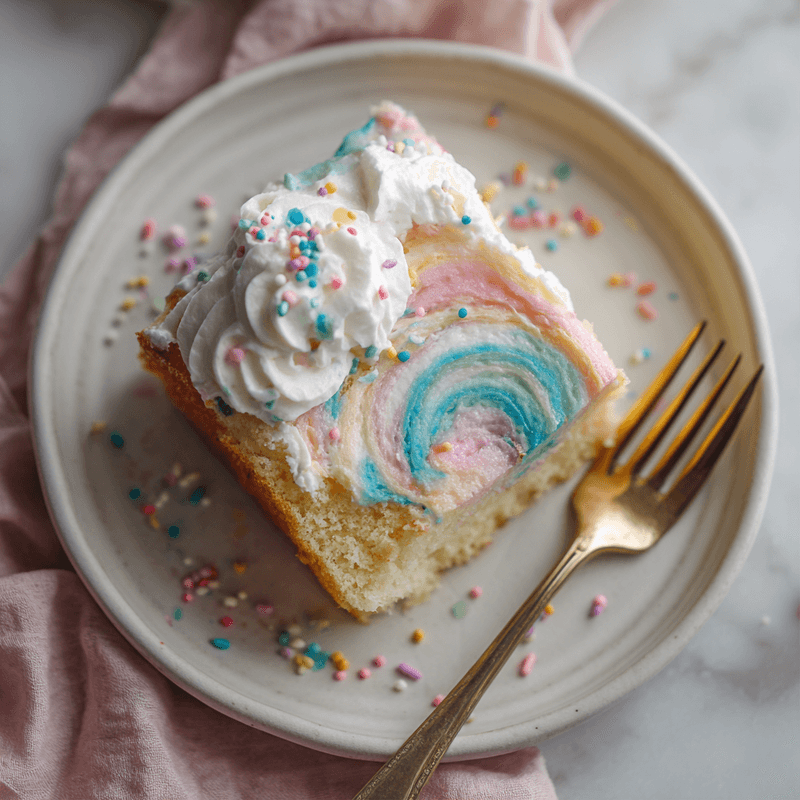
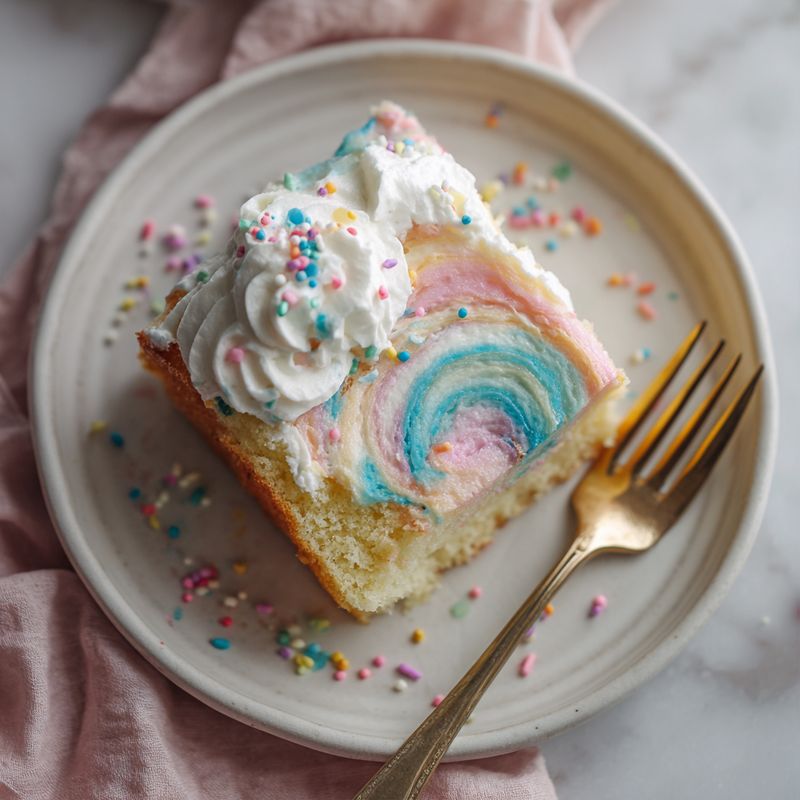
The magic moment arrives when you make that first cut through your Easy Easter Poke Cake with Pastel Pudding Swirls and reveal the ribbons of color running through each slice. The cross-section should show distinct channels of pastel pudding marbling through the tender white cake, with the fluffy whipped topping providing a cloud-like contrast on top. Each component plays a specific role: the cake provides structure and a neutral canvas, the pudding delivers moisture and flavor, and the topping adds lightness and a final touch of sweetness.
Traditional serving involves cutting generous squares and plating them so the colorful interior is visible. The whipped topping on top catches additional sprinkles or decorative elements beautifully. Some bakers like to add a few extra swirls of pudding on the plate itself, or scatter fresh berries around the slice for added color and freshness. The eating experience is wonderfully textural—the soft, moist cake yields easily to a fork, while the pudding pockets provide cool, creamy bursts of flavor.
This dessert is best served chilled, making it perfect for spring and summer gatherings when you want something refreshing rather than heavy. The cool temperature enhances the pudding's creaminess and makes the whipped topping more stable. Because of its moist nature, the Easy Easter Poke Cake with Pastel Pudding Swirls is incredibly forgiving if it sits out briefly, though it should return to refrigeration between servings to maintain its texture and food safety.
Make It Your Own
While the classic pastel version is stunning, you can adapt this Easy Easter Poke Cake with Pastel Pudding Swirls to suit different tastes and occasions. For chocolate lovers, start with a chocolate cake base and use chocolate pudding in various shades—from milk chocolate to white chocolate tinted with color. The contrast between dark cake and light pudding creates a beautiful effect. You could also try a marble cake base for added visual interest before you even add the pudding.
Flavor variations open up endless possibilities. Swap vanilla pudding for lemon, creating a brighter, more citrus-forward dessert perfect for spring. Pistachio pudding in its natural pale green is another lovely option. For tropical flair, use coconut pudding and garnish with toasted coconut flakes. Strawberry pudding mixed with fresh diced strawberries adds both flavor and small chunks of fruit throughout.
If you're serving guests with varying spice preferences—though this cake isn't spicy—you can adjust sweetness levels by using sugar-free pudding mixes or reducing the sugar in homemade whipped cream. For adults, a splash of vanilla extract or almond extract in the pudding mixture adds sophistication without overpowering the delicate flavors.
To introduce this dessert to those unfamiliar with poke cakes, emphasize the fun, interactive element of the preparation. Let children help with the poking and pouring steps, which makes them invested in the final result. You can also make mini versions in individual cups, layering crumbled cake with pudding and topping for a more approachable single-serving format.
Keeping and Reusing Leftovers
The Easy Easter Poke Cake with Pastel Pudding Swirls stores exceptionally well, actually improving in texture and flavor over the first few days. Cover the pan tightly with plastic wrap or transfer individual slices to airtight containers before refrigerating. The cake will stay moist and delicious for up to five days, making it an excellent make-ahead dessert. The pudding-soaked cake never dries out the way unfilled cakes can, which is one of the technique's greatest advantages.
Freezing is possible but requires some consideration. The whipped topping may separate slightly upon thawing, and the texture of the pudding changes somewhat. If you plan to freeze portions, consider doing so before adding the whipped topping. Wrap individual slices in plastic wrap, then foil, and freeze for up to two months. Thaw overnight in the refrigerator and add fresh whipped topping before serving.
Leftover cake makes wonderful trifle components. Cube the cake and layer it in glasses with additional pudding, fresh fruit, and whipped cream for an elegant presentation. You can also crumble leftover cake to create a base for ice cream sundaes or mix it into milkshakes for a cake batter flavor. The moisture from the pudding means the cake maintains its texture even when repurposed.
If the whipped topping begins to weep or separate after several days, simply scrape it off and replace it with fresh topping. The cake underneath will still be perfectly delicious. This flexibility makes the Easy Easter Poke Cake with Pastel Pudding Swirls ideal for meal planning, as you can prepare it several days before your gathering without any quality loss.
Your Questions Answered
Can I make this Easy Easter Poke Cake with Pastel Pudding Swirls dairy-free?
Yes, with some substitutions. Use a dairy-free cake mix or recipe, prepare the pudding with your preferred non-dairy milk (full-fat coconut milk or oat milk work best), and top with coconut whipped cream. The texture will be slightly different but still delicious, and you'll maintain the beautiful pastel swirls that make this dessert special.
How far in advance can I prepare this cake?
You can make the Easy Easter Poke Cake with Pastel Pudding Swirls up to two days before serving for optimal results. Prepare the cake completely through the pudding step, cover tightly, and refrigerate. Add the whipped topping and decorations up to four hours before serving to keep everything fresh and prevent the topping from absorbing moisture from the cake.
What if my pudding colors bleed together too much?
Some blending is natural and creates beautiful effects, but if you want more distinct colors, ensure your cake has cooled adequately before adding pudding. Work with one color at a time, allowing each to settle for a few minutes before adding the next. Using slightly thicker pudding (less milk) also helps colors stay more separated, though the swirls won't be quite as dramatic.
Can I use cooked pudding instead of instant?
Instant pudding is strongly recommended for this Easy Easter Poke Cake with Pastel Pudding Swirls because it sets quickly and has the right consistency. Cooked pudding takes longer to prepare, needs to cool completely, and may not flow into the holes as effectively. If you must use cooked pudding, thin it with extra milk while still warm and work quickly before it sets.
What's the best way to get clean slices that show off the swirls?
Use a sharp knife wiped clean between each cut, and make decisive, straight cuts rather than sawing back and forth. A thin, sharp blade works better than a wide cake server for the initial cuts. The cake needs to be thoroughly chilled—at least two hours, preferably overnight—so the pudding is fully set. Warm or room-temperature cake will create messy slices with indistinct swirls.
How do I adjust sweetness if this seems too sweet?
Reduce sweetness by using sugar-free pudding mixes and unsweetened whipped cream sweetened to your taste. You can also use a less sweet cake base, perhaps a sour cream-based vanilla cake that has more depth and less sugar. Balance the sweetness by serving fresh berries alongside—their tartness provides a nice contrast to the sweet pudding and cake combination.
Easy Easter Poke Cake with Pastel Pudding Swirls
A moist vanilla cake filled with colorful pastel pudding swirls and topped with fluffy whipped cream, perfect for spring gatherings and celebrations.
Prep Time
20 min
Cook Time
30 min
Total Time
2h 50m
Servings
12 servings
Ingredients
For 12 servings
- 1 box (15.25 oz) white or vanilla cake mix
- 3 large eggs
- 1/3 cup vegetable oil
- 1 cup water
- 3 packages (3.4 oz each) instant vanilla pudding mix
- 5 1/4 cups whole milk, divided
- Pink food coloring gel or liquid
- Blue food coloring gel or liquid
- Yellow food coloring gel or liquid
- 1 container (8 oz) whipped topping, thawed, or 2 cups heavy cream whipped with 2 tablespoons sugar
- Pastel sprinkles or decorations, optional
Instructions
- 1
Bake the cake
Preheat your oven to 350°F (175°C) and grease a 9x13-inch baking pan. Prepare the cake according to package directions using the eggs, oil, and water. Pour batter into the prepared pan and bake for 28-32 minutes, or until a toothpick inserted in the center comes out clean.
- 2
Cool and poke
Remove the cake from the oven and let it cool for 15-20 minutes until warm but not hot. Using the handle of a wooden spoon or a chopstick, poke holes evenly across the entire surface of the cake, spacing them about 1 inch apart. Press down until you almost reach the bottom of the pan, but don't pierce through completely.
- 3
Prepare pastel puddings
In three separate medium bowls, prepare each pudding mix with 1 3/4 cups of milk (slightly less than package directions to create a thinner consistency). Mix each pudding until smooth and just beginning to thicken. Add 2-3 drops of food coloring to each bowl—one pink, one blue, and one yellow—stirring until the color is evenly distributed and you achieve soft pastel shades.
- 4
Pour pudding layers
Working quickly before the pudding sets, pour or spoon the pink pudding over one-third of the cake's surface, allowing it to settle into the holes. Pour the blue pudding over the middle third, and the yellow pudding over the final third. Gently spread each color to encourage it to fill the holes.
- 5
Create swirls
Using a butter knife or small offset spatula, gently swirl where the colors meet to create soft, blended transitions. Don't over-mix or the colors will muddy together. The goal is to create watercolor-like swirls rather than distinct stripes.
- 6
Chill the cake
Cover the cake loosely with plastic wrap and refrigerate for at least 2 hours, or preferably overnight. This chilling time allows the pudding to set completely inside the holes and creates the distinct swirls that make this cake special.
- 7
Add topping
Once the cake is thoroughly chilled and the pudding is set, spread the whipped topping evenly across the entire surface of the cake. Create swoops and swirls with the back of a spoon or an offset spatula for an attractive finish.
- 8
Decorate and serve
Add pastel sprinkles or other decorations just before serving. Cut the cake into squares using a sharp knife, wiping it clean between cuts for neat slices that show off the beautiful pastel swirls. Serve chilled and store any leftovers covered in the refrigerator for up to 5 days.
Nutrition Facts
Per serving (estimated)
385 calories
Calories
58g
Carbs
6g
Protein
14g
Fat
1g
Fiber
425mg
Sodium
42g
Sugar