Thai Peanut Chicken Wraps with Fresh Vegetables
Crispy vegetables, tender chicken, and creamy peanut sauce wrapped in soft flatbread. These Thai-inspired wraps are impressive yet simple to make.
cookwithlucia.com/recipes/delicious-thai-peanut-chicken-wraps-with-fresh-vegetables-and-creamy-peanut-sauce
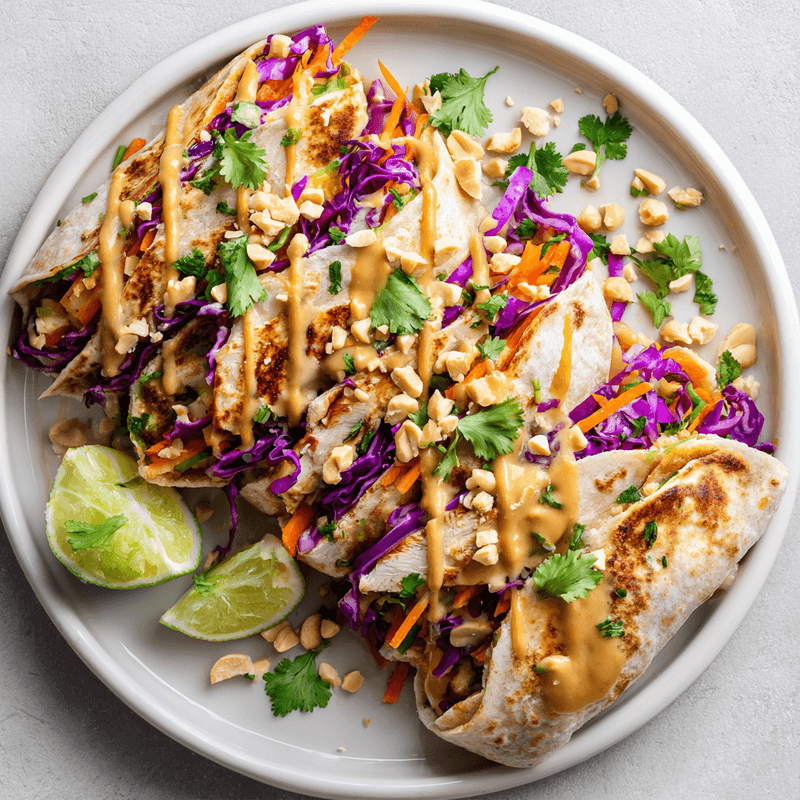
Picture this: you unwrap a perfectly rolled bundle at the table, revealing vibrant strips of purple cabbage, bright orange carrots, emerald cilantro, and tender chicken all glistening with a golden peanut sauce so aromatic it stops conversation mid-sentence. These delicious Thai peanut chicken wraps with fresh vegetables and creamy peanut sauce are the kind of dish that makes everyone pause, lean in closer, and ask how you managed to create something that looks like it came from a high-end café. The colors alone could stop traffic, but it's that first bite that seals the deal: cool crisp vegetables contrasting with warm seasoned chicken, all bound together by a sauce that's simultaneously sweet, tangy, savory, and just a little bit spicy.
Here's the beautiful secret I want you to know right from the start: these wraps look like they require culinary school training, but they're actually one of the most forgiving dishes you can make. The components come together independently, which means no tricky timing or coordination panic. You can have everything prepped and ready, then let your family or guests build their own wraps at the table, or you can roll them up ahead of time for a stunning plated presentation. Either way, these delicious Thai peanut chicken wraps with fresh vegetables and creamy peanut sauce deliver restaurant-quality results with home-cook-friendly techniques. The creamy peanut sauce is the star that ties everything together, and once you master this version, you'll find yourself drizzling it on everything from salads to grain bowls.
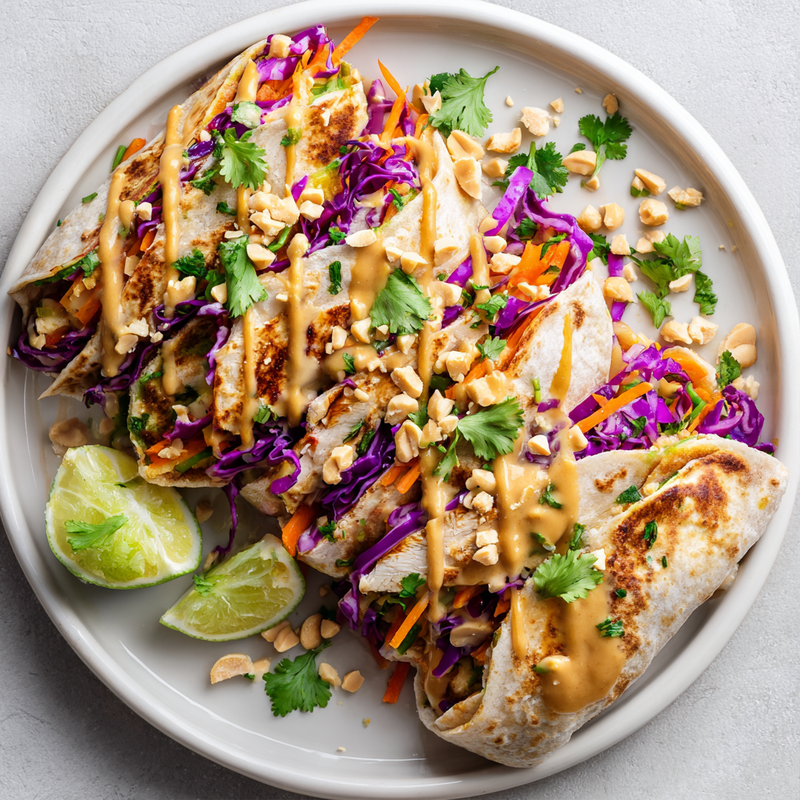
What Makes This a Showstopper
The moment these wraps hit the table, they command attention in a way that few dishes can match. It's the rainbow of colors bursting from every cross-section: deep purple cabbage ribbons, bright orange julienned carrots, jade-green cucumber strips, fresh herbs in varying shades of green, and golden-brown chicken pieces all wrapped in a soft tortilla or flatbread. When you slice them on the diagonal and arrange them standing up, the spiral effect is absolutely Instagram-worthy. The creamy peanut sauce acts as both the visual glue and the flavor anchor, its rich tan color weaving through every layer.
But looks are only half the story with delicious Thai peanut chicken wraps with fresh vegetables and creamy peanut sauce. The textural experience is what keeps people reaching for seconds and thirds. You get the initial soft give of the wrap, then the satisfying crunch of raw vegetables that still have their snap, followed by the tender bite of well-seasoned chicken, all lubricated by that impossibly creamy sauce. Every bite is different depending on which vegetables dominate, yet every bite is cohesive because that peanut sauce ties it all together with its complex flavor profile.
What truly makes this dish impressive without being intimidating is that it requires no special equipment, no difficult techniques, and no ingredients you need to hunt down at specialty markets. Everything comes together through good prep work and thoughtful layering. You're essentially creating a composed salad in wrap form, which means the bar for "messing it up" is remarkably low. Even if your julienne isn't perfect or your wraps aren't rolled as tightly as a professional's, the flavors and textures still deliver an experience that rivals what you'd pay fifteen dollars for at a trendy lunch spot.
The Ingredients That Matter Most
Let's talk about where your attention and budget should go for these delicious Thai peanut chicken wraps with fresh vegetables and creamy peanut sauce. First and foremost: the peanut butter. This is not the time for the natural oil-separated kind that's been sitting in your pantry. You want a creamy, well-emulsified peanut butter that will blend smoothly into your sauce without requiring ten minutes of stirring. The commercial creamy varieties work beautifully here, and the slight sweetness they contain actually enhances the sauce rather than detracting from it.
Your chicken quality matters significantly because it's one of the few cooked elements in an otherwise raw and fresh dish. I recommend boneless, skinless chicken breasts or thighs, depending on your preference for lean versus more flavorful dark meat. Either way, look for chicken that's plump and fresh-looking, not frozen and thawed. The texture difference is noticeable in a dish like this where the chicken is a featured player rather than hidden in a heavy sauce.
For the fresh vegetables, this is where the visual and textural magic happens, so don't skimp on quality or variety. Purple cabbage is non-negotiable for that stunning color contrast. Carrots should be firm and bright orange, not those sad, bendy ones from the bottom of the crisper drawer. English cucumbers work better than regular ones because they have fewer seeds and a thinner skin that doesn't need peeling. Bell peppers, particularly red or yellow ones, add both sweetness and another color dimension.
The herbs deserve special mention because they're not just garnish in these wraps; they're a primary flavor component. Fresh cilantro is traditional and adds that distinctive bright note that defines Thai-inspired cuisine. Fresh mint, if you can get it, brings a cooling contrast that's absolutely beautiful against the rich peanut sauce. Even fresh basil, particularly Thai basil if you happen upon it, can elevate these wraps from great to extraordinary.
As for the wraps themselves, you have options. Large flour tortillas work wonderfully and are the most accessible. Look for the extra-large "burrito size" ones that give you plenty of real estate for filling. Alternatively, large flatbreads or even large lettuce leaves for a low-carb version can work beautifully. The key is that your wrapper needs to be pliable enough to roll without cracking but sturdy enough to hold all these juicy components without tearing.
For the creamy peanut sauce, beyond the peanut butter, you'll need fresh lime juice (not bottled), good soy sauce or tamari, fresh ginger, garlic, and a touch of honey or another halal-friendly sweetener. Some red pepper flakes add heat, while a splash of sesame oil brings depth. Rice vinegar adds brightness. Every ingredient in that sauce has a job to do, creating a complex flavor profile that's greater than the sum of its parts.
Building It Step by Step
Creating delicious Thai peanut chicken wraps with fresh vegetables and creamy peanut sauce is all about smart sequencing and good mise en place. Start with your creamy peanut sauce because it needs to be made first and actually benefits from sitting for fifteen to twenty minutes, allowing the flavors to meld and deepen. In a medium bowl, whisk together your peanut butter, soy sauce, lime juice, honey, minced garlic, grated ginger, rice vinegar, sesame oil, and a splash of warm water to thin it to a pourable but still clingy consistency. The sauce should coat the back of a spoon and slowly drip off rather than running off immediately. Taste it and adjust: more lime for brightness, more honey for sweetness, more soy sauce for saltiness, more water if it's too thick.
Next, tackle your chicken. Season your chicken pieces generously with salt, pepper, and a touch of garlic powder. Heat a large skillet over medium-high heat with a tablespoon of neutral oil, then add your chicken in a single layer without crowding. Let it develop a golden-brown crust on the first side before flipping, about four to five minutes per side depending on thickness. The goal is fully cooked chicken with a bit of caramelization on the outside for flavor. Once cooked through, remove to a cutting board, let it rest for five minutes, then slice into thin strips. While the chicken is still warm, toss it with a few tablespoons of your peanut sauce so it absorbs that flavor as it cools to room temperature.
While your chicken rests, this is the perfect time to prep all your vegetables, and this is where precision pays off in the final presentation. Slice your purple cabbage as thinly as possible into long ribbons. Cut your carrots into matchstick julienne about two to three inches long. Slice your cucumber into thin strips of similar length. Cut bell peppers into thin strips. The uniform sizing isn't just about aesthetics; it's about creating even distribution in every bite and making the wraps easier to roll without bulky chunks breaking through.
Wash and thoroughly dry your herbs because wet herbs will make your wraps soggy and cause them to fall apart. Spin them in a salad spinner or pat them very dry with paper towels. Pick the cilantro and mint leaves from their stems, keeping them whole or roughly torn. This is also the time to prepare any additional garnishes you might want: chopped peanuts for crunch, thinly sliced green onions for sharpness, or lime wedges for serving.
The assembly stage is where these delicious Thai peanut chicken wraps with fresh vegetables and creamy peanut sauce come together, and there's a specific technique that ensures they roll tightly and hold together. Lay your wrap flat on a clean work surface. Spread a thin layer of peanut sauce down the center third of the wrap, leaving about two inches clear at the top and bottom. Layer your ingredients in the center in this order: cabbage first as a base, then carrots, cucumber, and bell pepper, then your chicken strips, then a generous handful of fresh herbs. Drizzle more peanut sauce over everything. The key is to keep your filling in a compact horizontal line rather than spreading it all over, which makes rolling nearly impossible.
To roll, fold the bottom edge up and over the filling, tucking it under the ingredients tightly. Fold in both sides, then continue rolling away from you, keeping tension on the wrap as you go so it stays tight. The final seam should be on the bottom. If you're serving immediately, slice each wrap on a sharp diagonal to show off those beautiful layers. If you're making them ahead, wrap each one tightly in plastic wrap and refrigerate seam-side down.
Presentation and Plating Tips
When it comes to plating these delicious Thai peanut chicken wraps with fresh vegetables and creamy peanut sauce, your goal is to showcase those gorgeous cross-sections that reveal all the colorful layers inside. The classic approach is to slice each wrap on a diagonal into two halves, then stand them up cut-side facing forward on the plate. This immediately signals to your guests or family that this is a thoughtfully composed dish rather than just a casual wrap.
For individual servings, place both halves on the plate with a small pile of extra vegetables on the side, a lime wedge, and a small ramekin of extra peanut sauce for dipping or drizzling. Sprinkle some chopped roasted peanuts over the top of the wraps and scatter a few fresh cilantro leaves around the plate for that professional touch. A light drizzle of additional peanut sauce across the plate itself, done with a spoon in a casual zigzag pattern, adds visual interest and signals that there's plenty of that delicious sauce to enjoy.
For family-style serving, arrange the wrap halves standing up in a circular pattern on a large platter, all facing outward so the beautiful cross-sections are visible from every angle. Fill the center of the circle with a mound of fresh herbs, lime wedges, and a bowl of extra peanut sauce. You can also add small bowls of crushed peanuts and red pepper flakes around the platter for guests who want to customize their experience.
If you're going for the build-your-own approach, set up a wrap station with all the components in separate bowls. This is fantastic for gatherings because it becomes an interactive experience and accommodates different preferences and dietary needs. Arrange everything on a large board or table: warmed wraps stacked and wrapped in a clean kitchen towel to keep them pliable, the peanut sauce in a bowl with a spoon, all your prepped vegetables in individual bowls, the chicken in its own bowl, and the fresh herbs in another. People love the hands-on aspect of building their own creation, and it takes all the pressure off you to assemble everything perfectly.
Scaling Up for a Crowd
When you're making these delicious Thai peanut chicken wraps with fresh vegetables and creamy peanut sauce for a larger group, the good news is that everything scales up beautifully with just a bit of planning. The recipe doubles, triples, or even quadruples without any technique changes, though you'll obviously need more workspace for all that vegetable prep. For a group of eight to ten people, plan on two wraps per person, which means you'll need about sixteen to twenty wraps total.
The single biggest timesaver when cooking for a crowd is doing your prep work the day before. The creamy peanut sauce actually improves overnight as the flavors meld, and it keeps perfectly in an airtight container in the refrigerator for up to five days. Your vegetables can be julienned and sliced the day before as well; store each type separately in airtight containers lined with paper towels to absorb any moisture. The paper towel trick is crucial because it keeps your vegetables crisp rather than soggy. Your herbs should be washed, dried, and stored wrapped in barely damp paper towels in plastic bags.
The chicken is best cooked the day of serving, but you can cook it up to four hours ahead and keep it at room temperature, loosely covered. If you need to cook it the night before, store it separately from the sauce and only toss them together an hour before serving. Cold chicken from the fridge can make your wraps feel heavy and less appealing, so bring it to room temperature before assembling.
For the actual assembly when serving a crowd, I strongly recommend the build-your-own station approach rather than trying to pre-roll twenty wraps. Not only does it save you considerable time and stress, but it also ensures that everyone gets their wrap exactly how they like it. Set everything out about thirty minutes before you want people to eat, which gives components time to come to room temperature. If you do want to pre-roll them for a more formal presentation, you can assemble the wraps up to two hours ahead, wrap each one tightly in plastic wrap, and store them in the refrigerator. Slice them just before serving so the cut edges stay fresh and vibrant.
Storing Any Leftovers
While these delicious Thai peanut chicken wraps with fresh vegetables and creamy peanut sauce are always best eaten fresh, you can absolutely store leftovers with a bit of strategy to maintain quality. If you have fully assembled wraps left over, wrap each one individually in plastic wrap as tightly as possible to prevent air exposure, which causes the vegetables to wilt and the wraps to dry out. Store them in the refrigerator for up to twenty-four hours. Be aware that the texture will change somewhat; the wrap will soften and the vegetables will lose some of their crispness, but the flavors will still be delicious.
A better approach for leftovers is to store the components separately rather than assembled. Keep your cooked chicken in an airtight container for up to three days in the refrigerator. Your fresh vegetables will keep for two to three days if stored properly in containers lined with paper towels. The peanut sauce keeps beautifully for up to five days and actually tastes even better after a day or two. The wraps themselves should be kept in their original packaging or wrapped tightly in plastic. When you're ready to eat, simply assemble a fresh wrap with your already-prepped components.
Reheating these wraps is tricky because you don't want to heat the fresh vegetables, which would make them sad and wilted. If you want a warm wrap, your best bet is to remove it from the refrigerator, unwrap it, and let it come to room temperature for about twenty minutes. Alternatively, you can warm just the chicken separately in a skillet or microwave, then assemble a fresh wrap with warm chicken and cold crisp vegetables. This gives you the best of both worlds: the comfort of warm protein with the refreshing crunch of raw vegetables.
Freezing fully assembled wraps is not recommended because the fresh vegetables don't freeze and thaw well at all; they'll become mushy and unappetizing. However, you can freeze the cooked chicken (without the sauce mixed in) for up to two months. Thaw it overnight in the refrigerator, bring it to room temperature, toss with fresh peanut sauce, and use it with freshly prepped vegetables for a quick meal that tastes like you just made everything from scratch.
Variations to Explore
Once you've mastered the classic version of these delicious Thai peanut chicken wraps with fresh vegetables and creamy peanut sauce, a whole world of variations opens up. For a different protein direction, try using shrimp instead of chicken. Quickly sauté peeled shrimp with a bit of garlic and ginger until just cooked through, then toss with the peanut sauce. The sweet, delicate flavor of shrimp pairs beautifully with the robust sauce. Alternatively, for a vegetarian version, use crispy baked tofu or even seasoned chickpeas as your protein source. Press extra-firm tofu, cut it into strips, toss with a bit of oil and soy sauce, then bake at four hundred degrees until golden and slightly crispy on the edges.
For a spicy version that brings serious heat, add sriracha or sambal oelek to your peanut sauce, increasing the amount until it matches your heat tolerance. You can also add thinly sliced fresh chili peppers to your vegetable mix. On the other hand, if you're feeding people who are sensitive to spice, simply omit the red pepper flakes from the sauce and keep some sriracha on the side for those who want to add their own heat.
Seasonal variations keep these wraps interesting year-round. In summer, add fresh mango strips for a sweet tropical note that's absolutely stunning with the peanut sauce. In fall and winter, try adding thinly sliced crisp apple or Asian pear for a different kind of crunch and sweetness. Roasted sweet potato strips, cooled to room temperature, add earthiness and make the wraps more substantial and filling.
If you want to make mini versions for gatherings or appetizers, use small flour tortillas or even rice paper wrappers for a more traditional Asian approach. The rice paper version requires quickly dipping each wrapper in warm water to soften it, then filling and rolling as you would a summer roll. These mini versions are perfect for parties because they're easier to eat standing up and create individual portions that look especially elegant on a platter.
For a simpler weeknight version when you want these flavors without the fuss of all the prep work, use a rotisserie chicken from the grocery store and pre-shredded coleslaw mix instead of individually prepping all your vegetables. You'll lose some of the visual impact and a bit of the texture, but you'll still get those delicious Thai peanut flavors in a fraction of the time. Sometimes good enough is absolutely good enough, especially on a busy weeknight when you need dinner on the table quickly.
Questions You Might Have
Can I make these wraps ahead of time for meal prep?
Absolutely, and they're actually fantastic for meal prep with one important strategy: store the components separately rather than pre-assembled. Prep all your vegetables on your meal prep day, cook and portion your chicken, make a big batch of peanut sauce, and store everything in separate containers. Each morning or evening, take five minutes to assemble a fresh wrap, and you'll have the perfect lunch that tastes freshly made because it essentially is. Pre-rolled wraps can be made up to four hours ahead for events, but beyond that, the texture suffers.
What if my peanut sauce is too thick or too thin?
Peanut sauce consistency is easily adjustable, which is one of its great qualities. If your sauce is too thick and looks more like peanut butter than a pourable sauce, simply whisk in warm water one tablespoon at a time until it reaches your desired consistency. If it's too thin and runs right off your ingredients, whisk in a bit more peanut butter or let it sit for ten minutes, as it will thicken slightly as it rests. The ideal consistency coats ingredients and clings to them without being goopy or dripping off immediately.
Can I use a different nut butter for the sauce?
Yes, though it will change the flavor profile somewhat. Almond butter creates a slightly sweeter, more delicate sauce that some people actually prefer. Cashew butter makes an incredibly creamy, mild sauce that lets the other flavors shine through more prominently. Sunflower seed butter works for those with nut allergies, though it has a more assertive flavor that can sometimes taste slightly bitter, so you may need to adjust the sweetness level. Whatever you choose, make sure it's a creamy, well-emulsified variety rather than a natural separated one.
How do I keep my wraps from getting soggy?
The secret to avoiding soggy wraps is threefold: first, make sure all your vegetables are thoroughly dried after washing. Second, don't over-sauce the filling; use enough to flavor everything but not so much that it pools in the bottom. Third, create a barrier between wet and dry components by putting your cabbage down first as a base layer that protects the wrap from direct contact with the sauce. If you're making them ahead, wrapping each one tightly in plastic wrap helps seal out air and keeps moisture from redistributing in a way that makes things soggy.
What's the best way to transport these for a picnic or work lunch?
For transport, wrap each assembled wrap very tightly in plastic wrap or aluminum foil, keeping them seam-side down. Place them in a rigid container so they don't get squashed in your bag. If you're really concerned about quality, pack the components separately in containers and assemble them right before eating. Include a small container of extra peanut sauce and some lime wedges for squeezing over the top. Keep everything cold with an ice pack if you won't have refrigeration, as the chicken needs to stay at safe temperatures.
Can I make this dish gluten-free?
Yes, with just a couple of simple swaps, these delicious Thai peanut chicken wraps with fresh vegetables and creamy peanut sauce can be completely gluten-free. Use tamari instead of regular soy sauce in your peanut sauce, and choose certified gluten-free wraps or tortillas for rolling. Many stores now carry excellent gluten-free tortillas that are pliable enough for wrapping. Alternatively, use large lettuce leaves for a naturally gluten-free and low-carb option that's actually quite traditional in Asian cuisine. Everything else in the recipe is naturally gluten-free, so those are the only changes you need to make.
Delicious Thai Peanut Chicken Wraps with Fresh Vegetables and Creamy Peanut Sauce
Colorful wraps filled with tender seasoned chicken, crisp vegetables, fresh herbs, and a rich creamy peanut sauce inspired by Thai flavors. Perfect for lunches, gatherings, or light dinners.
Prep Time
25 min
Cook Time
15 min
Total Time
40 min
Servings
4 servings
Ingredients
For 4 servings
- 1 pound boneless skinless chicken breast or thighs
- 1 teaspoon salt
- 1/2 teaspoon black pepper
- 1/2 teaspoon garlic powder
- 1 tablespoon neutral oil for cooking
- 4 large flour tortillas or flatbreads
- 2 cups purple cabbage, thinly sliced into ribbons
- 1 large carrot, julienned into matchsticks
- 1 English cucumber, cut into thin strips
- 1 red bell pepper, cut into thin strips
- 1/2 cup fresh cilantro leaves
- 1/4 cup fresh mint leaves, optional
- 1/4 cup roasted peanuts, chopped, for garnish
- 2 green onions, thinly sliced, for garnish
- Lime wedges for serving
- 1/2 cup creamy peanut butter
- 3 tablespoons soy sauce or tamari
- 2 tablespoons fresh lime juice
- 2 tablespoons honey
- 2 cloves garlic, minced
- 1 tablespoon fresh ginger, grated
- 1 tablespoon rice vinegar
- 1 teaspoon sesame oil
- 1/4 teaspoon red pepper flakes
- 3-4 tablespoons warm water to thin
Instructions
- 1
Make the peanut sauce
In a medium bowl, whisk together the peanut butter, soy sauce, lime juice, honey, minced garlic, grated ginger, rice vinegar, sesame oil, and red pepper flakes. Add warm water one tablespoon at a time, whisking until the sauce reaches a pourable but still clingy consistency that coats the back of a spoon. Taste and adjust seasonings as needed, then set aside to let the flavors meld while you prepare the other components.
- 2
Season and cook chicken
Pat the chicken dry with paper towels and season both sides generously with salt, black pepper, and garlic powder. Heat the neutral oil in a large skillet over medium-high heat until shimmering. Add the chicken in a single layer without crowding and cook undisturbed for 4-5 minutes until a golden-brown crust forms on the bottom.
- 3
Finish cooking chicken
Flip the chicken and continue cooking for another 4-5 minutes until the internal temperature reaches 165°F and the chicken is cooked through with no pink remaining. Remove the chicken to a cutting board and let it rest for 5 minutes to allow the juices to redistribute, which keeps the meat moist and tender.
- 4
Slice and coat chicken
Cut the rested chicken into thin strips, about 1/4-inch thick. While the chicken is still warm, toss it in a bowl with 2-3 tablespoons of the prepared peanut sauce, coating all the pieces. This allows the chicken to absorb the flavors as it cools to room temperature. Set aside while you prepare the vegetables.
- 5
Prepare all vegetables
Slice the purple cabbage as thinly as possible into long ribbons. Cut the carrot into matchstick julienne about 2-3 inches long. Slice the cucumber into thin strips of similar length, and cut the bell pepper into thin strips. Wash and thoroughly dry the cilantro and mint, removing leaves from stems. Pat everything completely dry with paper towels or use a salad spinner to remove excess moisture that could make the wraps soggy.
- 6
Warm the wraps
If using flour tortillas, warm them briefly in a dry skillet for about 10 seconds per side or wrap them in a damp paper towel and microwave for 15-20 seconds. This makes them more pliable and easier to roll without cracking. Keep them covered with a clean kitchen towel to maintain warmth and flexibility while you assemble.
- 7
Assemble the wraps
Lay one wrap flat on a clean work surface. Spread a thin layer of peanut sauce down the center third of the wrap, leaving about 2 inches clear at the top and bottom edges. Layer the ingredients in the center in this order: a handful of cabbage as the base, then carrots, cucumber, and bell pepper strips, followed by chicken strips, and finish with a generous amount of fresh cilantro and mint. Drizzle additional peanut sauce over the filling.
- 8
Roll the wraps tightly
Fold the bottom edge of the wrap up and over the filling, tucking it tightly under the ingredients. Fold in both left and right sides toward the center, then continue rolling away from you while maintaining tension to keep the wrap tight and compact. The final seam should end up on the bottom. Press gently to seal and hold the wrap together.
- 9
Slice and serve
Using a sharp knife, slice each wrap on a diagonal to create two halves that showcase the beautiful cross-section of colorful layers. Arrange the halves on plates cut-side up to display the interior. Garnish with chopped peanuts, sliced green onions, and additional cilantro leaves. Serve immediately with lime wedges and extra peanut sauce on the side for dipping or drizzling.
Nutrition Facts
Per serving (estimated)
485 calories
Calories
42g
Carbs
35g
Protein
19g
Fat
6g
Fiber
890mg
Sodium
12g
Sugar