Delicate Apple Rose Pastry Blooms Recipe
Learn to create stunning Delicate Apple Rose Pastry Blooms with this easy guide. Beautiful, elegant pastries perfect for any gathering.
cookwithlucia.com/recipes/delicate-apple-rose-pastry-blooms
Introduction
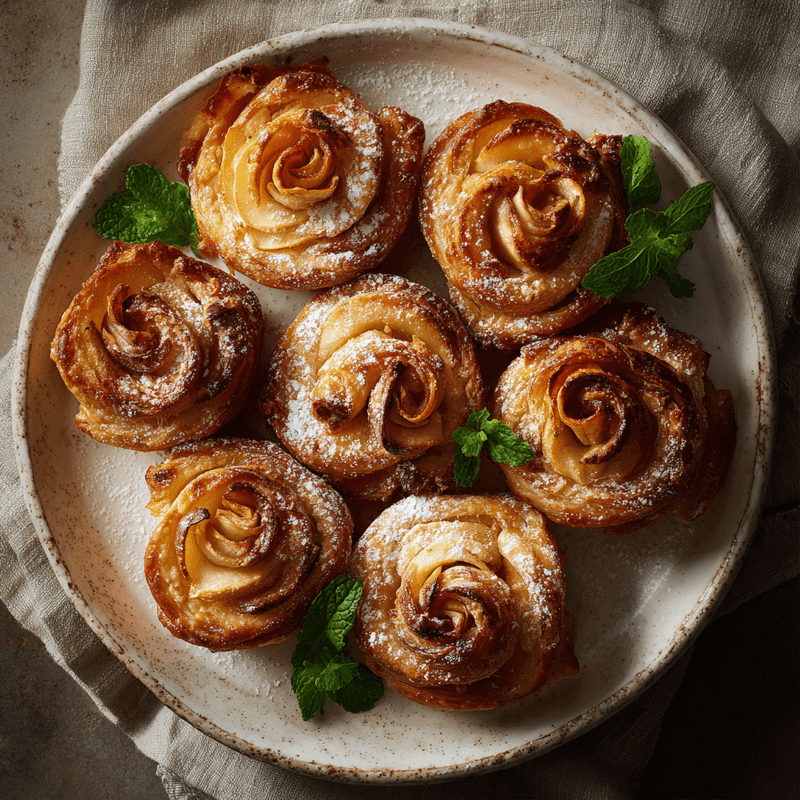
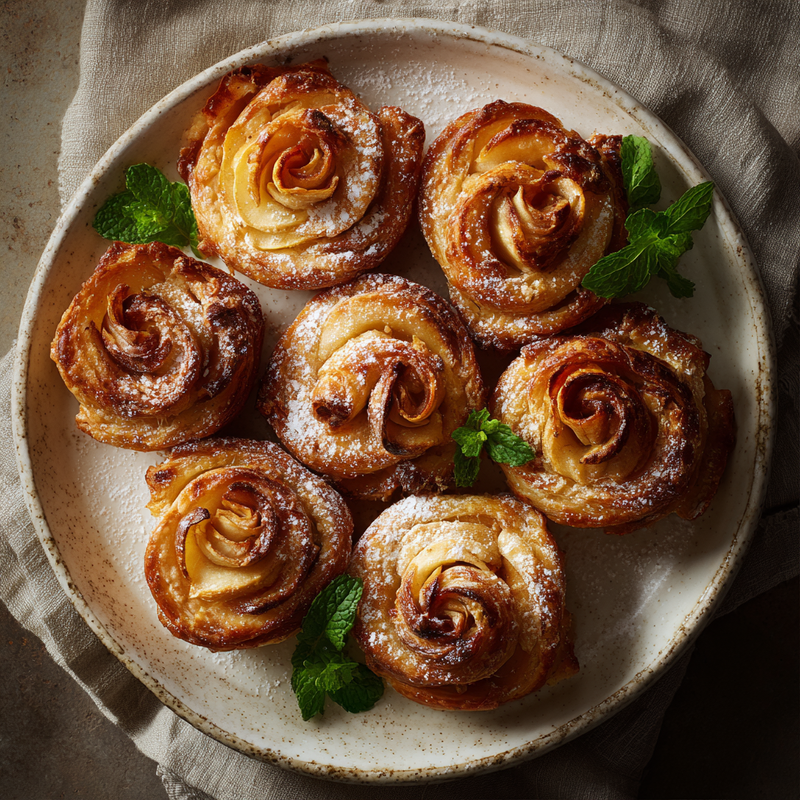
Let me tell you something wonderful: you don't need to be a pastry chef to create something that looks like it came from a French patisserie window. These Delicate Apple Rose Pastry Blooms are proof that sometimes the most stunning desserts are actually the simplest to make. Imagine pulling a pan from the oven filled with golden, caramelized apple roses nestled in buttery pastry, their edges crisp and their centers tender, each one looking like an edible flower arrangement.
The magic here is in the technique, not complexity. You're working with just a handful of ingredients—apples, pastry, butter, and a touch of sweetness—and transforming them into something that makes guests pause and wonder how you did it. The apple slices soften and curl as they bake, their natural sugars caramelizing into something that tastes like autumn itself. And here's the best part: while they look like they require hours of precise work, you can have a whole batch of these Delicate Apple Rose Pastry Blooms assembled and ready for the oven in about thirty minutes.
Whether you're preparing for a family gathering, hosting friends for tea, or simply want to elevate your weekend baking, these pastries deliver that wow factor without the stress. They're forgiving, they're beautiful, and they taste absolutely divine with a dusting of cinnamon sugar and a dollop of cream on the side.
The Beauty of Working with Apples
Apples are perhaps the most forgiving fruit you can work with in pastry. They hold their shape when sliced thin, they soften without falling apart, and their natural pectin helps them maintain structure even after baking. When you're creating Delicate Apple Rose Pastry Blooms, you're taking advantage of the apple's natural flexibility once it's been softened slightly.
The variety of apple you choose matters, but not as much as you might think. Firmer apples like Granny Smith, Honeycrisp, or Gala work beautifully because they maintain their shape and provide a slight tartness that balances the sweetness of the pastry and sugar. Softer varieties can work too, but they might become a bit more delicate during the rolling process.
The key transformation happens when you slice the apples paper-thin and soften them briefly in warm water with a squeeze of lemon. This step makes them pliable enough to roll without cracking, while the lemon juice prevents oxidation and adds a bright note that cuts through the richness. The slices become like fabric—easy to work with, ready to be shaped into those gorgeous rose formations that give these pastries their signature look.
What I love most about working with apples in this way is how they concentrate their flavor as they bake. The moisture evaporates slowly, the sugars intensify, and you're left with tender apple slices that taste more deeply of themselves than a raw apple ever could. It's this transformation that makes Delicate Apple Rose Pastry Blooms so special.
Choosing Your Pastry Foundation
The foundation of these beautiful pastries is puff pastry, and I'm going to be completely honest with you: there's absolutely no shame in using store-bought. Making puff pastry from scratch is a labor of love that involves multiple rounds of folding and chilling, and for this recipe, a good quality frozen puff pastry works perfectly. Look for all-butter varieties if you can find them—they offer superior flavor and a more delicate, flaky texture.
When working with puff pastry for Delicate Apple Rose Pastry Blooms, temperature is everything. You want the pastry thawed enough to roll and cut easily, but still cold enough that the butter layers remain distinct. If the pastry gets too warm, those precious butter layers will start to melt into the dough, and you'll lose some of that dramatic puffing action in the oven.
The way you cut and prepare the pastry strips determines how well your roses will form. You're looking for strips about two inches wide and six to eight inches long—wide enough to support the apple slices, long enough to create multiple petals when rolled. Rolling the pastry slightly before cutting helps it become more pliable and also gives you a bit more length to work with.
Some bakers like to brush their pastry with melted butter before adding the apples, while others prefer to keep it plain and let the natural butter in the pastry do its work. I find a light brush of butter on the inside of the strip, where the apples will sit, helps everything adhere better and adds an extra layer of richness. It also helps the cinnamon sugar stick, creating little pockets of spiced sweetness throughout each Delicate Apple Rose Pastry Bloom.
The Assembly Dance
Creating these pastries is a rhythm you'll fall into quickly. Once you've done one or two, your hands will remember the motion and you'll find yourself working faster and more confidently. Start by laying your softened, drained apple slices along the top edge of your pastry strip, overlapping them like scales on a fish. The curved edge should face outward and extend just beyond the pastry—this is what creates the petal effect.
The bottom half of your pastry strip stays apple-free. This is the foundation that will support the rose and create the base when you roll it up. Fold this bottom portion up over the lower part of the apple slices, creating a sandwich effect where the pastry hugs the apples. Some recipes tell you to fold first and then add apples, but I find it easier to see what you're doing when you place the apples first.
Now comes the actual rolling, and this is where your Delicate Apple Rose Pastry Blooms really take shape. Starting from one end, roll the pastry strip gently but firmly, keeping the apple edges facing outward. Don't worry if it's not perfect—the organic, slightly uneven nature of these pastries is part of their charm. As you roll, the apples will fan out naturally, creating those rose-like layers.
The final step before baking is securing the end of the pastry strip. A tiny bit of water acts as glue, helping the end stick to the roll so it doesn't unravel during baking. Place each finished rose into a muffin tin cavity—this helps them hold their shape as they bake and creates a lovely rounded bottom. The muffin tin also catches any butter or sugar that might drip, preventing burning and making cleanup easier.
As you work through your batch of Delicate Apple Rose Pastry Blooms, keep any finished ones in the refrigerator while you complete the rest. This keeps the pastry cold and helps ensure maximum puff when they hit the oven.
The Oven Transformation
What happens in the oven is nothing short of magical. Those carefully rolled Delicate Apple Rose Pastry Blooms undergo a complete transformation, turning from raw components into golden, aromatic works of edible art. The pastry begins to puff almost immediately, the butter creating steam between the layers that forces them apart into hundreds of delicate, crispy sheets.
Temperature control is crucial here. You want an oven hot enough to create rapid steam and puffing, but not so hot that the outside browns before the apples have time to cook through. The sweet spot is around 375°F to 400°F, depending on your oven. At this temperature, you'll get about 40 to 45 minutes of steady baking, giving the apples time to soften completely while the pastry turns golden brown.
About halfway through baking, take a look at your pastries. If the apple edges are browning too quickly, you can tent them loosely with foil, though I rarely find this necessary. The natural sugars in the apples will caramelize beautifully, creating those gorgeous bronzed edges that make these pastries so visually stunning. The kitchen will fill with the scent of butter, cinnamon, and baked apples—arguably one of the best aromatherapy combinations known to humankind.
You'll know your Delicate Apple Rose Pastry Blooms are done when the pastry is deeply golden and crisp to the touch, and the apples have softened completely with slightly caramelized edges. The base should be firm enough to hold its shape when you remove it from the muffin tin, but the interior layers should still have some tender softness. Let them cool for at least ten minutes in the pan before attempting to remove them—this cooling period allows the pastry to set and makes them much easier to handle.
Flavor Variations and Creative Twists
Once you've mastered the basic technique for Delicate Apple Rose Pastry Blooms, the variations are endless. The classic version with cinnamon and sugar is wonderful, but there's so much room to play with flavors that complement apples beautifully. Consider brushing the pastry with a thin layer of apricot preserves before adding the apples—it adds a subtle fruity sweetness and helps the apples adhere.
Spices beyond cinnamon work wonderfully here. Cardamom brings a sophisticated, slightly floral note that pairs beautifully with the buttery pastry. A pinch of ginger adds warmth and complexity. Nutmeg is more subtle but creates depth. You can even mix finely chopped nuts—walnuts or almonds work particularly well—with your cinnamon sugar for added texture and flavor.
For a more indulgent version, tuck a small piece of cream cheese or a dollop of almond paste at the center of each rose before you start rolling. As the pastries bake, this filling softens and melds with the apples, creating a luxurious center that contrasts beautifully with the crispy pastry. Some bakers also like to add a few raisins or dried cranberries to the center, giving little bursts of concentrated sweetness throughout.
The glaze you choose can completely change the character of your Delicate Apple Rose Pastry Blooms. A simple dusting of powdered sugar keeps things light and elegant. A brush of warmed apricot or apple jelly adds shine and intensifies the fruit flavor. For something richer, a light drizzle of caramel or a cream cheese glaze transforms them into something truly decadent. Personally, I often serve them with just a light dusting of cinnamon sugar and let the natural flavors shine through.
Making Them Ahead and Storing
One of the best things about Delicate Apple Rose Pastry Blooms is how well they adapt to make-ahead schedules. You can assemble them completely, place them in the muffin tin, and refrigerate them for up to 24 hours before baking. Just cover the tin tightly with plastic wrap to prevent the pastry from drying out. When you're ready to bake, they can go straight from the refrigerator into the preheated oven—you might need to add just a few extra minutes to the baking time.
For even longer storage, these pastries freeze beautifully before baking. Assemble them, freeze them in the muffin tin until solid, then transfer to a freezer bag or container. They'll keep for up to three months. When you want to bake them, you can go straight from freezer to oven, adding about ten minutes to the baking time. This makes them perfect for those times when you want something impressive but don't have time for last-minute preparation.
Once baked, Delicate Apple Rose Pastry Blooms are best enjoyed the same day, while the pastry is at its crispest. However, they'll keep at room temperature for two days in an airtight container. The pastry will soften slightly, but they'll still taste delicious. To refresh them, pop them in a 300°F oven for about five minutes to crisp up the pastry again.
If you find yourself with leftovers, they make an exceptional breakfast the next morning. Warm them gently and serve with a dollop of yogurt or a drizzle of honey. The pastry might not be quite as crispy, but the flavors will have melded overnight, creating something equally delicious but different from the first day.
Serving Suggestions and Presentations
The way you present your Delicate Apple Rose Pastry Blooms can elevate them from lovely to absolutely stunning. These pastries are beautiful enough to stand alone on a simple white plate, but thoughtful accompaniments can enhance both their flavor and visual appeal. A small scoop of vanilla ice cream slowly melting beside a warm pastry creates a delightful temperature and texture contrast.
For a more elegant presentation, consider a drizzle of caramel sauce on the plate before placing the pastry. Add a small quenelle of whipped cream flavored with a touch of vanilla, and perhaps a few fresh apple slices fanned to the side. A light dusting of cinnamon or a tiny sprig of fresh mint adds the finishing touch.
These pastries are perfect for afternoon tea or coffee gatherings. Arrange them on a tiered serving platter alongside other small pastries and sweets. Their rose shape makes them conversation starters, and guests always want to know how you created something so intricate. Pair them with fragrant tea—earl grey or chai work particularly well—or strong coffee that balances their sweetness.
For more casual family gatherings, serve your Delicate Apple Rose Pastry Blooms family-style on a large platter with a bowl of softly whipped cream in the center. Let everyone help themselves, perhaps offering small plates of chopped nuts, a shaker of cinnamon sugar, or a drizzle bottle of honey so people can customize their servings. The beauty of these pastries is that they feel special enough for company but approachable enough for everyday enjoyment.
Troubleshooting Common Challenges
Even with a relatively straightforward recipe like Delicate Apple Rose Pastry Blooms, sometimes things don't go quite as planned. If your pastry isn't puffing properly, the most common culprit is temperature. The pastry needs to be cold when it enters a hot oven—warm pastry means the butter has already begun to melt, and you'll lose that crucial separation of layers. Always work quickly with puff pastry and keep finished pieces refrigerated until baking.
Apples that are too thick won't soften properly during baking and will be difficult to roll without breaking. Aim for slices no thicker than 1/8 inch—as thin as you can manage while still maintaining structural integrity. A mandoline makes this much easier, but a sharp knife and a steady hand work perfectly well. If your apples keep breaking as you roll, they probably need a bit more softening time in the warm water bath.
Some bakers find their Delicate Apple Rose Pastry Blooms are browning too quickly on top while remaining pale underneath. This usually means the oven temperature is too high or the oven rack is positioned too close to the top heating element. Move the rack to the center position and reduce the temperature by 25°F. You can also place a sheet of foil loosely over the tops during the last fifteen minutes if they're getting too dark.
If the pastries are sticking to the muffin tin, you likely need more butter or cooking spray in the cavities. The sugar that drips down can caramelize and act like glue, making removal difficult. Generously butter or spray the tin, and allow the pastries to cool for at least ten minutes before trying to remove them—they'll firm up as they cool and release more easily. A small offset spatula or butter knife can help gently coax them out if they're being stubborn.
The Science Behind the Beauty
Understanding what's happening at a molecular level can help you become a better baker, even with something as simple as Delicate Apple Rose Pastry Blooms. Puff pastry works through a process of lamination—alternating layers of dough and butter that, when heated, create steam. This steam is trapped between the layers, forcing them apart and creating that characteristic flaky, puffy texture.
The apples undergo their own transformation during baking. The pectin in the cell walls breaks down with heat, softening the fruit. The moisture content decreases through evaporation, concentrating the flavors. The natural sugars—primarily fructose and glucose—caramelize at the edges where they're exposed to direct heat, creating complex flavor compounds that taste deeper and richer than raw apples.
The combination of butter from the pastry and sugar creates a process called the Maillard reaction at the interface where they meet heat. This is what gives your Delicate Apple Rose Pastry Blooms that gorgeous golden-brown color and adds nutty, complex flavors that make them so irresistible. It's also why temperature control is so important—the Maillard reaction happens optimally between 300°F and 400°F.
Cinnamon isn't just a flavor addition; it also contains compounds that complement and enhance the perception of sweetness, allowing you to use less sugar while still achieving a satisfying level of sweetness. This is why cinnamon and apples are such a classic pairing—they're chemically designed to make each other taste better.
Scaling Up for Crowds
When you need to make Delicate Apple Rose Pastry Blooms for a larger gathering, the recipe scales beautifully. A single sheet of puff pastry typically yields about six pastries, so plan accordingly based on your guest count. The good news is that the assembly process becomes faster with practice, and you can work in batches if your muffin tins are limited.
For large batches, organization is key. Set up an assembly line with your pastry strips cut and ready, your apples sliced and softened in batches, and your muffin tins prepared. You can enlist help for the rolling process—it's actually a fun activity that people enjoy, and once someone gets the hang of it, they can produce these pastries quickly.
Consider your oven capacity when planning. Most home ovens can accommodate two 12-cup muffin tins at once, giving you 24 pastries per batch. If you're making more than that, remember that assembled but unbaked pastries hold well in the refrigerator for a few hours, so you can prep everything and bake in shifts.
When serving large numbers, temperature becomes important. These Delicate Apple Rose Pastry Blooms are best served warm or at room temperature, not hot from the oven. This actually works in your favor for parties—you can bake them an hour or two ahead, let them cool to the perfect serving temperature, and have them ready when guests arrive. If you need to hold them longer, keep them uncovered at room temperature rather than covered, which would trap moisture and soften the pastry.
Answers to Your Questions
Can I use other fruits besides apples?
While apples are ideal because of their firmness and natural pectin, pears work beautifully in Delicate Apple Rose Pastry Blooms using the exact same technique. Choose firm pears like Bosc or Anjou, and slice them slightly thicker than apples since they're naturally softer. Stone fruits like peaches or nectarines can work in summer, though they're more delicate and require very gentle handling.
What if my puff pastry keeps tearing when I work with it?
Tearing usually means the pastry is either too cold and brittle, or it's been rolled too thin. Let it sit at room temperature for five minutes if it's rock-hard from the freezer, but not so long that it becomes warm and sticky. Roll gently with even pressure, and if you get a small tear, you can patch it with a tiny piece of pastry pressed firmly into place—it will seal during baking.
How do I prevent the bottoms from getting soggy?
Soggy bottoms happen when moisture from the apples seeps into the pastry faster than it can evaporate. Make sure to drain your softened apple slices thoroughly, even patting them dry with paper towels. Don't overload each pastry with too many apple slices—about eight to ten overlapping slices is plenty. The muffin tin also helps by elevating the pastries and allowing air circulation underneath.
Can I make mini versions of these pastries?
Absolutely! Use a mini muffin tin and cut your pastry strips narrower—about one inch wide—and shorter, around four to five inches. Use fewer apple slices per rose, perhaps five to six instead of eight to ten. Mini Delicate Apple Rose Pastry Blooms bake faster, usually in about 25 to 30 minutes, so watch them carefully. They make perfect bite-sized treats for large gatherings.
Do I need to peel the apples?
The peel adds beautiful color—that rim of red or pink around each petal is part of what makes Delicate Apple Rose Pastry Blooms so visually striking. The peel also contains nutrients and fiber, and it becomes perfectly tender during baking. However, if you prefer, you can peel the apples for a more uniform golden appearance. The texture difference is minimal once baked.
What's the best way to slice apples uniformly thin?
A mandoline is the easiest tool for consistent thin slices, set to about 1/8 inch thickness. Always use the hand guard to protect your fingers. If using a knife, cut the apple in half from top to bottom, place the flat side down for stability, and slice with a very sharp knife using a rocking motion. Consistency matters more than perfection—even slightly varied slices will still create beautiful Delicate Apple Rose Pastry Blooms.
Delicate Apple Rose Pastry Blooms
Beautiful rose-shaped pastries made with thinly sliced apples wrapped in buttery puff pastry, baked until golden and caramelized. These stunning treats are easier to make than they look and perfect for any special occasion.
Prep Time
30 min
Cook Time
45 min
Total Time
75 min
Servings
12 pastries
Ingredients
For 12 pastries
- 2 large red apples (such as Gala or Honeycrisp), cored and sliced paper-thin
- 1 tablespoon fresh lemon juice
- 2 sheets frozen puff pastry, thawed according to package directions
- 3 tablespoons unsalted butter, melted
- 3 tablespoons granulated sugar
- 1 teaspoon ground cinnamon
- 2 tablespoons apricot preserves, warmed and strained (optional, for glaze)
- Powdered sugar for dusting
Instructions
- 1
Prepare the apples
Fill a medium microwave-safe bowl with water and add the lemon juice. Slice the apples paper-thin using a mandoline or sharp knife, leaving the peel on for color. Immediately place the apple slices in the lemon water to prevent browning. Microwave on high for 3 minutes, or until the apple slices are pliable and slightly softened but not mushy. Drain the apples and pat them gently dry with paper towels.
- 2
Prepare pastry and pan
Preheat your oven to 375°F. Generously butter or spray a 12-cup muffin tin, making sure to coat the bottom and sides of each cavity. In a small bowl, mix together the granulated sugar and cinnamon. Unfold the puff pastry sheets on a lightly floured surface and roll them slightly to smooth out creases. Cut each sheet into 6 strips, about 2 inches wide and 9 inches long, for a total of 12 strips.
- 3
Brush and season pastry
Brush each pastry strip lightly with melted butter on one side. Sprinkle the cinnamon sugar mixture evenly over the buttered surface, using about half your mixture for this step. Save the remaining cinnamon sugar for sprinkling on the apples. Work with cold pastry for best results—if it starts to warm and become too soft, place the strips in the refrigerator for 5 minutes.
- 4
Arrange apple slices
Take one pastry strip and arrange apple slices along the top half of the strip, overlapping them slightly like fish scales. The rounded edge of each apple slice should extend just beyond the top edge of the pastry. You'll need about 8 to 10 apple slices per strip. Sprinkle a pinch of the remaining cinnamon sugar over the apples. Fold the bottom half of the pastry strip up over the bottom portion of the apple slices, creating a sandwich effect.
- 5
Roll the roses
Starting from one end, carefully roll the pastry strip into a spiral, keeping the apple edges facing outward and upward. Roll gently but firmly enough to keep everything together. As you roll, the apples will fan out naturally creating the rose petal effect. When you reach the end, dab a tiny bit of water on the final edge and press it against the roll to seal. The finished rose should be about 2 inches in diameter.
- 6
Fill muffin tin
Place each completed rose into a prepared muffin cup, spiral side up. Gently press down on the base so it sits flat in the bottom of the cup. If any apple slices have fallen out of place, tuck them back in. Once all 12 roses are in the tin, brush the tops lightly with any remaining melted butter. Place the muffin tin in the refrigerator for 10 minutes to firm up the pastry before baking.
- 7
Bake the pastries
Place the muffin tin in the preheated oven and bake for 40 to 45 minutes, until the pastry is golden brown and puffed, and the apple edges are slightly caramelized. The pastries should be crispy on the outside and tender in the center. If the tops are browning too quickly after 30 minutes, you can tent them loosely with aluminum foil for the remaining baking time. The kitchen should smell amazing with caramelized apples and butter.
- 8
Cool and finish
Remove the muffin tin from the oven and let the pastries cool in the pan for 10 to 15 minutes. This cooling time allows the pastry to set and makes them easier to remove. Carefully run a small offset spatula or butter knife around the edges of each pastry to loosen it, then lift them out gently. Transfer to a wire rack. If using the optional apricot glaze, brush it lightly over the warm pastries for shine. Dust with powdered sugar just before serving.
Nutrition Facts
Per serving (estimated)
285 calories
Calories
32g
Carbs
4g
Protein
16g
Fat
2g
Fiber
125mg
Sodium
12g
Sugar