Crispy Rice Paper Spring Rolls: Quick Healthy Dinner
Learn to make crispy rice paper spring rolls at home! Perfect healthy dinner ideas with fresh vegetables, protein, and golden wrappers in under 30 minutes.
cookwithlucia.com/recipes/crispy-rice-paper-spring-rolls-easy-recipes-for-healthy-dinner-ideas-quick-weeknight-meals
There's something deeply satisfying about biting into a perfectly golden spring roll, hearing that delicate crunch give way to a vibrant filling of crisp vegetables and tender protein. Crispy rice paper spring rolls represent one of the most elegant solutions to the eternal question of what to make for a quick weeknight meal. Unlike their fresh counterparts, these rolls deliver textural contrast and warmth that transforms simple ingredients into something extraordinary.
I first tasted truly exceptional crispy rice paper spring rolls at a small Vietnamese restaurant tucked away in a bustling food district, and what struck me most was how the rice paper wrapper shattered with the gentlest pressure, revealing layers of perfectly seasoned filling inside. The combination of fresh vegetables, aromatic herbs, and savory protein worked in harmony, each element distinct yet unified. That experience taught me that these rolls are far more than convenient healthy dinner ideas—they're a culinary technique worth mastering.
Making crispy rice paper spring rolls does require attention to detail and a bit of practice with the folding technique, but I promise you the effort pays dividends. Once you understand the fundamentals of wrapper hydration, filling proportion, and frying temperature, you'll find yourself turning to this recipe again and again for quick weeknight meals. This guide will walk you through every stage, from selecting ingredients to achieving that coveted golden exterior, ensuring your spring rolls emerge from the pan perfectly crispy every single time.
The Origins and History
Crispy rice paper spring rolls trace their heritage to Southeast Asian culinary traditions, particularly Vietnamese and Thai cuisines where rice paper has been used for centuries as a versatile wrapper. The production of rice paper itself dates back over a thousand years, with artisans pouring thin layers of rice batter onto cloth stretched over boiling water, creating delicate translucent sheets that dried in the sun. These wrappers became essential to home cooking across the region, valued for their neutral flavor and ability to encase countless filling combinations.
As these recipes traveled across borders and oceans, they adapted to local tastes and available ingredients. In Vietnam, cha gio often features ground protein with wood ear mushrooms and glass noodles, while Thai variations might incorporate more aromatic herbs and a spicier profile. Chinese spring rolls evolved their own identity with thicker wheat-based wrappers, but the rice paper version maintains its distinct lightness and crispness that wheat simply cannot replicate.
In modern home kitchens worldwide, crispy rice paper spring rolls have become beloved healthy dinner ideas because they accommodate virtually any dietary preference or ingredient availability. Home cooks have embraced the technique, experimenting with fusion fillings that might surprise traditional cooks but honor the fundamental principle: fresh ingredients wrapped carefully and fried to golden perfection. The dish has evolved from special occasion food to accessible weeknight fare, thanks to the widespread availability of rice paper in international grocery stores and mainstream supermarkets.
Understanding the Flavor Profile
The genius of crispy rice paper spring rolls lies in their textural and flavor contrasts working in perfect harmony. The exterior delivers an intensely satisfying crunch—lighter and more delicate than wheat-based wrappers—while the interior remains tender, moist, and vibrant with fresh vegetable flavors. When properly seasoned, the filling should offer savory depth from protein and aromatics like garlic and ginger, balanced by the sweetness of carrots and the mild bitterness of cabbage or lettuce.
The layers of flavor build as you eat, with each bite releasing aromatics from fresh herbs like cilantro, mint, or Thai basil that cut through any richness from frying. There's often a subtle umami foundation from ingredients like mushrooms or properly seasoned protein, while a hint of pepper provides gentle heat. The rice paper itself contributes a neutral, slightly sweet base that allows the filling to shine without competing flavors.
Texture matters as much as taste in these rolls. The wrapper should shatter crisply under your teeth, giving way to the tender-crisp vegetables inside that still retain some bite. Protein should be moist and well-distributed, not clumped in one area. When you master this balance—crispy outside, fresh-tasting inside, with vegetables that are cooked just enough to be tender but not so much that they become soggy—you'll understand why crispy rice paper spring rolls have earned their place among the best healthy dinner ideas.
Essential Ingredients Explained
Rice paper wrappers form the foundation of these rolls, and quality matters significantly. Look for round wrappers about 8-9 inches in diameter, made from rice flour, water, and salt. The best wrappers appear uniformly thin and translucent when held to light, without thick spots or tears. Vietnamese brands are generally most reliable, and you'll find them in the international aisle or at Asian markets. Avoid wrappers that look yellowed or have been broken in the package, as these indicate age or mishandling.
For the protein component, ground chicken or turkey works beautifully in crispy rice paper spring rolls for quick weeknight meals, providing lean protein that cooks quickly and seasons easily. If using shrimp, choose medium-sized ones and chop them roughly so they distribute evenly throughout each roll. The protein should be seasoned generously before cooking—this is your opportunity to build the savory foundation that will anchor all the fresh vegetable flavors.
Cabbage serves as the bulk vegetable, providing structural integrity and a mild sweetness that doesn't overpower other ingredients. Green cabbage offers the best texture, remaining slightly crisp even after brief cooking while releasing moisture that helps bind the filling. Shred it finely so it distributes evenly and doesn't create bulky spots that make rolling difficult.
Carrots add both color and natural sweetness, and they should be julienned into matchstick-thin pieces so they soften quickly during the brief cooking process. Their vibrant orange hue creates visual appeal when you bite into the finished roll, and their earthy sweetness balances the savory elements beautifully.
Glass noodles, also called cellophane or bean thread noodles, are optional but traditional in many versions of crispy rice paper spring rolls. They absorb the cooking liquids and seasonings, adding substance without heaviness. Soak them in warm water until pliable, then cut into shorter lengths so they don't create long strands that pull the filling apart when you bite into the roll.
Fresh aromatics—garlic, ginger, and green onions—provide the flavor foundation that transforms simple vegetables into something memorable. Mince garlic and ginger finely so they distribute throughout the filling, releasing their essential oils during cooking. Green onions add a mild onion flavor and lovely green flecks throughout the mixture.
Herbs like cilantro, mint, and Thai basil aren't just garnishes in these rolls; they're integral flavor components. Cilantro offers bright, citrusy notes; mint provides cooling freshness; and Thai basil contributes a slight anise flavor that's distinctly Southeast Asian. Chop them roughly and add them after cooking so they retain their vibrant flavor and don't wilt into oblivion.
For frying, choose an oil with a high smoke point like vegetable, canola, or peanut oil. You'll need enough to come about an inch up the sides of your pan, providing even heat distribution without requiring a full deep-fryer setup. The neutral flavor of these oils won't compete with your carefully seasoned filling, allowing the rice paper to develop that signature golden color.
Mastering the Technique
The journey to perfect crispy rice paper spring rolls begins with preparing your filling, and this stage determines much of your final success. Start by cooking your protein with aromatics over medium-high heat, breaking it into small, uniform pieces as it browns. This isn't the time for large chunks—you want fine crumbles that will distribute evenly across the wrapper. Once the protein is cooked through, add your vegetables and stir-fry just until they begin to soften but still retain some structure, about three to four minutes. The goal is vegetables that are tender enough to roll without breaking the wrapper but still have enough body to provide textural interest.
After cooking, transfer your filling to a wide, shallow dish and spread it out to cool completely. This step is absolutely critical and cannot be rushed—warm filling will steam inside the wrapper, creating moisture that prevents crisping and can cause the wrapper to tear during rolling. While the filling cools, prepare your rolling station with a large plate or cutting board, a shallow dish of room-temperature water, and clean kitchen towels for drying your hands between rolls.
Hydrating the rice paper requires a delicate touch and precise timing. Fill a large, shallow dish with room-temperature water—not cold, which hydrates too slowly, and not hot, which creates sticky, unmanageable wrappers. Submerge one wrapper completely for just five to eight seconds, moving it gently through the water to ensure even contact. The wrapper should still feel slightly stiff when you remove it; it will continue softening as it rests. Lay it on your work surface and wait about twenty seconds before filling—this brief rest allows the wrapper to become pliable without turning mushy.
The filling and folding technique follows a specific sequence that prevents bursting and ensures even distribution. Place about two tablespoons of filling in a horizontal line across the lower third of the wrapper, leaving about two inches clear on each side. Don't overfill—this is the most common mistake, and it leads to rolls that burst during frying or have filling spilling out the ends. Fold the bottom edge up and over the filling, tucking it snugly underneath. Then fold in both sides, creating an envelope shape. Finally, roll tightly from bottom to top, applying gentle but consistent pressure to eliminate air pockets that would cause uneven cooking.
Frying requires careful temperature management to achieve that perfect golden exterior without burning. Heat your oil to 350°F, verified with a thermometer if possible, or test by dropping in a small piece of wrapper—it should sizzle immediately and begin to bubble actively. Place rolls seam-side down in the oil, working in batches of four to six depending on your pan size. Don't crowd them, as this drops the oil temperature and leads to greasy, soggy rolls instead of crispy ones. Fry for two to three minutes on the first side until deep golden, then flip and fry another two minutes.
The final stage involves proper draining and brief resting, which sets the exterior to maximum crispness. Transfer finished rolls to a wire rack set over a baking sheet, never to paper towels which trap steam underneath and soften the bottom. Let them rest for two to three minutes before serving—this brief pause allows the exterior to firm up and any excess oil to drip away. Crispy rice paper spring rolls are best served within twenty minutes of frying, when the contrast between crunchy wrapper and fresh filling reaches its peak.
Common Pitfalls and How to Fix Them
The most frequent problem home cooks encounter when making crispy rice paper spring rolls is wrappers that tear during rolling, creating gaps where filling escapes during frying. This usually happens because the wrapper was either over-hydrated, becoming too soft and fragile, or under-hydrated, remaining brittle and inflexible. The solution is precise timing: exactly five to eight seconds in room-temperature water, followed by a twenty-second rest period. If your wrappers consistently tear, try using two layers—hydrate them separately and stack them with the filling between, which provides extra insurance against breakage.
Greasy, soggy rolls that lack crispness indicate oil temperature problems, almost always too low. When oil isn't hot enough, the rice paper absorbs oil instead of immediately forming a crispy seal. Invest in an inexpensive thermometer and maintain 350°F throughout frying, adjusting your heat between batches as needed. If you've already fried a batch and they're greasy, you can actually re-fry them briefly in properly heated oil to crisp them up—this works surprisingly well as a rescue technique for quick weeknight meals.
Filling that bursts through the wrapper during frying points to overfilling, insufficient tucking during rolling, or air pockets in the roll. Each wrapper can comfortably hold only about two tablespoons of filling—measuring for your first few batches helps calibrate your eye. When you fold, tuck the bottom edge firmly under the filling before folding in the sides, creating a tight envelope. Roll with steady pressure, compressing gently but consistently to eliminate air gaps where steam can build and burst the wrapper.
If your crispy rice paper spring rolls brown too quickly on the outside while the filling remains cold inside, you're frying at too high a temperature. Reduce the heat and give each roll a full four to five minutes of total frying time. Since your filling is already cooked, you're only heating it through, but it needs sufficient time for heat to penetrate to the center. Cutting one open after the first batch helps you assess whether the interior is properly warmed.
Wrappers that stick together during rolling or to your work surface indicate too much surface moisture. After laying down each hydrated wrapper, blot your work surface lightly with a clean towel before placing the next one. Keep your hands dry between rolls, and if wrappers are sticking to each other in storage, layer them with plastic wrap or parchment paper. For healthy dinner ideas that you're preparing in advance, you can roll the spring rolls and refrigerate them uncovered for up to four hours before frying, which actually helps the wrapper firm up and reduces sticking.
Regional Twists Worth Trying
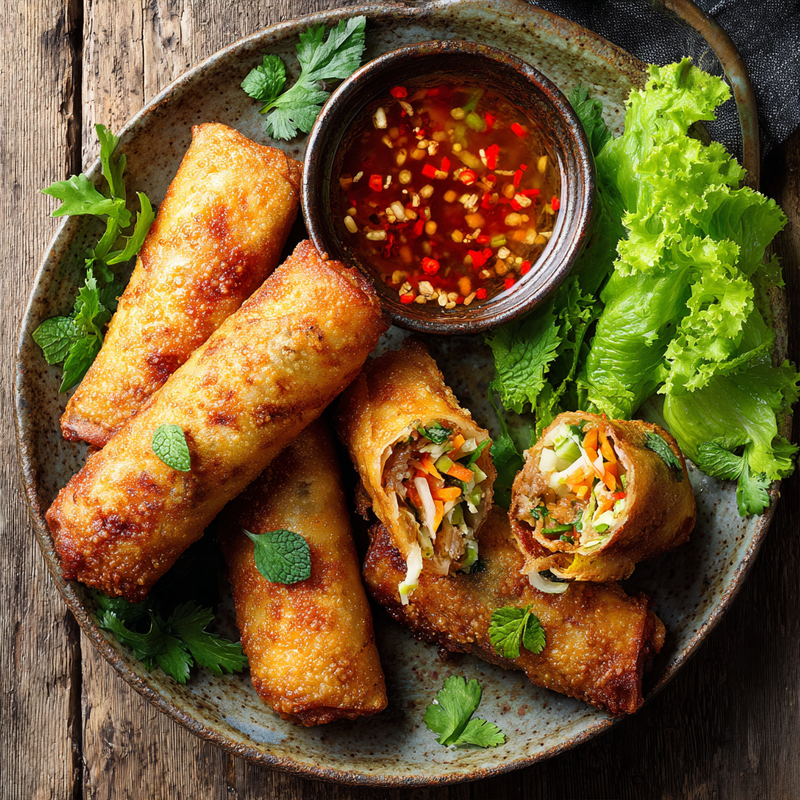
Vietnamese-style crispy rice paper spring rolls, or cha gio, traditionally incorporate wood ear mushrooms and glass noodles into the filling, creating a unique textural experience with chewy, slightly crunchy elements throughout. The mushrooms are soaked until pliable, then chopped finely and cooked with the protein. Vietnamese versions often use fish sauce for seasoning, adding a deep umami note, and the rolls are typically served with fresh lettuce leaves and herbs for wrapping, along with a tangy dipping sauce. This approach transforms the rolls into an interactive eating experience where you control the ratio of crispy wrapper to fresh vegetables with each bite.
Thai variations often incorporate more herbs directly into the filling and favor a spicier profile with fresh chilies or white pepper mixed throughout. Thai cooks might add lemongrass paste or finely minced kaffir lime leaves, infusing the filling with citrusy, floral aromatics that distinguish these rolls immediately upon tasting. The protein might be seasoned with Thai curry paste before cooking, creating layers of complexity that make these crispy rice paper spring rolls suitable as a centerpiece for quick weeknight meals rather than just an appetizer.
Chinese-influenced versions sometimes include shiitake mushrooms and bamboo shoots, ingredients that add earthiness and textural variety. The filling might be darker and more soy-sauce forward, with five-spice powder providing warm, aromatic notes of star anise and cinnamon. These rolls tend to be slightly larger and heartier, making them particularly satisfying as healthy dinner ideas when served with a simple soup.
Modern fusion approaches have embraced crispy rice paper spring rolls as a vehicle for creative combinations—Mediterranean-inspired versions with seasoned ground turkey, sun-dried tomatoes, and fresh basil, or Mexican-influenced rolls with seasoned chicken, black beans, and cilantro-lime flavoring. While purists might object, these adaptations honor the fundamental technique while making the dish accessible to different palates and pantries, proving the versatility that makes this recipe truly universal.
The Perfect Spread
Crispy rice paper spring rolls shine brightest when served as part of a thoughtfully composed meal that balances their richness and provides complementary flavors and textures. The traditional accompaniment is fresh lettuce leaves—butter lettuce or red leaf work beautifully—arranged on a platter alongside herbs like cilantro, mint, and Thai basil. Diners wrap a spring roll in lettuce with herbs, creating a fresh, crunchy vehicle that cuts through the fried wrapper's richness while adding another layer of texture.
A selection of dipping sauces elevates these rolls from simple to spectacular. A classic sweet chili sauce provides tangy sweetness with a gentle kick, while a peanut sauce adds creamy richness and nutty depth. For something lighter, a simple mixture of rice vinegar, lime juice, minced garlic, and a touch of sugar offers bright acidity that refreshes the palate between bites. Set out small individual dishes so each person can control their sauce quantity without double-dipping.
For a complete meal that positions crispy rice paper spring rolls as the centerpiece for quick weeknight meals, serve them alongside a light soup—a clear broth with vegetables and herbs keeps things bright and digestible. Jasmine rice or a simple rice noodle salad with shredded vegetables and a lime dressing provides substance without heaviness, and the neutral grains balance the seasoned filling beautifully.
Consider adding pickled vegetables like daikon and carrots to your spread, as their sharp tanginess cuts through richness while adding probiotic benefits and vibrant color. Cucumber spears or jicama sticks offer refreshing crunch and hydration, rounding out a meal that feels abundant yet light—exactly what you want from healthy dinner ideas that satisfy without weighing you down.
Keeping and Reheating
Crispy rice paper spring rolls are undeniably best within the first hour after frying, when the wrapper maintains its maximum crispness and the filling is freshly warm. However, practical considerations for quick weeknight meals sometimes require advance preparation, and with proper techniques, you can minimize quality loss. Unfried rolls can be prepared several hours ahead and refrigerated uncovered on a parchment-lined tray, which allows the wrapper surface to dry slightly and actually improves the final crispness when fried. Bring them to room temperature for fifteen minutes before frying to ensure even cooking.
If you have leftover fried spring rolls, store them in the refrigerator in a single layer in an airtight container with a paper towel underneath to absorb any moisture. They'll keep for up to three days, though the wrapper will soften considerably. Never store them while still warm, as trapped steam will make them soggy almost immediately.
Reheating fried spring rolls successfully requires restoring crispness to the wrapper, which means avoiding the microwave entirely—it will turn them into rubbery, chewy disappointments. Instead, use your oven as a tool for revival. Preheat to 375°F, arrange the rolls on a wire rack set over a baking sheet, and heat for ten to twelve minutes, flipping halfway through. This circulates hot air around the entire surface, re-crisping the wrapper while warming the filling. The results won't match freshly fried rolls, but they're remarkably good and make these healthy dinner ideas practical for meal prep.
For longer storage, freeze unfried rolls in a single layer on a baking sheet until solid, then transfer to a freezer bag with parchment paper between layers. They'll keep for up to two months and can be fried directly from frozen, adding just one to two minutes to the frying time. This approach makes crispy rice paper spring rolls genuinely convenient for those evenings when you need quick weeknight meals but don't want to start from scratch.
Your Questions Answered
Can I make crispy rice paper spring rolls in an air fryer instead of frying them?
Absolutely, and the results are impressive for those seeking even lighter healthy dinner ideas. Brush each rolled spring roll lightly with oil on all sides, arrange them in a single layer in your air fryer basket without touching, and cook at 375°F for twelve to fifteen minutes, flipping halfway through. The wrapper will crisp beautifully, though the color will be slightly lighter than deep-fried versions and the texture marginally less shattering. Air frying uses significantly less oil while still delivering satisfying crunch, making this method particularly appealing for regular rotation in quick weeknight meals.
What can I substitute if I can't find rice paper wrappers?
Rice paper is truly the defining characteristic of these rolls, and there's no perfect substitute that delivers the same delicate crispness. However, if you're in a pinch, egg roll wrappers made from wheat flour can work, though they'll create a thicker, heartier wrapper with a different texture entirely. The filling and technique remain the same, but the final product will be closer to Chinese egg rolls than Vietnamese-style crispy rice paper spring rolls. For those with wheat sensitivities, some specialty stores carry tapioca-based wrappers that work similarly to rice paper, though they're less common and more expensive.
How do I prevent the filling from making the wrapper soggy before I can fry them?
The key is cooling your filling completely before rolling, which stops steam production that softens the wrapper. Spread cooked filling in a thin layer on a large plate or baking sheet and refrigerate for twenty minutes if you're pressed for time. Additionally, avoid ingredients with high water content like tomatoes or freshly cut cucumbers in the filling itself. If preparing crispy rice paper spring rolls more than an hour ahead, refrigerate them uncovered so air circulates around the wrapper, allowing any surface moisture to evaporate and actually firming the exterior for better frying results.
Can I make a vegetarian version that's still satisfying for dinner?
Definitely, and vegetarian crispy rice paper spring rolls make excellent healthy dinner ideas when you increase the protein content through other means. Use finely crumbled firm tofu that you've pressed to remove excess moisture, or add cooked lentils for plant-based protein and a satisfying, slightly grainy texture. Increase the variety of vegetables—add shiitake mushrooms for umami depth, bean sprouts for crunch, and water chestnuts for a sweet, crisp element. Season generously with garlic, ginger, and a touch of sesame oil to ensure the filling has enough flavor complexity to satisfy without meat.
How many spring rolls should I plan per person for a main course?
For crispy rice paper spring rolls serving as the centerpiece of quick weeknight meals, plan on four to six rolls per person depending on size and what else you're serving. If you're including rice, noodles, or substantial sides, four rolls per person is usually sufficient. For lighter meals or when the rolls are the primary focus with only lettuce and herbs alongside, six per person ensures everyone leaves satisfied. The beauty of this recipe is that you can easily scale up or down—the technique remains identical whether you're making a dozen or four dozen rolls.
Can I prepare the filling a day ahead to save time?
Yes, and in fact the flavors often improve after the filling rests overnight, making this strategy perfect for efficient quick weeknight meals. Cook the filling completely, cool it thoroughly, and refrigerate in an airtight container for up to two days. When you're ready to roll, let the filling come to room temperature for easier handling and better distribution inside the wrapper. Cold filling is difficult to spread evenly and can cause the wrapper to crack, so that thirty-minute rest on the counter before you begin rolling makes a significant difference in your success rate with crispy rice paper spring rolls.
Crispy Rice Paper Spring Rolls
Golden, crispy spring rolls filled with seasoned protein, fresh vegetables, and aromatic herbs. Perfect for healthy weeknight dinners with a satisfying crunch.
Prep Time
30 min
Cook Time
25 min
Total Time
55 min
Servings
6 servings (18 rolls)
Ingredients
For 6 servings (18 rolls)
- 18 round rice paper wrappers (8-9 inch diameter)
- 1 pound ground chicken or turkey
- 3 cups green cabbage, finely shredded
- 1 large carrot, julienned into matchsticks
- 2 ounces glass noodles, soaked and cut into 2-inch pieces
- 4 cloves garlic, minced
- 1 tablespoon fresh ginger, minced
- 4 green onions, thinly sliced
- 1/2 cup fresh cilantro, roughly chopped
- 1/4 cup fresh mint leaves, roughly chopped
- 2 tablespoons soy sauce
- 1 tablespoon fish sauce (optional)
- 1 teaspoon sesame oil
- 1/2 teaspoon ground white pepper
- 1/2 teaspoon sugar
- 3 cups vegetable oil for frying
- Salt to taste
Instructions
- 1
Prepare glass noodles
Place glass noodles in a bowl and cover with warm water. Let soak for 10-15 minutes until softened and pliable. Drain completely, then use kitchen scissors to cut into 2-inch lengths so they don't create long strands in the filling.
- 2
Cook protein filling
Heat a large skillet or wok over medium-high heat. Add ground chicken or turkey and cook, breaking it into small crumbles with a wooden spoon, until completely browned and cooked through, about 5-6 minutes. Add minced garlic, ginger, and sliced green onions, stirring constantly for 1 minute until fragrant.
- 3
Add vegetables
Add shredded cabbage and julienned carrots to the pan with the cooked protein. Stir-fry for 3-4 minutes until vegetables just begin to soften but still retain some crispness. Add glass noodles, soy sauce, fish sauce if using, sesame oil, white pepper, sugar, and salt to taste, tossing everything together for 1-2 minutes until well combined.
- 4
Cool filling completely
Transfer the cooked filling to a wide, shallow dish and spread it out in an even layer to cool. Allow to cool completely to room temperature, about 30 minutes, or refrigerate for 15-20 minutes. Stir in chopped cilantro and mint once cooled. This step is critical—warm filling will create steam that prevents the wrapper from crisping and can cause tearing.
- 5
Set up rolling station
Fill a large, shallow dish with room-temperature water. Prepare your work surface with a clean cutting board or large plate, the cooled filling, and clean kitchen towels nearby. Have a parchment-lined baking sheet ready for the finished rolls.
- 6
Hydrate rice paper
Submerge one rice paper wrapper completely in the room-temperature water, moving it gently for 5-8 seconds until it begins to soften but still feels slightly stiff. Remove and lay flat on your work surface, then wait 20 seconds for it to become fully pliable before filling.
- 7
Fill and roll
Place about 2 tablespoons of filling in a horizontal line across the lower third of the wrapper, leaving 2 inches clear on each side. Fold the bottom edge up and over the filling, tucking it snugly underneath. Fold in both sides to create an envelope, then roll tightly from bottom to top, applying gentle but consistent pressure to eliminate air pockets. Place seam-side down on the prepared baking sheet.
- 8
Prepare for frying
Repeat the hydrating, filling, and rolling process with remaining wrappers and filling. Keep finished rolls in a single layer, not touching, until ready to fry. If preparing ahead, refrigerate uncovered for up to 4 hours.
- 9
Heat oil properly
Pour vegetable oil into a large, deep skillet or pot to a depth of about 1 inch. Heat over medium-high heat until the oil reaches 350°F on a thermometer, or until a small piece of wrapper sizzles immediately when dropped in. Maintain this temperature throughout frying, adjusting heat as needed between batches.
- 10
Fry spring rolls
Working in batches of 4-6 rolls to avoid crowding, carefully place rolls seam-side down in the hot oil. Fry for 2-3 minutes on the first side until deep golden brown, then flip and fry another 2 minutes on the second side. Use tongs or a spider strainer to turn them gently.
- 11
Drain and rest
Transfer fried spring rolls to a wire rack set over a baking sheet, never to paper towels which trap steam and soften the wrapper. Let rest for 2-3 minutes to allow the exterior to firm up to maximum crispness and excess oil to drip away.
- 12
Serve immediately
Serve crispy rice paper spring rolls within 20 minutes of frying for best texture. Accompany with fresh lettuce leaves, herbs, and your choice of dipping sauces such as sweet chili sauce, peanut sauce, or a simple mixture of rice vinegar and lime juice.
Nutrition Facts
Per serving (estimated)
385 calories
Calories
38g
Carbs
22g
Protein
15g
Fat
3g
Fiber
520mg
Sodium
4g
Sugar