Creamy Herb Chicken with Mashed Potatoes & Glazed Carrots
Master this restaurant-quality creamy herb chicken with mashed potatoes and glazed carrots. Complete guide with technique tips and flavor secrets.
cookwithlucia.com/recipes/creamy-herb-chicken-with-mashed-potatoes-and-glazed-carrots
There's something profoundly comforting about a plate where tender chicken meets silky mashed potatoes and jewel-toned glazed carrots—a trinity that speaks to the heart of home cooking across cultures. This creamy herb chicken with mashed potatoes and glazed carrots represents the kind of meal that transforms an ordinary evening into something memorable, where each component shines individually yet harmonizes beautifully on the plate. The first time I tasted a truly exceptional version of this combination, I was struck by how the herbaceous cream sauce bridged the richness of the potatoes and the sweet earthiness of the carrots, creating a symphony of textures and flavors that felt both familiar and refined.
I won't pretend this is a thirty-minute weeknight shortcut—this creamy herb chicken with mashed potatoes and glazed carrots asks for your attention and rewards it generously. You'll be managing three components, each requiring its own technique and timing, but the payoff is a complete meal that rivals anything you'd order at a fine dining establishment. The investment of time teaches you fundamental skills: how to build a pan sauce, how to achieve cloud-like potatoes, how to coax natural sugars from vegetables until they glisten. This is a guide designed to walk you through every stage with confidence, addressing the why behind each step so you're not just following instructions but truly understanding the craft of creating this spectacular dish.
The Origins and History
The concept of pairing poultry with cream-based sauces has deep roots in European culinary traditions, particularly in French country cooking where dairy-rich regions developed countless variations of chicken in cream. These preparations traveled across continents, adapting to local herbs and available ingredients, evolving from aristocratic tables to everyday family meals. The combination with mashed potatoes reflects the British and Irish influence on comfort food, where potatoes became the foundation of countless meals, while glazed carrots draw from classical French technique where vegetables receive the same careful attention as proteins.
Regional interpretations of this meal vary dramatically—in some areas, the cream sauce incorporates mustard and tarragon, while others favor rosemary and thyme. Scandinavian versions might include dill and a splash of cream fraiche, while Mediterranean approaches lean toward oregano and lemon zest. The glazed carrots evolved from the classic French carottes glacées, where vegetables are cooked in butter, sugar, and their own juices until they develop a glossy sheen.
In modern home kitchens, this creamy herb chicken with mashed potatoes and glazed carrots has become a go-to for weekend gatherings and family dinners where you want to impress without relying on exotic ingredients. The beauty lies in its scalability and the fact that each component can be partially prepared in advance. What was once reserved for special occasions has become accessible to any cook willing to learn proper technique, transforming simple chicken breasts into restaurant-quality fare through understanding rather than complexity.
Understanding the Flavor Profile
The magic of creamy herb chicken with mashed potatoes and glazed carrots lies in its masterful balance of rich, herbaceous, and sweet elements that create a complete flavor journey with every forkful. The chicken itself provides a neutral canvas that absorbs the aromatic herbs—typically a combination of thyme, rosemary, and parsley—while the cream sauce adds luxurious body and a subtle tang that prevents the dish from feeling heavy. Each bite should deliver a silky richness punctuated by bright herbal notes that cleanse the palate even as they satisfy.
The mashed potatoes bring earthy comfort and act as the perfect vehicle for soaking up the herb-infused cream sauce, their buttery smoothness providing textural contrast to the tender chicken. Meanwhile, the glazed carrots introduce a sweet counterpoint, their natural sugars concentrated through careful cooking until they develop caramelized edges and a glossy coating. The interplay between the savory cream, the neutral-rich potatoes, and the sweet vegetables creates a dynamic plate where no single element dominates.
Texturally, this dish succeeds through contrast—the tender, juicy chicken should yield easily to your fork, while the mashed potatoes should be cloud-like and smooth without being gluey. The glazed carrots provide the only textural resistance, maintaining a slight firmness at the center while their exteriors soften and caramelize. When executed properly, every component has been cooked to its ideal state, creating a harmony that makes this creamy herb chicken with mashed potatoes and glazed carrots far greater than the sum of its parts.
Essential Ingredients Explained
Selecting quality chicken breasts forms the foundation of this dish—look for organic or free-range poultry with a slight pink hue and firm texture, avoiding any with a grayish tint or excessive liquid in the package. The thickness matters tremendously; if your breasts are uneven, pound them to uniform thickness so they cook evenly and don't dry out. Some cooks prefer chicken thighs for their higher fat content and forgiveness, which is absolutely a valid choice that will yield an even more succulent result in this creamy herb chicken with mashed potatoes and glazed carrots.
The cream you choose determines the sauce's final consistency and richness—heavy cream with at least 36% fat content creates the most stable, velvety sauce that won't break when simmered. Half-and-half can work if you're seeking a lighter version, though you'll need to be more careful about temperature to prevent separation. Fresh herbs are non-negotiable here; dried herbs simply cannot provide the bright, complex flavor that makes the sauce sing. Thyme offers earthy, slightly minty notes, rosemary brings pine-like intensity, and parsley adds fresh, peppery brightness at the finish.
For the mashed potatoes, starchy varieties like Russets produce the fluffiest results because their high starch content breaks down beautifully when cooked, while waxy potatoes like Yukon Golds create a creamier, denser texture with a naturally buttery flavor. The butter you incorporate should be unsalted so you control the seasoning, and it must be at room temperature to emulsify properly into the potatoes rather than forming greasy pockets.
Carrots for glazing should be medium-sized with vibrant orange color and firm texture—avoid limp or cracked carrots, which indicate age and will never achieve the perfect tender-crisp consistency. The sugar or honey used for glazing isn't just about sweetness; it helps create the characteristic glossy coating as it caramelizes and concentrates. Fresh garlic adds aromatic depth to both the chicken and carrots, while chicken stock forms the base of both the cream sauce and the carrot glaze, tying the components together with unified savory undertones. Quality sea salt and freshly ground black pepper might seem basic, but they're what allow each ingredient's natural flavor to shine through in this carefully balanced creamy herb chicken with mashed potatoes and glazed carrots.
Mastering the Technique
The journey to perfect creamy herb chicken with mashed potatoes and glazed carrots begins with proper preparation—what French chefs call mise en place, having everything measured, chopped, and ready before you begin cooking. Start by seasoning your chicken generously with salt and pepper, then let it sit at room temperature for fifteen minutes, which ensures even cooking and prevents the exterior from overcooking while the center reaches temperature. Meanwhile, peel and cut your potatoes into evenly sized chunks so they cook uniformly, and prep your carrots by peeling and cutting them into consistent batons or rounds.
The chicken cooking process requires attention to heat management—preheat your skillet over medium-high heat until a drop of water sizzles and evaporates immediately, then add oil with a high smoke point. When you lay the chicken in the pan, resist the urge to move it; let it develop a golden-brown crust for four to five minutes before flipping. This crust isn't just about appearance—it's packed with flavor compounds created through the Maillard reaction, and it provides textural contrast to the creamy sauce. After flipping, reduce heat slightly and cook until the internal temperature reaches 165°F, then remove the chicken to rest while you build the sauce in the same pan.
Building the cream sauce is where technique transforms simple ingredients into something sublime—after removing the chicken, add minced garlic and fresh herbs to the still-hot pan, stirring constantly for thirty seconds until fragrant but not browned. Pour in chicken stock to deglaze, scraping up all those flavorful browned bits stuck to the pan, then let it reduce by half to concentrate the flavors. Only then do you add the cream, bringing it to a gentle simmer—never a rolling boil, which can cause the cream to break and become grainy.
For the mashed potatoes, timing is everything—they should finish just as the chicken rests and the sauce simmers. Boil the potato chunks in well-salted water until they break apart easily when pierced with a fork, then drain them thoroughly and return them to the hot pot for one minute to evaporate excess moisture. This step is crucial; wet potatoes make gluey mash no matter how carefully you handle them. Mash or rice them while still hot, then incorporate warm cream and room-temperature butter, working quickly to maintain that fluffy texture.
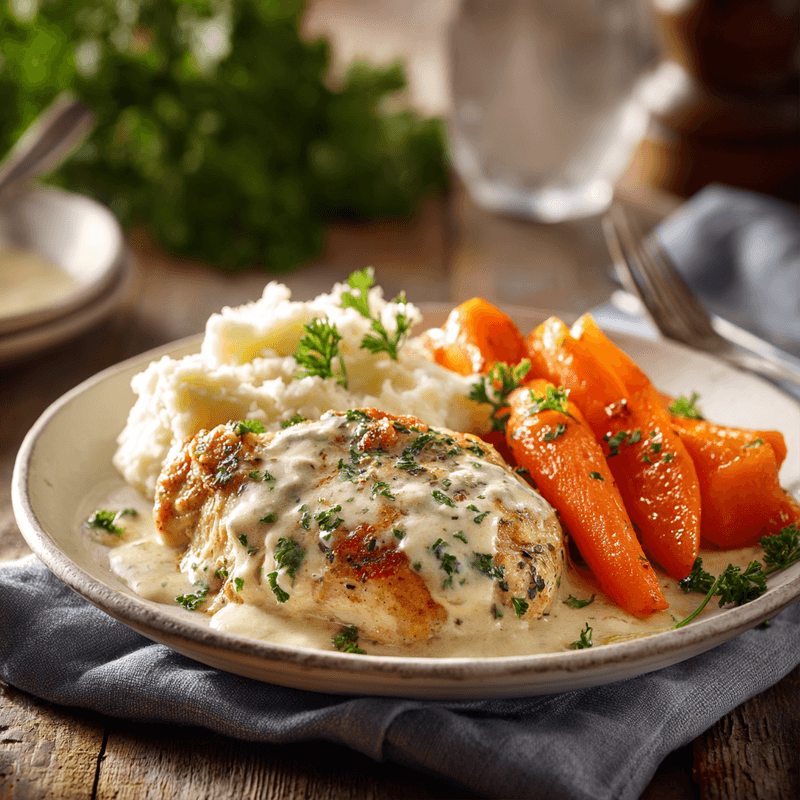
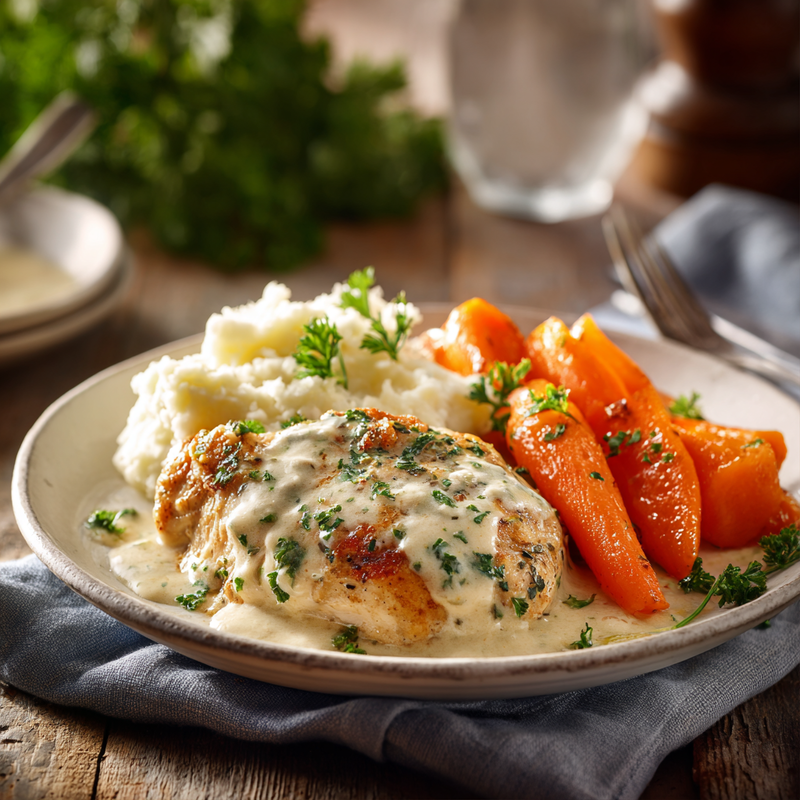
The glazed carrots require their own careful attention—they cook in a mixture of butter, a touch of honey or sugar, and chicken stock in a wide skillet that allows for even evaporation. The technique is to simmer them gently, shaking the pan occasionally, until the liquid reduces to a glossy glaze that coats each piece. The carrots should maintain a slight resistance at the center while their exteriors soften and caramelize, achieving that perfect balance that makes this component of the creamy herb chicken with mashed potatoes and glazed carrots so irresistible. The final stage is plating—arrange the mashed potatoes as a base, slice or place the chicken alongside, nestle the glazed carrots on the plate, and spoon that luxurious herb cream sauce over the chicken and onto the potatoes.
Common Pitfalls and How to Fix Them
One of the most frequent disasters in preparing creamy herb chicken with mashed potatoes and glazed carrots is dry, overcooked chicken that resembles shoe leather rather than tender poultry. This happens when you cook over heat that's too high or don't monitor internal temperature—invest in an instant-read thermometer and pull the chicken at exactly 165°F, remembering that carryover cooking will add another few degrees as it rests. If you've already overcooked your chicken, slice it thinly against the grain and let it sit in the warm cream sauce for a few minutes to reabsorb moisture and become more palatable.
Gluey, paste-like mashed potatoes result from overworking the starches after they've been cooked, which happens when you use a food processor or beat them too vigorously with an electric mixer. The fix is prevention—use a ricer or hand masher and incorporate the butter and cream with gentle folding motions, stopping the moment you achieve smoothness. If your potatoes have already turned gluey, there's unfortunately no complete rescue, though you can thin them with additional warm cream and serve them as a more rustic, textured mash rather than a smooth purée.
A broken cream sauce that looks curdled or separated typically occurs when the cream is added to liquid that's too hot or when the sauce boils rather than simmers. If you catch it early, remove the pan from heat immediately and whisk in a tablespoon of cold cream, which can sometimes bring the emulsion back together. For future batches, remember that gentle heat is your friend—once the cream is added, keep the temperature low and never let it reach a full boil.
Carrots that remain rock-hard at the center or turn to mush before glazing properly indicate a heat or timing issue. If they're cooking too slowly, increase the heat slightly and add a bit more stock to prevent scorching while they soften. If they're softening too quickly, you've likely cut them too thin—next time, cut them into larger, more uniform pieces that can withstand the glazing process. When the liquid reduces before the carrots are tender, simply add more stock a few tablespoons at a time until they reach the right texture.
A cream sauce that's too thin and watery won't coat the chicken properly or provide that luxurious mouthfeel that defines this creamy herb chicken with mashed potatoes and glazed carrots. The solution is to let it simmer longer to reduce further, or to create a quick slurry with a teaspoon of cornstarch mixed with cold stock, whisking it into the sauce and simmering for two minutes to thicken. Conversely, if your sauce becomes too thick, simply whisk in additional stock or cream tablespoon by tablespoon until you achieve the consistency of thick heavy cream that coats the back of a spoon.
Regional Twists Worth Trying
The Mediterranean interpretation of this dish transforms the creamy herb chicken with mashed potatoes and glazed carrots by incorporating sun-dried tomatoes, fresh oregano, and a generous amount of lemon zest into the cream sauce. The potatoes might be replaced with or mixed with white beans that have been mashed with olive oil and garlic, while the carrots are glazed with a touch of honey and za'atar spice blend. This version brings brightness and herbal complexity that feels lighter despite the cream, with each bite offering sunny, aromatic notes.
A Nordic-inspired variation leans into dill and mustard, creating a cream sauce that's both tangy and herbaceous with whole-grain mustard stirred in at the end. The mashed potatoes incorporate buttermilk or sour cream for extra tang, while the carrots are glazed with caraway seeds and a hint of maple syrup, creating an earthy-sweet combination. This approach works beautifully during cooler months when you crave warmth and substance, and the mustard's sharpness cuts through the richness in a distinctly Scandinavian way.
For those who enjoy more assertive flavors, a garlic-forward version amplifies the aromatic elements by using roasted garlic in the mashed potatoes and fresh garlic chips as a garnish for the chicken. The cream sauce incorporates fresh sage alongside the traditional herbs, creating an earthy, almost autumnal quality. The carrots get glazed with balsamic reduction instead of plain sugar, adding a sweet-tart complexity that stands up to the intensified garlic presence throughout the plate.
An Indian-fusion approach reimagines this creamy herb chicken with mashed potatoes and glazed carrots by infusing the cream sauce with garam masala, fresh cilantro, and ginger, transforming it into something reminiscent of korma. The mashed potatoes incorporate roasted cumin seeds, while the carrots are glazed with a mixture of butter, honey, and crushed cardamom pods. This version demonstrates how the fundamental technique can adapt to entirely different flavor profiles while maintaining the same comforting, complete-meal structure.
The Perfect Spread
When serving creamy herb chicken with mashed potatoes and glazed carrots, consider adding a simple green element to provide textural contrast and visual balance—lightly dressed arugula or watercress with lemon juice and olive oil cuts through the richness while adding peppery brightness. Steamed green beans tossed with toasted almonds offer crunch and freshness, or you might choose sautéed spinach with garlic for an earthy, slightly mineral quality that complements the sweet carrots.
A crusty artisan bread serves double duty, providing something to soak up every drop of that precious herb cream sauce while adding textural variety to the plate. Look for a rustic sourdough or herb-flecked focaccia that can stand up to the rich sauce without becoming soggy immediately. Warm the bread slightly before serving so it releases its aroma and becomes even more inviting alongside the hot components.
For beverage pairings, consider what will refresh the palate between bites of this rich meal—sparkling water with lemon or cucumber provides cleansing effervescence, while mint tea offers aromatic refreshment. A light, herbal infusion like chamomile or lemongrass complements the herbs in the chicken without competing with them. The goal is to enhance rather than overwhelm, allowing the carefully constructed flavors of your creamy herb chicken with mashed potatoes and glazed carrots to remain the star.
Think about temperature and color contrast when composing your spread—the warm golden-brown chicken, creamy white potatoes, and vibrant orange carrots already create visual appeal, but adding something green and perhaps something with textural crunch transforms a good plate into a stunning one. Consider finishing touches like microgreens, a sprinkle of flaky sea salt, or freshly cracked black pepper as final garnishes that show attention to detail and elevate the presentation to restaurant quality.
Keeping and Reheating
Storing your creamy herb chicken with mashed potatoes and glazed carrots properly ensures you can enjoy the fruits of your labor for several days. The chicken in cream sauce stores beautifully in an airtight container in the refrigerator for up to four days, and interestingly, the flavors often deepen and meld overnight as the herbs continue to infuse the sauce. Keep the chicken and sauce together rather than separating them, as this prevents the chicken from drying out and maintains the sauce's consistency.
Mashed potatoes require special consideration when storing—transfer them to an airtight container while still warm but not hot, smoothing the top and pressing plastic wrap directly onto the surface to prevent a skin from forming. They'll keep for three to four days refrigerated, though their texture will inevitably change slightly as the starches retrogradation occurs. To restore their creamy consistency when reheating, you'll need to add additional cream or milk and whip them gently as they warm.
The glazed carrots are perhaps the most forgiving component, maintaining their texture and flavor for up to five days when stored in their glazing liquid in a sealed container. In fact, they continue to absorb flavor from the glaze, making them even more delicious the next day. If the glaze solidifies in the refrigerator due to the butter content, don't worry—it will liquify again when reheated.
For reheating, gentle methods preserve quality best—warm the chicken and sauce in a covered skillet over medium-low heat, adding a splash of cream or stock if the sauce has thickened too much. The mashed potatoes reheat beautifully in a double boiler or in the microwave with additional cream stirred in, while the carrots can be quickly warmed in a skillet over medium heat until the glaze melts and coats them again. Avoid high heat with any component, as it will toughen the chicken, make the potatoes gluey, and cause the cream sauce to break. This creamy herb chicken with mashed potatoes and glazed carrots actually makes excellent planned leftovers, offering you a second restaurant-quality meal with minimal effort.
Your Questions Answered
Can I use chicken thighs instead of breasts for this recipe?
Absolutely—chicken thighs are actually more forgiving than breasts due to their higher fat content and connective tissue, which keeps them moist even if slightly overcooked. They'll require a few extra minutes of cooking time to reach the safe internal temperature of 165°F, and they'll add a richer, more robust flavor to your creamy herb chicken with mashed potatoes and glazed carrots. The dark meat pairs beautifully with the herb cream sauce and stands up well to reheating.
How can I make this dish ahead for a gathering?
You can prepare all three components several hours in advance and reheat them just before serving—cook the chicken completely and store it in its sauce, prepare the mashed potatoes and keep them warm in a slow cooker on low with extra cream, and glaze the carrots until nearly done, then finish them quickly before plating. Alternatively, you can prepare the sauce base without the cream, cook and refrigerate the chicken, and make the potatoes and carrots fresh, which takes the pressure off while still delivering excellent results. The key is not letting the chicken sit in hot cream sauce for extended periods, which can break down its texture.
What's the best substitute if I can't find fresh herbs?
While fresh herbs truly make this dish shine, you can use dried herbs in a pinch at a ratio of one teaspoon dried for every tablespoon of fresh. Add dried herbs earlier in the cooking process to allow them time to rehydrate and release their flavors, stirring them into the pan before adding the stock. For the best result with dried herbs, choose high-quality options stored away from light and heat, and consider finishing the dish with fresh parsley if you can find it, as that final fresh herb addition brightens everything considerably in your creamy herb chicken with mashed potatoes and glazed carrots.
Can I make a dairy-free version of this recipe?
Yes, though it requires thoughtful substitutions—use full-fat coconut cream in place of heavy cream for a rich sauce that won't break when simmered, and substitute olive oil or dairy-free butter for the butter in both the potatoes and carrots. For the mashed potatoes, use the starchy potato cooking water and olive oil to create creaminess, or try cashew cream blended with roasted garlic. The result will taste different but can still be delicious, with the coconut cream adding a subtle sweetness that actually complements the herbs and glazed carrots quite nicely.
How do I scale this recipe up for eight or ten people?
Scaling this creamy herb chicken with mashed potatoes and glazed carrots is straightforward—simply multiply the ingredients proportionally and use larger cooking vessels or work in batches. The challenge is logistics: you'll need a large pot for the increased quantity of potatoes, and you may need to cook the chicken in two batches unless you have a very large skillet, as overcrowding prevents proper browning. For the sauce, you can combine all the pan drippings from multiple batches of chicken and make one large batch of cream sauce. Consider recruiting a helper to manage timing, as coordinating three components for a large group requires attention to keep everything hot and ready simultaneously.
Why does my cream sauce sometimes taste bland even though I followed the recipe?
Blandness in the cream sauce usually indicates under-seasoning or insufficient reduction of the stock before adding cream, which dilutes the flavors. Remember that cream is rich but relatively neutral, so it needs a well-seasoned, concentrated base to shine. Make sure you're reducing the stock by at least half after deglazing, which concentrates its flavor, and don't be shy with salt—cream can handle and even requires generous seasoning. Also ensure your herbs are fresh and aromatic; old herbs contribute little flavor. Taste the sauce before serving your creamy herb chicken with mashed potatoes and glazed carrots and adjust seasoning boldly, adding salt, pepper, or a squeeze of lemon juice to brighten everything.
Creamy Herb Chicken with Mashed Potatoes and Glazed Carrots
Restaurant-quality chicken in herb cream sauce served with silky mashed potatoes and honey-glazed carrots—a complete, elegant meal that balances rich, savory, and sweet flavors.
Prep Time
20 min
Cook Time
40 min
Total Time
60 min
Servings
4 servings
Ingredients
For 4 servings
- 4 boneless, skinless chicken breasts (about 6 oz each), pounded to even thickness
- Salt and freshly ground black pepper to taste
- 2 tablespoons olive oil
- 3 cloves garlic, minced
- 1 cup chicken stock, low-sodium
- 1 cup heavy cream
- 2 tablespoons fresh thyme leaves
- 1 tablespoon fresh rosemary, finely chopped
- 3 tablespoons fresh parsley, chopped, divided
- 2 pounds russet potatoes, peeled and cut into 2-inch chunks
- 4 tablespoons unsalted butter, at room temperature
- 1/2 cup whole milk, warmed
- 1/4 cup heavy cream, warmed
- 1 pound medium carrots, peeled and cut into 2-inch batons
- 2 tablespoons unsalted butter
- 2 tablespoons honey
- 1/2 cup chicken stock
- 1/2 teaspoon salt
Instructions
- 1
Prepare the chicken
Pat the chicken breasts completely dry with paper towels and season both sides generously with salt and freshly ground black pepper. Let them sit at room temperature for 15 minutes while you prepare the other components. This ensures even cooking and better browning.
- 2
Start the potatoes
Place the potato chunks in a large pot and cover with cold water by 1 inch. Add 1 tablespoon of salt to the water. Bring to a boil over high heat, then reduce to a steady simmer and cook for 15-18 minutes until the potatoes break apart easily when pierced with a fork.
- 3
Sear the chicken
Heat olive oil in a large skillet over medium-high heat until shimmering. Add the chicken breasts and cook without moving for 5-6 minutes until a golden-brown crust forms. Flip and cook for another 5-6 minutes until the internal temperature reaches 165°F. Remove chicken to a plate and tent with foil to rest.
- 4
Build the cream sauce
In the same skillet with the chicken drippings, reduce heat to medium and add minced garlic, thyme, and rosemary. Stir constantly for 30 seconds until fragrant. Pour in 1 cup chicken stock and scrape up all the browned bits from the bottom of the pan. Let the stock reduce by half, about 4-5 minutes.
- 5
Finish the sauce
Reduce heat to medium-low and pour in the heavy cream, stirring to combine. Let the sauce simmer gently for 3-4 minutes until it thickens slightly and coats the back of a spoon. Stir in 2 tablespoons of chopped parsley and season with salt and pepper to taste. Return the chicken to the pan and turn to coat with sauce.
- 6
Cook the glazed carrots
While the sauce simmers, combine carrots, 2 tablespoons butter, honey, 1/2 cup chicken stock, and 1/2 teaspoon salt in a wide skillet over medium-high heat. Bring to a simmer, then reduce heat to medium and cook for 12-15 minutes, shaking the pan occasionally, until the carrots are tender and the liquid has reduced to a glossy glaze.
- 7
Mash the potatoes
Drain the cooked potatoes thoroughly and return them to the hot pot for 1 minute to evaporate excess moisture. Mash the potatoes or pass them through a ricer into a large bowl. While still hot, fold in the room-temperature butter until melted, then gently stir in the warm milk and cream until smooth and fluffy. Season with salt and pepper to taste.
- 8
Plate and serve
Spoon a generous portion of mashed potatoes onto each plate. Place a chicken breast alongside or slightly on top of the potatoes. Arrange the glazed carrots next to the chicken. Spoon the herb cream sauce over the chicken and let it pool onto the potatoes. Garnish with remaining fresh parsley and serve immediately while hot.
Nutrition Facts
Per serving (estimated)
685 calories
Calories
52g
Carbs
48g
Protein
32g
Fat
6g
Fiber
780mg
Sodium
14g
Sugar