Classic Chicken Salad Meal Prep for the Week
Make classic chicken salad once on Sunday and enjoy perfect lunches all week. Fresh, protein-packed, and endlessly customizable meal prep recipe.
cookwithlucia.com/recipes/classic-chicken-salad
Introduction
Imagine opening your refrigerator every morning and finding a perfectly portioned, restaurant-quality lunch waiting for you. No scrambling to pack something. No expensive takeout runs. No sad desk lunches that leave you hungry an hour later. This is the promise of classic chicken salad meal prep, and it's easier than you think.
I'll be honest with you: the daily grind of figuring out what to eat for lunch used to drain me. By noon, I'd either be staring into an empty fridge or ordering something I didn't really want. But once I discovered the freedom of batch-cooking classic chicken salad on Sunday afternoons, everything changed. One focused cooking session gives you five days of protein-packed, satisfying meals that actually taste better as the week goes on.
Classic chicken salad is the ultimate meal prep champion. It's completely make-ahead friendly, travels beautifully, requires no reheating if you prefer it cold, and adapts to whatever your taste buds crave that particular day. The creamy, savory filling stays fresh for days, the flavors meld and deepen overnight, and you can serve it a dozen different ways without getting bored.
Today, I'm walking you through my complete system for making classic chicken salad your weekly meal prep anchor. We'll cover the smartest cooking methods, the best storage strategies, and exactly how to keep this simple dish exciting from Monday through Friday.
Why This Recipe Is Perfect for Meal Prep
Classic chicken salad was practically designed for advance preparation. Unlike dishes that lose their appeal after a day in the fridge, this one actually improves with time. The mayonnaise-based dressing needs several hours to fully coat every piece of chicken and allow the seasonings to bloom. What tastes good on Sunday tastes even better on Tuesday.
The ingredients themselves are meal prep superstars. Cooked chicken stays moist and tender when properly stored in a creamy dressing. Celery maintains its satisfying crunch for up to five days when kept cold. Fresh herbs like dill or parsley hold their color and flavor remarkably well when mixed into the salad base. Even delicate additions like grapes or apple slices can last several days if you follow proper storage techniques.
Texturally, classic chicken salad survives the refrigeration cycle beautifully. There's no breading to get soggy, no crispy elements that wilt, and no separate components that leak into each other. Everything mingles together in one harmonious mixture that tastes consistent from the first serving to the last.
From a nutritional standpoint, you're getting a complete meal in every portion. Lean protein from the chicken keeps you full and supports muscle maintenance. Healthy fats from mayonnaise and optional additions like nuts provide sustained energy. Vegetables add fiber, vitamins, and minerals. When you pair your classic chicken salad with whole grain bread, crisp lettuce cups, or fresh vegetables, you've built a balanced lunch that powers you through your afternoon without the post-meal slump.
What You'll Need
The beauty of classic chicken salad lies in its simplicity, but choosing the right ingredients makes all the difference for meal prep success. Start with boneless, skinless chicken breasts, about two to three pounds for a week's worth of servings. I prefer buying them in bulk at the beginning of the month and freezing what I don't immediately need. For meal prep, chicken thighs work wonderfully too since they stay even more moist throughout the week, though breasts give you that traditional texture most people expect.
Your mayonnaise choice matters more than you might think. Full-fat versions create the creamiest, most stable emulsion that won't separate or become watery after several days. You'll need about one cup for a large batch. Greek yogurt can replace half the mayonnaise if you want to lighten things up, and it actually extends the freshness window since its acidity acts as a natural preservative.
Celery is non-negotiable for authentic classic chicken salad. Buy fresh, firm stalks and dice them into small, uniform pieces. Aim for four to five stalks, which gives you plenty of crunch without overwhelming the chicken. I also keep fresh dill or parsley on hand, buying the bunches that come with roots still attached since they last longer in the refrigerator.
For seasoning, you'll need salt, black pepper, garlic powder, and a touch of lemon juice or apple cider vinegar to brighten everything. Optional additions like Dijon mustard, honey, or dried herbs can be customized to your preference. I always keep toasted slivered almonds or pecans in my pantry for adding crunch just before serving.
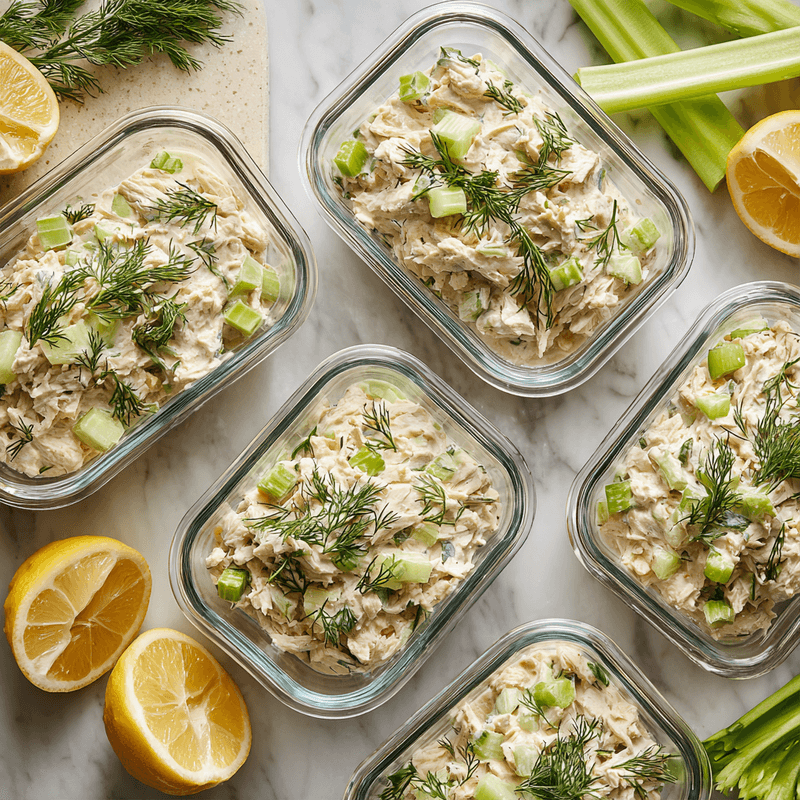
As for storage, invest in glass containers with tight-fitting lids, preferably in the one to two cup size range. Glass doesn't absorb odors, maintains temperature better than plastic, and lets you see exactly what you have in the fridge. Compartmentalized containers work brilliantly if you want to pack your classic chicken salad alongside crackers, vegetable sticks, or fruit without everything touching.
The Batch Cooking Method
My preferred technique for cooking chicken specifically for meal prep is poaching, which keeps the meat incredibly moist and makes shredding effortless. Place your chicken breasts in a large pot and cover them with cold water by about two inches. Add a generous pinch of salt, a few peppercorns, and a bay leaf if you have one. Bring the water to a gentle simmer over medium heat, then immediately reduce to the lowest setting. Let the chicken cook in barely bubbling water for fifteen to eighteen minutes, depending on thickness.
While the chicken poaches, prep your vegetables and gather your other ingredients. This is where the efficiency of batch cooking shines. Dice all your celery at once, wash and chop your herbs in one go, and measure out your mayonnaise and seasonings into a large mixing bowl. By the time your chicken finishes cooking, you're ready for immediate assembly.
Once the chicken reaches an internal temperature of one hundred sixty-five degrees, remove it from the poaching liquid and let it cool on a cutting board for ten minutes. This cooling period is crucial for meal prep success. If you mix hot chicken with mayonnaise, you'll create condensation that makes your salad watery and reduces its storage life. Use this time to toast your nuts if you're adding them, or to prep your storage containers.
Now comes the satisfying part: shredding the chicken. Use two forks to pull the meat into bite-sized pieces, working with the grain for longer shreds or against it for smaller bits. Transfer everything to your bowl with the mayonnaise and fold gently but thoroughly. The key is coating every piece without mashing the chicken into paste. Add your celery, herbs, and seasonings, then taste and adjust. Remember that flavors mellow slightly in the fridge, so season just a touch more boldly than you think necessary.
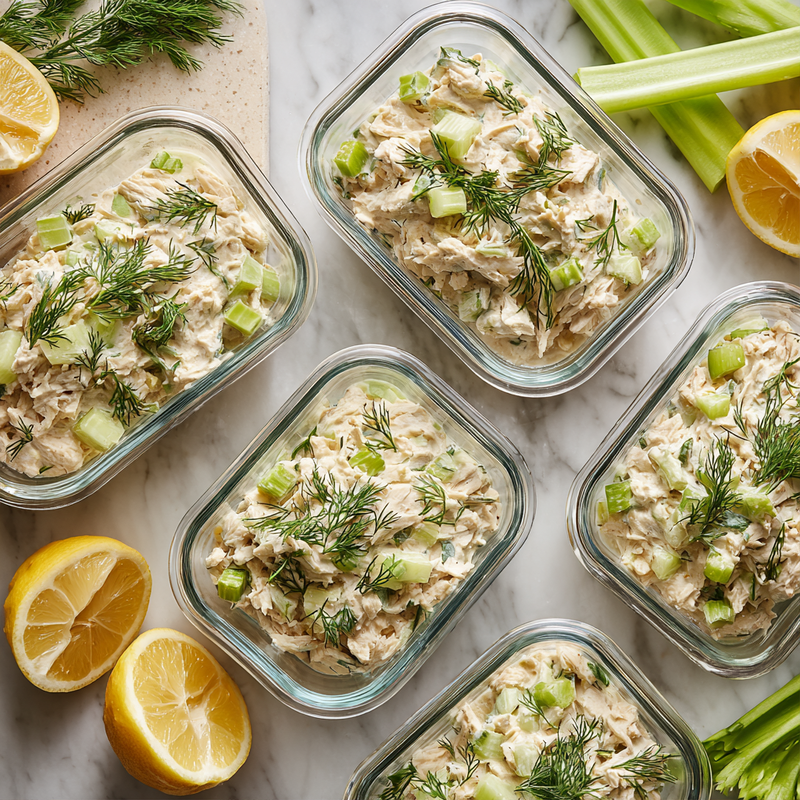
For true assembly-line efficiency, set up your portioning station. Line up your five containers, place a kitchen scale nearby if you want exact portions, and use a large spoon or ice cream scoop to divide the classic chicken salad evenly. I aim for about one cup per container, which gives a generous lunch portion. Smooth the tops, seal the lids, label with the prep date, and refrigerate immediately.
The Weekly Game Plan
Sunday afternoon is your power hour. Block out ninety minutes for the complete classic chicken salad production, from cooking the chicken to washing the last dish. This includes about thirty minutes of active cooking, twenty minutes of cooling time, and forty minutes for chopping, mixing, and portioning. The return on this investment is five stress-free mornings and five satisfying lunches.
Monday through Wednesday are your prime eating days when the classic chicken salad tastes absolutely perfect. The flavors have melded overnight, but everything still tastes fresh and vibrant. Serve it however you like: piled onto toasted whole grain bread, stuffed into lettuce cups, scooped onto a bed of mixed greens, or surrounded by crackers and vegetable sticks. Keep a few serving options at your workplace if possible—a box of whole grain crackers in your desk drawer, or extra lettuce leaves in the office fridge.
By Thursday, consider adding fresh elements to combat any hint of meal prep fatigue. Toss in a handful of fresh grapes cut in half, dice up a crisp apple, or add extra herbs just before eating. These bright additions wake up the flavors and make day four feel completely different from day one. You can also change your serving vessel entirely: try your classic chicken salad inside a halved avocado, rolled into a whole wheat wrap, or served warm over roasted vegetables.
Friday is your last scheduled day for this batch, and it's the perfect time to get creative with leftovers. If you have any extra classic chicken salad beyond your five portions, consider freezing it in a small container for an emergency lunch two weeks from now. While the texture changes slightly after freezing, it's still perfectly good when thawed overnight in the refrigerator and given a quick stir.
This four to five day cycle keeps you in the safe zone for refrigerated chicken while preventing boredom. Some people prep twice weekly, making a small batch on Sunday and another mid-week, but I find the once-weekly system more efficient and easier to maintain long-term.
Smart Storage and Reheating
Container choice makes or breaks your meal prep game. For classic chicken salad, I rank glass containers with airtight lids as the gold standard. They don't retain odors from previous meals, they maintain a consistent cold temperature, and they're safe to use for years without degrading. Look for containers in the two-cup size, which gives you room for a generous portion of salad plus any sides you want to pack alongside.
Compartmentalized containers earn their place when you're packing classic chicken salad with items that should stay separate until eating time. Keep your chicken salad in the largest compartment, then use smaller sections for crackers, cherry tomatoes, cucumber slices, or fresh fruit. This prevents your crackers from getting soggy and keeps everything at peak texture.
Your classic chicken salad will stay fresh in the refrigerator for four to five days when stored at forty degrees or below. Always place containers toward the back of the fridge where temperature stays most consistent, not in the door where it fluctuates every time you open it. Press a piece of plastic wrap directly onto the surface of the chicken salad before sealing the lid to minimize air exposure and prevent the top layer from drying out.
For longer storage, classic chicken salad freezes surprisingly well for up to two months. Portion it into smaller containers since you can't refreeze after thawing. The texture becomes slightly more separated after freezing, but a quick stir brings it back together. Thaw overnight in the refrigerator, never at room temperature, and consume within two days of thawing.
Most people enjoy classic chicken salad cold, straight from the fridge, which makes it perfect for desk lunches without access to heating equipment. If you do prefer it warm, microwave individual portions for thirty to forty-five seconds on medium power, just until the chill is off. Alternatively, let it sit at room temperature for twenty minutes before eating, which takes the edge off the cold without requiring any equipment. You can also serve it warm by spooning it over roasted vegetables or quinoa that you've heated separately, creating a composed warm bowl.
Customization Ideas
The foundation of classic chicken salad adapts beautifully to different proteins and dietary needs. Swap the chicken for canned tuna or cooked turkey for an equally delicious result. Rotisserie chicken from the store works wonderfully when you're short on time—just remove the skin, shred the meat, and proceed with the recipe. For a vegetarian version, try using chickpeas that you've roughly mashed, leaving some whole for texture.
Grain alternatives transform your classic chicken salad into different meals entirely. Serve it over quinoa, brown rice, or farro for a heartier lunch that keeps you satisfied longer. Stuff it into whole wheat pita pockets, or spread it onto thick slices of seeded bread. For a low-carb approach, use butter lettuce cups, endive leaves, or cucumber rounds as your base.
Sauce variations keep the same chicken interesting all week long. Add curry powder and golden raisins for a sweet and savory twist. Stir in pesto and sun-dried tomatoes for Mediterranean flair. Mix in fresh dill, lemon zest, and capers for a bright, herbaceous version. Each variation stores just as well as the classic version and gives you multiple flavor profiles from a single batch of cooked chicken.
Making classic chicken salad work for different dietary needs is straightforward. Use dairy-free mayonnaise or mashed avocado for a dairy-sensitive version. Skip the nuts for nut-free environments. Load up on extra vegetables like diced bell peppers, shredded carrots, or chopped cucumber for additional nutrients and fiber. Scale your portions up for family meal prep by doubling or tripling the recipe, or keep them individual-sized by preparing just two to three portions if you only need occasional packed lunches.
Meal Prep FAQ
How long does classic chicken salad really last in the fridge?
When stored properly in an airtight container at forty degrees or below, classic chicken salad stays fresh and safe to eat for four to five days. The mayonnaise-based dressing actually helps preserve the chicken by limiting oxygen exposure. Always use your senses as a final check: if it smells off or looks discolored, discard it regardless of the date.
What are the absolute best containers for storing this?
Glass containers with snap-lock lids are my top recommendation for classic chicken salad meal prep. The two-cup size from reputable brands works perfectly for individual portions. Glass doesn't absorb odors, maintains cold temperatures better than plastic, and lets you see your food at a glance. If you're using plastic, choose BPA-free options and replace them every six months as they can retain smells.
Can I reheat classic chicken salad at work without a microwave?
Absolutely, and many people prefer it that way. Classic chicken salad tastes excellent cold or at room temperature, so simply remove it from the fridge twenty to thirty minutes before eating. If your workplace has a microwave, a quick fifteen to twenty second burst on low power takes the chill off without making it hot. You can also pack it alongside warm components like roasted vegetables or soup, letting the heat from those items gently warm your salad.
Is this suitable for kids' lunchboxes?
Classic chicken salad works wonderfully for children's lunches with a few adaptations. Pack it with fun dippers like whole grain crackers, pretzel sticks, or cucumber rounds. Keep the pieces smaller and the seasonings milder. Include an ice pack to maintain safe temperatures until lunchtime. Many kids enjoy building their own crackers with chicken salad on top, making lunch interactive and engaging.
How do I avoid getting tired of eating the same thing all week?
Variety in serving method prevents meal prep fatigue better than anything else. Monday, serve your classic chicken salad on bread. Tuesday, scoop it onto salad greens. Wednesday, stuff it into a whole wheat wrap with extra vegetables. Thursday, enjoy it with crackers and fruit. Friday, try it over warm quinoa or roasted vegetables. The same base tastes completely different depending on how you present it.
Can I prep the components separately and mix them daily?
Yes, and this technique actually extends your freshness window. Store cooked, shredded chicken in one container and your mayo-celery mixture in another. Combine a portion each morning for the absolute freshest taste. This method works especially well if you want to add delicate ingredients like fresh herbs or grapes that lose their prime texture after several days mixed in. The trade-off is a few extra minutes each morning, but you gain an extra day or two of optimal quality.
Classic Chicken Salad
Creamy, protein-packed classic chicken salad perfect for meal prep. This simple recipe yields five days of delicious, customizable lunches that actually improve with time.
Prep Time
20 min
Cook Time
18 min
Total Time
48 min
Servings
5 servings
Ingredients
For 5 servings
- 2.5 pounds boneless, skinless chicken breasts
- 1 cup mayonnaise
- 4 celery stalks, finely diced
- 3 tablespoons fresh dill or parsley, chopped
- 2 tablespoons lemon juice
- 1 teaspoon Dijon mustard
- 1 teaspoon garlic powder
- 1 teaspoon salt
- 1/2 teaspoon black pepper
- 1/2 cup toasted slivered almonds (optional)
Instructions
- 1
Poach the chicken
Place chicken breasts in a large pot and cover with cold water by two inches. Add a generous pinch of salt and bring to a gentle simmer over medium heat. Reduce heat to the lowest setting and cook for fifteen to eighteen minutes until chicken reaches an internal temperature of one hundred sixty-five degrees.
- 2
Cool the chicken
Remove chicken from poaching liquid and place on a cutting board. Let cool for ten minutes at room temperature. This cooling period prevents condensation and ensures your mayonnaise-based dressing stays creamy and thick rather than watery.
- 3
Prepare vegetables and dressing
While chicken cools, dice celery into small, uniform pieces and chop fresh herbs. In a large mixing bowl, combine mayonnaise, lemon juice, Dijon mustard, garlic powder, salt, and black pepper. Whisk until smooth and well blended.
- 4
Shred the chicken
Using two forks, pull the cooled chicken into bite-sized pieces. Work with the grain for longer shreds or against it for smaller bits. Aim for relatively uniform pieces so every bite has a consistent texture and flavor.
- 5
Combine chicken and dressing
Add the shredded chicken to the bowl with the mayonnaise mixture. Fold gently but thoroughly using a large spoon or spatula, ensuring every piece of chicken is coated with dressing. Avoid overmixing, which can turn the chicken mushy.
- 6
Add vegetables and herbs
Fold in the diced celery and chopped fresh herbs. The celery should be evenly distributed throughout the salad. If using toasted almonds, add them now or reserve them to add fresh to each portion throughout the week.
- 7
Taste and adjust
Sample your chicken salad and adjust seasonings as needed. Remember that flavors will mellow slightly during refrigeration, so season just a touch more boldly than you think necessary. Add more lemon juice for brightness, salt for depth, or pepper for a gentle kick.
- 8
Portion into containers
Divide the chicken salad evenly among five airtight containers, using about one cup per portion. Smooth the tops and press a small piece of plastic wrap directly onto the surface of each portion to minimize air exposure.
- 9
Store properly
Seal containers with tight-fitting lids and label with the preparation date. Refrigerate immediately, placing containers toward the back of the fridge where temperature stays most consistent. The chicken salad will stay fresh for four to five days.
- 10
Serve and enjoy
Throughout the week, serve your chicken salad in different ways to prevent meal prep fatigue. Try it on whole grain bread, in lettuce cups, over mixed greens, with crackers, stuffed in whole wheat wraps, or over warm quinoa. Add fresh elements like grapes, apple slices, or extra herbs just before eating to keep each meal interesting.
Nutrition Facts
Per serving (estimated)
385 calories
Calories
6g
Carbs
42g
Protein
22g
Fat
2g
Fiber
680mg
Sodium
2g
Sugar