Cilantro Lime Steak Bowls – Fresh & Flavorful in 30 Minutes
Learn to make vibrant cilantro lime steak bowls in just 30 minutes! Perfect marinating technique, fresh ingredients, easy meal prep tips included.
cookwithlucia.com/recipes/cilantro-lime-steak-bowls-fresh-flavorful-in-30-minutes-easy-healthy-meal-prep
There's something magical about mastering the art of building balanced bowl meals that look like they came from a restaurant kitchen but take less time than ordering takeout. When you understand how to properly marinate and sear protein, build layers of complementary flavors, and arrange components for both visual appeal and practical eating, you unlock an entire category of weeknight dinners that feel special without demanding hours of your time. The cilantro lime steak bowl represents everything I love about this approach: bright, herbaceous flavors that wake up your palate, perfectly charred meat with a tender interior, and a rainbow of fresh vegetables and grains that make every bite interesting.
The intimidation factor with steak bowls often comes from two places: worrying about cooking the meat correctly, and feeling overwhelmed by assembling multiple components. But here's what I want you to understand right from the start: once you grasp the foundational technique of quick marinating and high-heat searing, you'll be able to create restaurant-quality cilantro lime steak bowls consistently. The secret isn't complicated cooking skills or expensive equipment. It's about understanding timing, temperature, and how acids work with proteins to create both flavor and tenderness.
What makes cilantro lime steak bowls particularly brilliant is their flexibility. Master the core technique, and you can swap vegetables based on what's in season, change the grain to match your preference, and adjust the protein portion for meal prep or family dinners. The marinade itself becomes a template you'll use dozens of times, and the assembly method works for everything from quick weeknight meals to impressive weekend gatherings with friends.
The Science Behind the Method
When you combine citrus juice with oil and fresh herbs to create a marinade for steak, you're engaging in a beautiful dance of chemistry that transforms the meat in multiple ways. The citric acid in lime juice begins to denature the proteins on the surface of the steak, essentially starting the cooking process at a molecular level before any heat is applied. This not only allows the flavors to penetrate more deeply but also creates a more tender texture, particularly important when working with leaner cuts that might otherwise be chewy.
The oil in the marinade serves as a flavor carrier, helping the fat-soluble compounds in cilantro and garlic coat the meat evenly. When you later sear the steak in a hot pan, these oil-coated surfaces undergo the Maillard reaction—that gorgeous browning that creates hundreds of new flavor compounds and gives you those dark, caramelized edges. The sugars naturally present in the aromatics also caramelize, adding depth and slight sweetness that balances the bright acidity.
Understanding this process changes how you approach not just cilantro lime steak bowls, but all marinated proteins. You'll know why marinating time matters (too short and flavors stay shallow, too long and acids can make the texture mushy), why patting the meat dry before searing is crucial (moisture prevents browning), and why resting the cooked steak is non-negotiable (it allows redistributed juices to settle back into the fibers). This knowledge transforms you from someone following a recipe to a cook who understands cause and effect in the kitchen.
Tools and Ingredients You'll Need
For successful cilantro lime steak bowls, your most important tool is a heavy-bottomed skillet—cast iron is ideal because it retains heat beautifully and creates superior searing, but a thick stainless steel pan works wonderfully too. If you only have non-stick, you can still make this work, though you won't achieve quite the same level of caramelization. A good pair of tongs gives you control when flipping the steak, and a sharp chef's knife is essential for slicing against the grain after cooking.
For measuring and prep, you'll want a medium bowl for the marinade, a cutting board dedicated to raw meat preparation, and another clean board for slicing the cooked steak. A citrus juicer makes quick work of limes, though you can absolutely squeeze them by hand if needed. If you're planning to meal prep your cilantro lime steak bowls, invest in good quality glass or BPA-free plastic containers with tight-fitting lids that keep components fresh for up to four days.
Ingredient quality matters tremendously here because the dish relies on fresh, bright flavors rather than heavy sauces or complicated techniques. Choose steak with good marbling—flank steak, skirt steak, or sirloin all work beautifully for cilantro lime steak bowls. Fresh cilantro should be vibrant green without yellowing or sliminess, and your limes should feel heavy for their size, indicating juiciness. For the grain base, I typically use brown rice, quinoa, or cauliflower rice depending on dietary preferences. Fresh vegetables like bell peppers, red onion, cherry tomatoes, and avocado add color and nutrition, while canned black beans provide protein and substance.
The Method, Step by Step
Begin by preparing your marinade, which forms the flavor foundation of your cilantro lime steak bowls. In a medium bowl, combine the juice of four fresh limes with a generous handful of chopped cilantro—stems included, as they carry intense flavor. Add minced garlic, ground cumin for earthiness, a touch of honey to balance the acidity, and enough olive oil to create an emulsified mixture when you whisk vigorously. The marinade should look cohesive rather than separated, with tiny droplets of oil suspended throughout the lime juice.
Place your steak in a shallow dish and pour the marinade over it, turning to coat all surfaces completely. This is where timing becomes important: for tender cuts like sirloin, 15-30 minutes is ideal; for tougher cuts like flank or skirt, you can go up to 2 hours, but never exceed 4 hours or the acid will begin to make the texture unpleasantly soft. While the meat marinates at room temperature (which helps it cook more evenly), prepare your bowl components: cook your grain according to package directions, dice your vegetables into uniform pieces for consistent texture, and prep any toppings like sliced avocado or lime wedges.
When you're ready to cook, remove the steak from the marinade and pat it thoroughly dry with paper towels—this step is absolutely crucial for achieving proper browning rather than steaming. Heat your skillet over high heat until it's smoking hot; you can test readiness by flicking a drop of water into the pan, which should evaporate instantly with a sharp sizzle. Add a thin layer of high-smoke-point oil like avocado or grapeseed, then carefully lay the steak in the pan, laying it away from you to prevent splatter.
Resist the urge to move the steak for the first 3-4 minutes—this patience allows a proper crust to form on the cilantro lime steak. You'll know it's ready to flip when the edges begin to brown and the meat releases easily from the pan without sticking. Flip once and cook another 3-4 minutes for medium-rare, adjusting time based on thickness and your preferred doneness. Use an instant-read thermometer if you have one: 130°F for medium-rare, 140°F for medium.
Once cooked, transfer the steak to a cutting board and let it rest for at least 5 minutes—this resting period is when the magic happens. The muscle fibers relax, the internal juices redistribute evenly throughout the meat instead of running out onto the cutting board, and the residual heat finishes the cooking process gently. While the steak rests, you can warm your grain if it's cooled, and arrange your vegetable components in your serving bowls.
After resting, identify the grain of the steak—those visible lines running through the meat—and slice perpendicular to them using smooth, confident strokes with your sharp knife. Cutting against the grain shortens the muscle fibers, making each bite significantly more tender. Slice at a slight diagonal to create larger surface area on each piece, which looks more appealing and provides better flavor in every bite of your cilantro lime steak bowls.
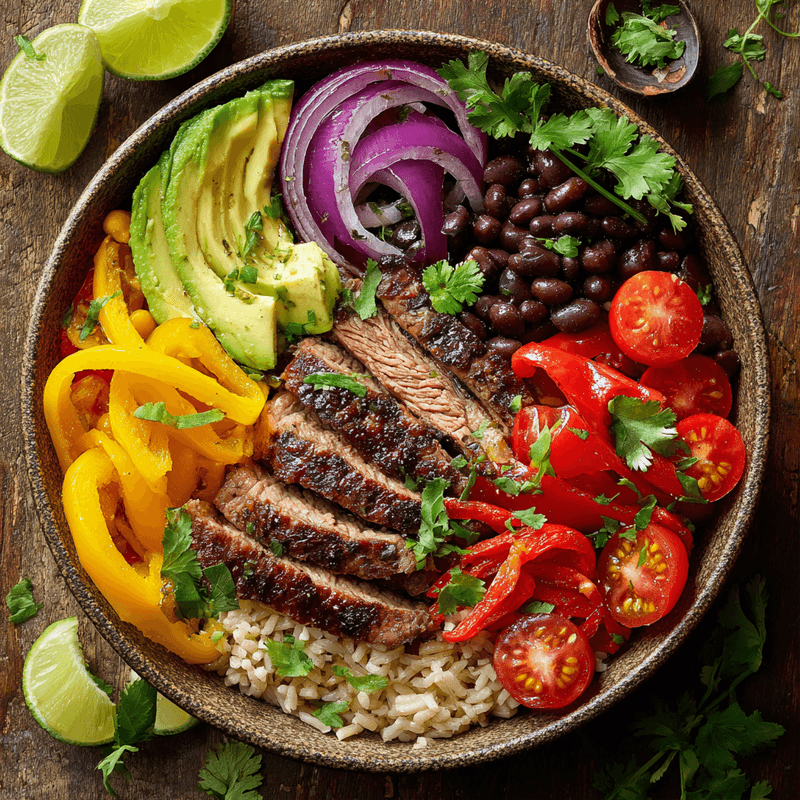
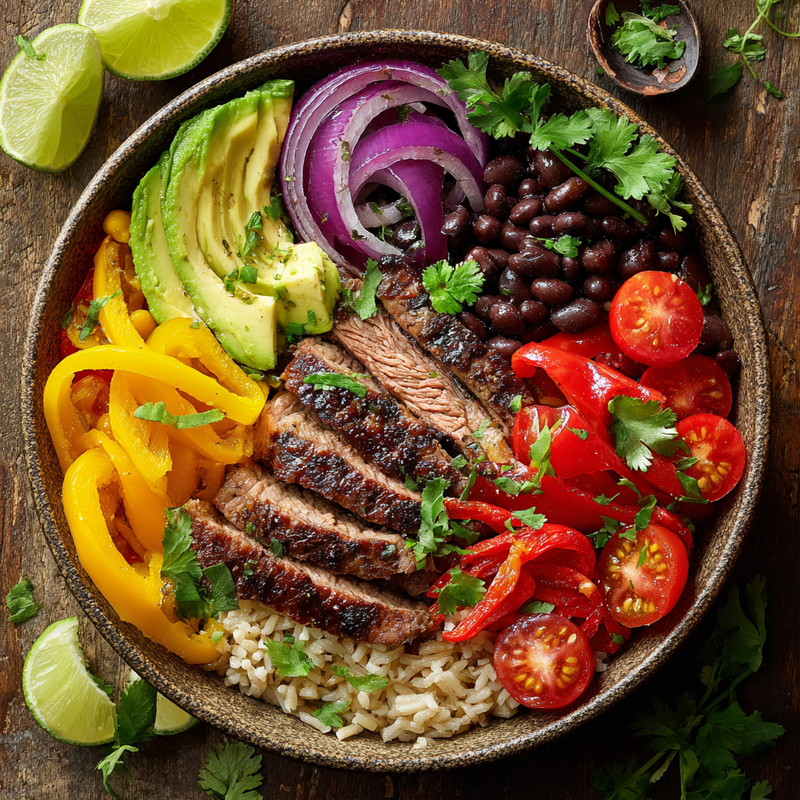
Now comes the artful assembly that transforms simple components into a restaurant-worthy cilantro lime steak bowl. Start with your grain base, spreading it across the bottom of your bowl to create a foundation. Arrange your vegetables in separate sections rather than mixing them together—this segmented approach looks beautiful and allows diners to customize each forkful to their preference. Lay the sliced steak across the top where it becomes the visual star, then finish with creamy avocado slices, a sprinkle of fresh cilantro, and an extra lime wedge for squeezing.
Troubleshooting Guide
If your steak turns out tough and chewy despite proper marinating, the most likely culprit is slicing with the grain instead of against it, or overcooking the meat past medium. Steak continues cooking after you remove it from heat, so pull it slightly earlier than your target temperature. For next time, invest in an instant-read thermometer to eliminate guesswork, and always examine the meat closely before slicing to identify which direction the fibers run.
When the exterior of your steak is beautifully seared but the inside remains too rare for your liking, your pan was likely too hot or the steak too thick. You can finish it gently in a 350°F oven for a few minutes, but prevention works better: let meat come to room temperature for 20-30 minutes before cooking, or if working with a particularly thick cut, consider butterflying it to create more even thickness. Your cilantro lime steak bowls should feature meat that's evenly cooked from edge to center.
If the marinade flavors taste weak or barely present in the final dish, you probably didn't marinate long enough or didn't dry the meat properly before searing. The surface moisture dilutes the marinade and prevents the Maillard reaction from creating those deep, concentrated flavors. Make sure to marinate for at least 30 minutes, and be aggressive about patting dry—use multiple paper towels until they come away barely damp.
When your bowl components taste disconnected rather than cohesive, it usually means you need more acid and seasoning at the assembly stage. Even though your steak is well-seasoned, the vegetables and grain often need their own boost. Dress your vegetables lightly with lime juice and salt before adding them to the bowl, and season your grain with a pinch of salt and a drizzle of olive oil. Some cooks also reserve a few tablespoons of marinade before it touches raw meat to use as a finishing sauce, which ties all the components of your cilantro lime steak bowls together beautifully.
If everything tastes flat despite proper seasoning, your culprit is likely old spices or cilantro that's lost its punch. Cumin loses its fragrance after about six months in your pantry, and cilantro that's been sitting in your refrigerator for a week has nowhere near the vibrant flavor of fresh bunches. Always taste your cilantro before using it—if it doesn't have that distinctive, bright, almost citrusy flavor, buy a fresh bunch.
Taking It to the Next Level
Once you've mastered the basic technique for cilantro lime steak bowls, consider dry-brining your steak in addition to marinating. Generously salt the meat and let it rest uncovered in the refrigerator for 2-24 hours before marinating. This draws moisture to the surface where it dissolves the salt, then pulls it back into the meat along with the seasoning, resulting in more evenly seasoned, juicy steak with better browning capability.
For restaurant-level presentation, use a culinary torch to add final char marks after slicing, or finish your steak with a compound butter made from softened butter mixed with cilantro, lime zest, and minced garlic. A small pat melting over the warm slices adds richness and makes the presentation glisten beautifully. Some advanced cooks also add a smoky element by incorporating chipotle powder into the marinade or finishing the bowls with a drizzle of smoky sauce.
Experiment with marinating vegetables alongside your protein—bell peppers and red onions particularly benefit from 15 minutes in a simple lime-olive oil mixture before quick grilling or roasting. The caramelization on charred vegetables adds another layer of complexity to your cilantro lime steak bowls. You can also play with grain variations like ancient grain blends, black rice for dramatic color contrast, or even warm, seasoned legumes like lentils for added protein and fiber.
Storing Your Results
Cilantro lime steak bowls are exceptional for meal prep because the components actually hold up beautifully when stored separately. Cook your steak as directed, let it cool completely, then slice and store in an airtight container with any accumulated juices—these will keep the meat moist during storage. The sliced steak stays fresh for 3-4 days in the refrigerator, though texture is best within the first two days.
Store your cooked grain, prepared vegetables, and proteins in separate containers rather than pre-assembling complete bowls. This prevents the grain from getting soggy and vegetables from wilting, and allows you to refresh components individually when you're ready to eat. Keep cut avocado in a container with the pit still in place and a light squeeze of lime juice over the surface to minimize browning, or wait to slice it fresh when assembling your bowl.
To reheat, warm your grain and steak separately—grain microwaves well with a splash of water to refresh it, while steak is best gently reheated in a covered skillet over low heat or eaten at room temperature to prevent overcooking. Never reheat assembled cilantro lime steak bowls all together, as the different components require different reheating times and the fresh vegetables should stay cool and crisp. If you're taking bowls to work, pack cold components in an insulated bag with an ice pack, and keep warm components in a thermos or reheat upon arrival.
Common Questions
Can I make cilantro lime steak bowls without a cast iron skillet?
Absolutely—while cast iron provides superior heat retention and searing, any heavy-bottomed skillet works well for this recipe. Stainless steel is my second choice because it also gets very hot and creates excellent browning. If using non-stick, understand that you won't achieve quite the same dark crust, but the steak will still be delicious and properly cooked. The key is getting your pan as hot as possible before adding the meat and avoiding overcrowding, which drops the temperature too much.
How do I adjust this recipe for high altitude cooking?
High altitude primarily affects cooking times and moisture evaporation rather than the marinating process for cilantro lime steak bowls. Your steak will likely cook slightly faster because of lower air pressure, so reduce your cooking time by about 30 seconds per side and rely on a thermometer rather than timing alone. For the grain component, you'll need additional liquid and longer cooking times—typically an extra 1/4 cup liquid per cup of grain and 5-10 minutes additional cooking time. The fresh components and marinade require no adjustments.
Can I double or triple this recipe for a crowd?
Scaling up cilantro lime steak bowls is straightforward for the marinade and components, but cooking requires attention to avoid overcrowding your pan. The marinade multiplies perfectly—just maintain the same ratios. For the steak, cook in batches rather than cramming multiple pieces in one pan, which drops the temperature and causes steaming instead of searing. Keep cooked steak warm in a low oven while you finish subsequent batches. All other components scale linearly, making this an excellent recipe for gatherings where you want something fresh and impressive.
What's the best cut of steak for these bowls on a budget?
Flank steak and skirt steak offer the best balance of flavor, texture, and price for cilantro lime steak bowls. Both cuts are flavorful but can be tough if not handled properly—that's where your marinade and slicing technique become crucial. Sirloin tip is another budget-friendly option that's slightly more tender. Avoid very lean cuts like eye of round, which tend to dry out with high-heat cooking. Whatever cut you choose, make absolutely certain to slice against the grain after cooking, as this makes even tougher cuts remarkably tender.
Why does my steak stick to the pan and tear when I try to flip it?
Sticking happens when the pan isn't hot enough or when you try to flip before a proper crust has formed. The meat will naturally release from the pan once sufficient browning has occurred—this usually takes 3-4 uninterrupted minutes over high heat. Additionally, make sure your steak is completely dry before it hits the pan, as surface moisture creates steam that prevents proper contact and browning. Use enough oil to create a thin, even coating on the pan surface, and resist the urge to move, press, or flip the meat before it's ready.
Can I prepare the marinade in advance?
Yes, the marinade for cilantro lime steak bowls can be made up to 24 hours in advance and stored in an airtight container in the refrigerator. In fact, this allows the flavors to meld beautifully. Fresh cilantro may darken slightly but will still provide plenty of flavor. Give the marinade a good stir or shake before using, as the oil and citrus juice will separate during storage. Just remember to let your steak sit at room temperature for 20-30 minutes before cooking, even if it's been marinating in the cold refrigerator, as this promotes more even cooking throughout the meat.
Cilantro Lime Steak Bowls
Fresh, vibrant steak bowls featuring tender marinated steak with bright cilantro-lime flavors, served over rice with colorful vegetables. Ready in just 30 minutes and perfect for meal prep.
Prep Time
15 min
Cook Time
15 min
Total Time
30 min
Servings
4 servings
Ingredients
For 4 servings
- 1.5 pounds flank steak or sirloin
- 4 limes, juiced (about 1/2 cup)
- 1 cup fresh cilantro, chopped (stems included)
- 4 cloves garlic, minced
- 1/4 cup olive oil
- 2 teaspoons ground cumin
- 1 tablespoon honey
- 1 teaspoon salt
- 1/2 teaspoon black pepper
- 2 cups cooked brown rice or quinoa
- 1 can (15 oz) black beans, drained and rinsed
- 1 red bell pepper, diced
- 1 yellow bell pepper, diced
- 1 cup cherry tomatoes, halved
- 1/2 red onion, thinly sliced
- 2 avocados, sliced
- Fresh cilantro for garnish
- Lime wedges for serving
- 2 tablespoons high-heat cooking oil for searing
Instructions
- 1
Prepare the marinade
In a medium bowl, whisk together lime juice, chopped cilantro (stems included), minced garlic, olive oil, cumin, honey, salt, and black pepper until well combined. The mixture should be emulsified with the oil evenly distributed throughout the lime juice, creating a cohesive marinade.
- 2
Marinate the steak
Place the steak in a shallow dish and pour the marinade over it, turning to coat all surfaces completely. Let marinate at room temperature for 15-30 minutes, or up to 2 hours in the refrigerator for tougher cuts. Do not exceed 4 hours as the acid can make the texture mushy.
- 3
Prepare bowl components
While the steak marinates, cook your rice or quinoa according to package directions. Dice bell peppers, halve cherry tomatoes, and thinly slice red onion. Drain and rinse black beans. Arrange all components in separate containers for easy assembly.
- 4
Dry the steak
Remove steak from marinade and pat completely dry with paper towels, using multiple towels until they come away barely damp. This crucial step ensures proper browning rather than steaming. Discard the used marinade.
- 5
Sear the steak
Heat a heavy-bottomed skillet (cast iron preferred) over high heat until smoking hot. Add 2 tablespoons of high-heat oil, then carefully place the steak in the pan, laying it away from you. Do not move the steak for 3-4 minutes until a dark crust forms and it releases easily from the pan.
- 6
Finish cooking
Flip the steak once and cook another 3-4 minutes for medium-rare (130°F internal temperature) or adjust time for your preferred doneness. The edges should be deeply browned and the meat should feel slightly firm when pressed.
- 7
Rest the meat
Transfer cooked steak to a cutting board and let rest for at least 5 minutes. During this time, the muscle fibers relax and juices redistribute throughout the meat. Resting is essential for tender, juicy results.
- 8
Slice against the grain
Identify the direction of the muscle fibers (the grain) running through the steak. Using a sharp knife, slice perpendicular to these lines at a slight diagonal, creating 1/4-inch thick slices. Cutting against the grain shortens the muscle fibers, making the meat significantly more tender.
- 9
Assemble the bowls
Divide cooked rice or quinoa among four bowls as the base. Arrange black beans, bell peppers, cherry tomatoes, and red onion in separate sections around each bowl. Top with sliced steak, avocado slices, and fresh cilantro.
- 10
Garnish and serve
Finish each bowl with extra fresh cilantro and a lime wedge for squeezing. Serve immediately while the steak is warm and the vegetables are crisp. For meal prep, store components separately and assemble when ready to eat.
Nutrition Facts
Per serving (estimated)
585 calories
Calories
52g
Carbs
42g
Protein
23g
Fat
12g
Fiber
520mg
Sodium
6g
Sugar