Caprese Roasted Asparagus: The Ultimate Meal Prep Recipe
Master Caprese Roasted Asparagus for weekly meal prep. Fresh mozzarella, tomatoes & asparagus stay delicious for 5 days. Complete storage guide included.
cookwithlucia.com/recipes/caprese-roasted-asparagus
There's nothing quite like the feeling of opening your refrigerator on a busy Tuesday evening and finding a beautiful, ready-to-eat meal waiting for you. No frantic chopping, no decision fatigue, just gorgeous food you prepared when you had the time and energy. That's the magic of meal prep, and Caprese Roasted Asparagus is about to become your new Sunday afternoon ritual. This stunning dish combines the classic Italian flavors of fresh mozzarella, ripe tomatoes, and fragrant basil with perfectly roasted asparagus spears that maintain their texture throughout the week.
The beauty of this approach is that you're not committing to eating the exact same meal five days in a row. Instead, you're creating a versatile base that can be transformed into different experiences each day. Imagine waking up Monday knowing lunch is handled, then Tuesday, then Wednesday. The mental load disappears. The evening scramble vanishes. You've given yourself the gift of time by spending just one focused hour in the kitchen. Caprese Roasted Asparagus isn't just a side dish—it's a complete meal prep strategy that brings Mediterranean freshness to your weekly routine without the daily cooking commitment.
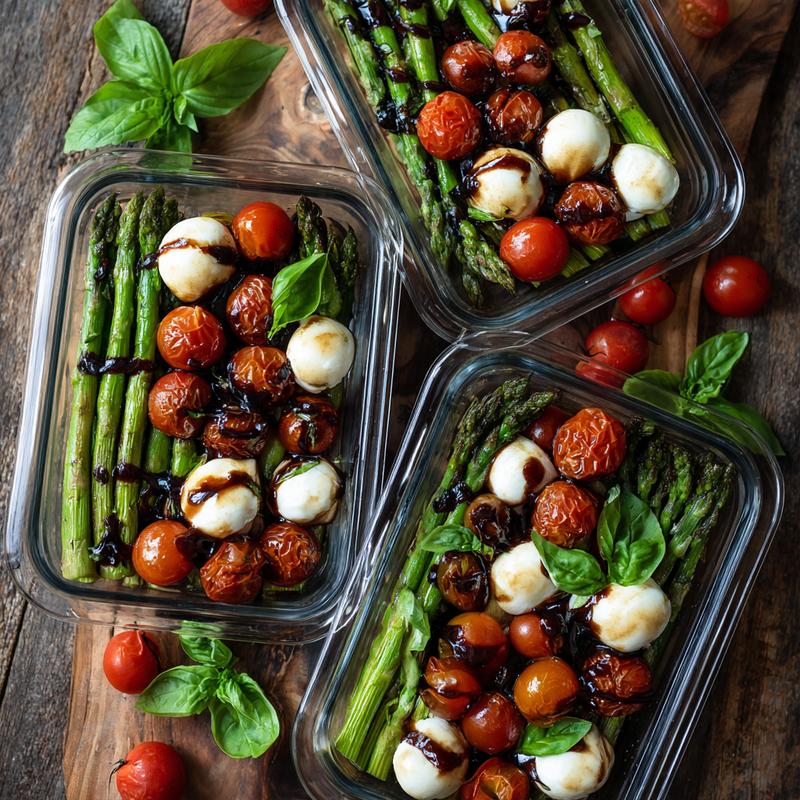
Why This Recipe Is Perfect for Meal Prep
Caprese Roasted Asparagus stands out in the crowded world of meal prep recipes because every single component is designed to improve or maintain its quality over several days. Asparagus, when roasted properly with a slight char, holds its texture remarkably well in refrigerated storage. Unlike steamed or boiled asparagus that turns mushy within hours, roasted spears maintain their structural integrity and that delightful bite that makes vegetables actually enjoyable to eat throughout the week.
The flavor profile of this dish actually deepens as it sits. The balsamic reduction seeps into the asparagus, the tomato juices mingle with the olive oil, and the herbs infuse everything around them. By day three, you'll notice the flavors have married in a way that tastes even better than day one. This is the hallmark of an excellent meal prep recipe—it rewards your patience rather than punishing it.
Nutritionally, Caprese Roasted Asparagus delivers everything you need for a balanced meal. The asparagus provides fiber, vitamins K and C, and folate. Fresh mozzarella contributes protein and calcium without being heavy. Cherry tomatoes add lycopene and natural sweetness. A drizzle of quality olive oil brings healthy fats that help your body absorb all those fat-soluble vitamins. When you portion this into containers alongside quinoa or farro, you've created a complete meal that sustains energy levels without the afternoon crash.
The reheating factor is where many meal prep recipes fail, but not this one. Caprese Roasted Asparagus can be enjoyed cold as a salad, at room temperature as an antipasto, or gently reheated to bring back that fresh-from-the-oven warmth. This flexibility means you're not locked into one serving method, giving you variety even when eating the same base ingredients.
What You'll Need
Let's talk about sourcing ingredients with meal prep in mind, because buying for five servings requires a different strategy than shopping for tonight's dinner. For the asparagus, you'll want two full pounds of medium-thickness spears. Avoid the pencil-thin variety—they overcook too easily and won't hold up through storage. Look for firm stalks with tight tips and no sliminess at the cut ends. I buy mine from farmers markets on Sunday mornings when they're freshest, giving me maximum storage life throughout the week.
Cherry tomatoes are your MVPs here, and you'll need about two cups. They're naturally designed by nature to have a longer shelf life than larger tomatoes, and their concentrated flavor intensifies beautifully when roasted alongside the asparagus. Choose tomatoes that are firm but ripe, with no soft spots. A mix of red and yellow creates visual interest that makes your meal prep containers look restaurant-worthy all week long.
For the mozzarella, opt for small balls of fresh mozzarella packed in brine, about eight ounces total. Here's the meal prep secret: don't add all the mozzarella during the initial roasting. Keep half of it fresh in its brine and add it to individual portions throughout the week. This gives you both the melted, roasted mozzarella experience and the cool, creamy contrast of fresh cheese. Buy the best quality you can find—this is where the Caprese element really shines.
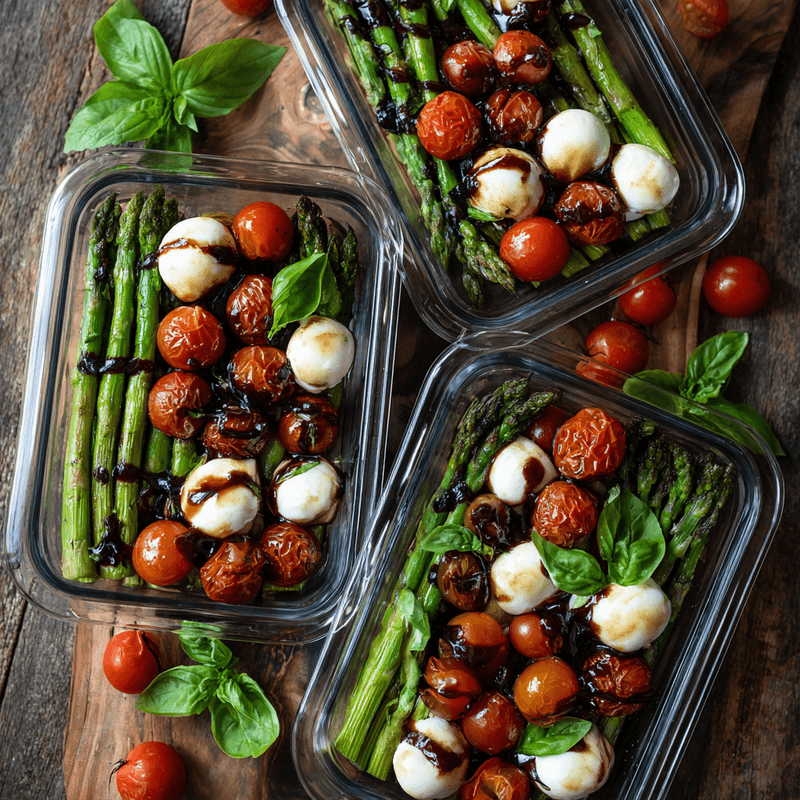
Fresh basil is non-negotiable, and you'll want a generous bunch. However, basil wilts and darkens quickly, so buy two bunches: one to roast with the vegetables and one to add fresh as you eat throughout the week. Store the second bunch with stems in water like a bouquet, covered loosely with a plastic bag in the refrigerator. Balsamic vinegar, extra virgin olive oil, garlic, and sea salt round out your shopping list. For containers, invest in glass meal prep containers with compartments—the kind with a larger section for the vegetables and a smaller section for any grain or protein you're adding. Glass doesn't stain or retain odors, and it reheats beautifully.
The Batch Cooking Method
The secret to successful meal prep is treating your cooking session like a professional kitchen operation. Start by preheating your oven to 425°F and laying out all your ingredients and tools before you begin. This mise en place approach eliminates the frantic searching that adds unnecessary time to your cooking. Line two large sheet pans with parchment paper—you'll need the space to spread everything in a single layer, which is crucial for proper roasting rather than steaming.
While the oven heats, trim the tough ends from your asparagus spears. I hold each stalk at both ends and bend gently—it will naturally snap at the point where tender meets woody. Some people measure and cut, but this bending method is faster when you're processing two pounds. Arrange the asparagus on one sheet pan, drizzle with olive oil, and season generously with salt and freshly cracked black pepper. Use your hands to roll the spears around, coating them evenly. This tactile approach is faster and more effective than tossing with spoons.
On the second sheet pan, arrange your halved cherry tomatoes cut-side up, along with half of your mozzarella balls (torn into chunks) and several whole garlic cloves in their skins. Drizzle with more olive oil and season well. Scatter some fresh basil leaves over both pans. Now both pans go into the oven—asparagus on the lower rack, tomato mixture on the upper rack. Set a timer for twelve minutes.
At the twelve-minute mark, rotate both pans and check the asparagus. You want them tender with some charred tips but still holding their shape. The tomatoes should be blistering and collapsing into themselves, releasing their juices. Give everything another five to eight minutes, watching carefully. The total roasting time is usually eighteen to twenty minutes, but ovens vary. While everything finishes, reduce about half a cup of balsamic vinegar in a small saucepan until it's thick enough to coat the back of a spoon—this takes about eight minutes over medium heat.
Once everything is roasted, let it cool for ten minutes before portioning. This cooling period allows the vegetables to finish cooking with residual heat and makes them easier to handle. Divide the Caprese Roasted Asparagus into four or five containers, drizzle each with the balsamic reduction, and add a few fresh basil leaves to each container for brightness throughout the week. The entire active cooking time is about thirty-five minutes, plus twenty minutes of roasting while you clean up your workspace.
The Weekly Game Plan
Sunday afternoon is your power hour, and I recommend starting around 3 PM when the day is still bright but the weekend's main activities are winding down. This is when you'll do your actual roasting and portioning of the Caprese Roasted Asparagus. Prepare the full batch, let everything cool completely, and portion into containers. Don't add your grain base yet if you're using one—cook that separately and add it to containers once cooled, or store it in a separate large container to scoop from throughout the week.
Monday through Wednesday are your prime eating days for this recipe. The asparagus is still at peak texture, the tomatoes are perfectly jammy, and everything tastes vibrant. For Monday, eat the Caprese Roasted Asparagus cold over a bed of arugula dressed simply with lemon juice and olive oil. Tuesday, reheat your portion gently and serve it over warm farro with additional fresh mozzarella torn on top. Wednesday, bring your container to room temperature and eat it as-is with crusty bread for a Mediterranean-style lunch.
Thursday and Friday require a bit more creativity to keep things interesting, but the base is still delicious. On Thursday, chop your Caprese Roasted Asparagus into smaller pieces and toss it with pasta you've cooked fresh that evening—the tomato juices and balsamic create an instant sauce. Friday, if you're working from home, reheat the vegetables and scramble them with eggs for a breakfast-for-lunch situation that feels completely different from the week's previous meals.
The genius of this plan is that you're never eating the identical meal twice. The core components are the same, but the presentation, temperature, and accompanying elements change daily. This prevents meal prep fatigue while still giving you the convenience of mostly-prepared food. You're spending maybe five minutes per day assembling or slightly modifying your meal, compared to the thirty to forty-five minutes it would take to cook from scratch.
Smart Storage and Reheating
Container choice genuinely matters when you're storing Caprese Roasted Asparagus for up to five days. Glass containers with snap-lock lids are my top recommendation because they create an airtight seal that prevents moisture loss and keeps odors contained. The asparagus releases some moisture as it sits, and glass handles this better than plastic, which can become slippery and harbor stains from the tomatoes and balsamic.
Compartmentalized containers are ideal if you're storing your grain or protein base separately from the vegetables. Keep the Caprese Roasted Asparagus in the larger section and your quinoa, brown rice, or chickpeas in the smaller compartment. This prevents the grains from absorbing too much moisture from the vegetables and becoming mushy. If you're planning to eat some portions cold and others warm, this separation also gives you more flexibility.
Your refrigerator's temperature zone matters more than most people realize. Store these containers in the main body of the fridge, not in the door where temperature fluctuates with opening and closing. The Caprese Roasted Asparagus will maintain optimal quality for four to five days when kept at a consistent 37-40°F. Check your containers each day—if you see any excessive liquid pooling, simply drain it off before eating. This is just the tomatoes releasing more juice, which is perfectly normal.
For reheating, the microwave works but requires finesse. Remove the lid, cover loosely with a damp paper towel, and heat in thirty-second intervals at 70% power. This gentle approach prevents the asparagus from becoming rubbery and the mozzarella from turning into a hockey puck. Total reheating time is usually ninety seconds to two minutes depending on your portion size. The oven method is superior if you have time—spread everything on a small sheet pan and warm at 350°F for about eight minutes. This refreshes the roasted quality and can even re-crisp the asparagus tips slightly.
If you want to extend your meal prep beyond five days, freezing is an option, though the texture of fresh mozzarella doesn't survive freezing well. For freezer storage, prepare the Caprese Roasted Asparagus without the cheese, cool completely, and freeze in airtight containers for up to two months. Thaw overnight in the refrigerator and add fresh mozzarella when you reheat. The asparagus and tomatoes handle freezing remarkably well and taste nearly as good as fresh when properly thawed and gently reheated.
Customization Ideas
The framework of Caprese Roasted Asparagus is endlessly adaptable to different dietary preferences and what's available in your kitchen. Swap the fresh mozzarella for crumbled feta if you want a sharper, saltier flavor profile that leans more Greek than Italian. Goat cheese is another excellent option that adds tanginess and holds up beautifully through refrigeration. For a dairy-free version, omit the cheese entirely and increase the balsamic reduction—the dish is still absolutely delicious with just the vegetables and that sweet-tart glaze.
Protein additions transform this from a side into an unmistakably complete main course. Grilled chicken breast sliced and added to each container gives you lean protein. Canned chickpeas tossed with the vegetables before roasting add plant-based protein and turn delightfully crispy in the oven. White beans stirred in after roasting create a Tuscan-style dish. Even hard-boiled eggs, halved and added to containers, work beautifully with these Mediterranean flavors.
Grain bases change the entire character of your meal. Quinoa keeps things light and adds complete protein. Farro or barley brings a nutty chewiness that pairs perfectly with the tender asparagus. Cauliflower rice works for low-carb meal preppers. I've even served Caprese Roasted Asparagus over creamy polenta that I've portioned and refrigerated separately—when you reheat them together, it's like a fancy restaurant dish.
For spice lovers, add red pepper flakes before roasting or drizzle each portion with chili oil throughout the week. Sun-dried tomatoes mixed in with the cherry tomatoes intensify the tomato flavor. A handful of toasted pine nuts or slivered almonds added before eating gives textural contrast. The beauty of Caprese Roasted Asparagus as a meal prep base is that it's a canvas for whatever flavors you're craving on any given day.
Meal Prep FAQ
How long does Caprese Roasted Asparagus really last in the refrigerator?
When stored properly in airtight containers at consistent refrigerator temperatures, this dish maintains excellent quality for four to five days. The asparagus texture is best in the first three days, but it remains perfectly safe and delicious through day five. The fresh mozzarella is actually the limiting factor—if you keep it separate and add it fresh throughout the week, the roasted vegetables themselves can last a full seven days.
What are the absolute best containers for this meal prep?
Glass containers with four-latch locking lids are my gold standard for Caprese Roasted Asparagus. The Pyrex or Glasslock brands create an airtight seal that keeps everything fresh. Look for containers that are roughly three to four cups in capacity—large enough for a full meal portion but not so big that you're carrying around excess weight. Compartmentalized versions let you separate wet components from grains, which prevents sogginess.
Can I reheat this in a work microwave without making it weird?
Absolutely, and I do it several times a week. The trick is using reduced power and adding moisture. Place your container of Caprese Roasted Asparagus in the microwave without the lid, lay a damp paper towel over the top, and heat at 70% power for ninety seconds. Stir, then heat another thirty to sixty seconds if needed. The damp towel creates steam that keeps everything tender rather than rubbery, and using reduced power prevents hot spots that turn the mozzarella into rubber.
How do I keep my kids interested in eating the same base all week?
Presentation and variety are everything with young eaters. For kids, I recommend chopping the Caprese Roasted Asparagus into smaller, more manageable pieces and changing the delivery method daily. Monday it's mixed with pasta, Tuesday it's rolled into a wrap, Wednesday it's served with crackers for dipping. Let them add their own toppings like extra cheese or a favorite sauce. The roasted vegetables are mild and naturally sweet, which most kids enjoy, but the changing presentation prevents the "this again?" complaint.
What if I get sick of eating the same flavors by Thursday?
This is where strategic ingredient holdbacks save the day. When you're doing your Sunday prep of Caprese Roasted Asparagus, roast the vegetables but keep your flavor additions flexible. Store containers of the plain roasted asparagus and tomatoes, then throughout the week add different finishing elements—pesto one day, tahini sauce another, a squeeze of lemon and fresh herbs the next. The roasted vegetables are neutral enough to take on completely different flavor profiles, so you're not locked into the Caprese direction for every single meal.
Is it worth investing in a meal prep bag with ice packs?
If you're transporting Caprese Roasted Asparagus to work and won't have immediate refrigeration access, yes, a insulated bag with ice packs is worthwhile. Food safety guidelines recommend keeping cold foods below 40°F, and an insulated bag maintains that temperature for four to six hours. However, if you have a refrigerator at work and can store your container as soon as you arrive, a regular bag is fine. I've been meal prepping for years and my insulated lunch bag has paid for itself hundreds of times over in money saved from not buying lunch out.
Caprese Roasted Asparagus
Mediterranean-inspired roasted asparagus with fresh mozzarella, cherry tomatoes, and balsamic reduction. Perfect for meal prep with flavors that improve over time.
Prep Time
15 min
Cook Time
20 min
Total Time
35 min
Servings
5 servings
Ingredients
For 5 servings
- 2 pounds fresh asparagus, tough ends trimmed
- 2 cups cherry tomatoes, halved
- 8 ounces fresh mozzarella balls, torn into chunks
- 4 tablespoons extra virgin olive oil, divided
- 4 cloves garlic, unpeeled
- 1/2 cup balsamic vinegar
- 1 cup fresh basil leaves, divided
- 1 teaspoon sea salt
- 1/2 teaspoon freshly cracked black pepper
Instructions
- 1
Preheat and prepare
Preheat your oven to 425°F. Line two large sheet pans with parchment paper for easy cleanup and to prevent sticking. Gather all ingredients and tools to create an efficient workspace.
- 2
Trim the asparagus
Hold each asparagus spear at both ends and bend gently until it naturally snaps, discarding the woody ends. This ensures you're only using the tender portions. Arrange the trimmed spears in a single layer on one prepared sheet pan.
- 3
Season the asparagus
Drizzle the asparagus with 2 tablespoons of olive oil and season with half the salt and pepper. Use your hands to roll the spears around, ensuring even coating. This tactile method distributes oil better than using utensils.
- 4
Prepare tomato mixture
On the second sheet pan, arrange the halved cherry tomatoes cut-side up. Add half of the torn mozzarella chunks and the whole unpeeled garlic cloves. Drizzle with the remaining 2 tablespoons of olive oil and season with remaining salt and pepper.
- 5
Add fresh basil
Tear half of the fresh basil leaves and scatter them over both sheet pans. Reserve the remaining basil for adding fresh to portions throughout the week. The heat will bring out the basil's aromatic oils while some stays bright and fresh.
- 6
Roast the vegetables
Place the asparagus pan on the lower oven rack and the tomato pan on the upper rack. Roast for 12 minutes, then rotate both pans 180 degrees for even cooking. Continue roasting for another 6-8 minutes until asparagus is tender with charred tips and tomatoes are blistered and collapsing.
- 7
Reduce balsamic vinegar
While vegetables roast, pour balsamic vinegar into a small saucepan over medium heat. Simmer gently for 8-10 minutes, stirring occasionally, until reduced by half and thick enough to coat the back of a spoon. Remove from heat and let cool slightly.
- 8
Cool and combine
Remove both pans from the oven and let cool for 10 minutes. This resting period allows vegetables to finish cooking with residual heat and makes them easier to handle. Transfer asparagus to a large platter or bowl and top with the roasted tomato mixture.
- 9
Portion for meal prep
Divide the roasted vegetables evenly among 5 meal prep containers. Drizzle each portion with the reduced balsamic vinegar. Add a few fresh basil leaves to each container for brightness throughout the week.
- 10
Store properly
Let containers cool to room temperature, then seal with airtight lids. Store in the main body of your refrigerator at 37-40°F for up to 5 days. Add remaining fresh mozzarella to portions throughout the week for best texture and flavor.
Nutrition Facts
Per serving (estimated)
245 calories
Calories
18g
Carbs
12g
Protein
15g
Fat
4g
Fiber
520mg
Sodium
10g
Sugar